Plaster vs Plaster
The word plaster covers two different pool finishes. What white marble plaster and modified plaster blends actually are, and which one to specify.
Plaster vs plaster means white marble plaster against a modified blend. White plaster costs $4,000 to $10,000 and lasts 7 to 12 years; a quartz-blended plaster costs $6,000 to $12,000 and lasts 10 to 15, and the quote rarely says which one you were sold.
- White plaster
- $4,000-$10,000
- Blended plaster
- $6,000-$12,000
- White plaster life
- 7-12 years
- Blended life
- 10-15 years
Some links on this page are affiliate links.If you buy through them we may earn a commission at no extra cost to you. We do not accept payment for rankings. Read the full disclosure.
Plaster vs plaster sounds like a mistake, and in a way it is: the pool trade uses one word for two different finishes. Traditional white plaster is cement and marble dust, at $4,000 to $10,000 and 7 to 12 years. A modified plaster blend replaces much of that marble dust with quartz or another hard aggregate, at $6,000 to $12,000 and 10 to 15 years. The quote usually says “plaster” for both.
The two products behind one word
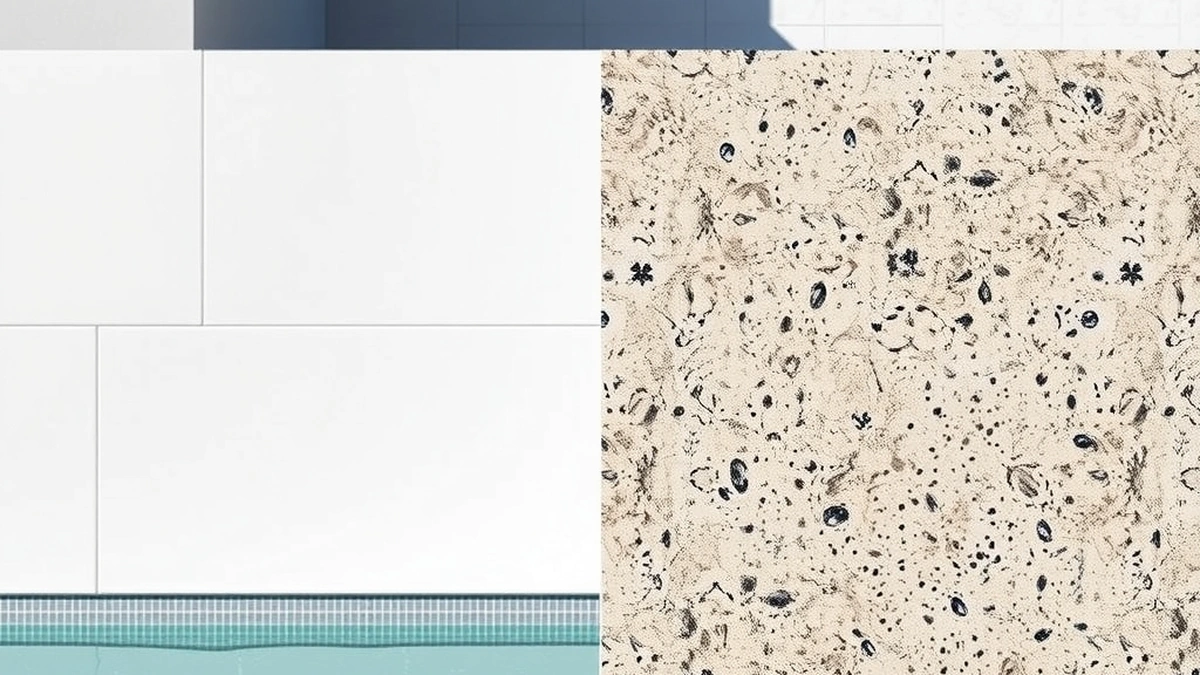
White plaster is the original pool finish: a mix of white cement and ground marble, troweled onto the shell. It exposes calcium carbonate at the surface, which is soft, bright, and easy to patch. It is also the material that dissolves first when water goes aggressive.
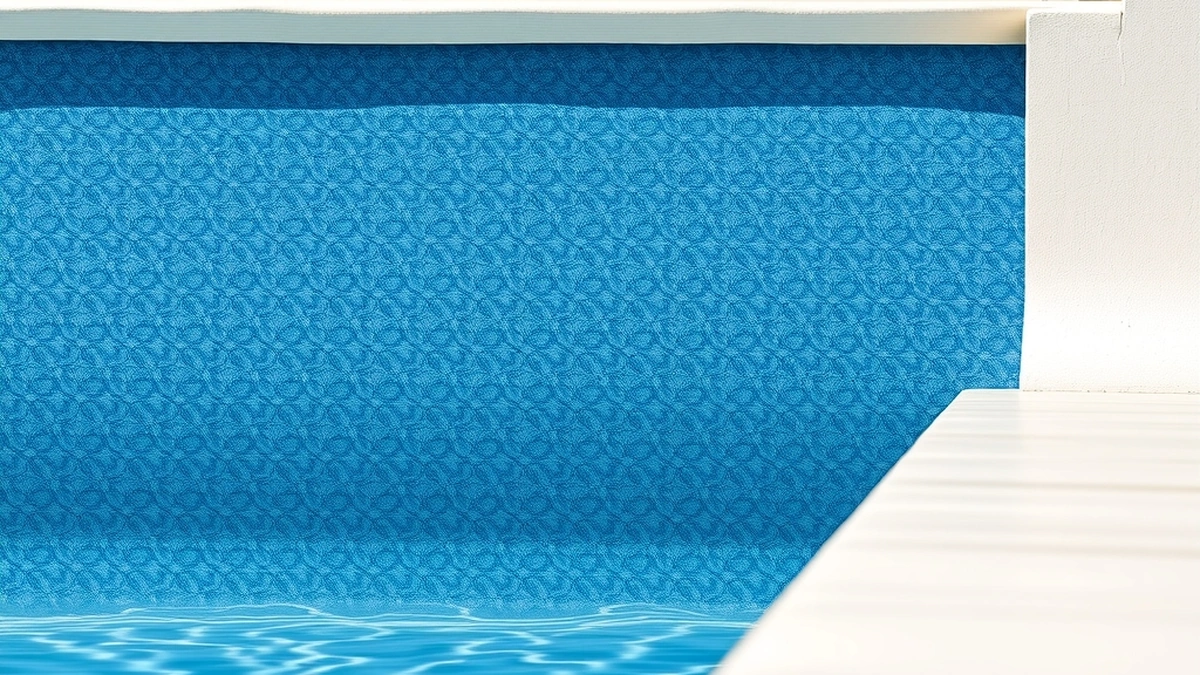
A modified plaster is the same cement base with part of the marble dust replaced by a harder aggregate, most commonly crushed quartz. The finished surface exposes those grains, so the water has less soft material to work on. It is still a plaster, still cementitious, and still sold under the same word.
That is the entire confusion. The difference is not brand, not installer, and not color. It is what is in the bag.
Why the label stays vague
Contractors use plaster as a category name because that is how the work is priced and scheduled. A crew that plasters pools applies both products with the same tools and the same sequence. The upgrade is a material substitution, not a different trade.
The vagueness becomes a problem at the quote stage. Two bids that both say “plaster, standard finish” can be $2,000 apart because one is white marble and one is a quartz blend, and the homeowner has no way to tell which is which without asking.
Three questions cut through it:
- What aggregate is in the mix, and at what ratio to cement?
- Is the finish white, tinted, or speckled?
- What does the installer expect for service life on this pool?
An answer of “standard plaster” to the first question means white marble. An answer naming quartz, glass, or a brand means a blend.
Cost and life, side by side
| Factor | White marble plaster | Modified plaster blend |
|---|---|---|
| Installed cost | $4,000-$10,000 | $6,000-$12,000 |
| Expected life | 7-12 years | 10-15 years |
| Cost per year | $333-$1,429 | $400-$1,200 |
| Surface feel | Smooth, soft | Fine grip |
| Stain visibility | High | Lower, surface is patterned |
| Patch blending | Invisible | Visible |
| Low-pH tolerance | Poor | Moderate |
| Color range | White and light tints | Wide, including speckle |
The premium is about $2,000 at the bottom and $2,000 at the top, so it is a fixed slice rather than a percentage. What changes the value is how long you keep the pool.
The per-year arithmetic
Divide each range by its expected life. White plaster: $4,000 ÷ 12 = $333 per year at best, and $10,000 ÷ 7 = $1,429 per year at worst. A blended finish: $6,000 ÷ 15 = $400 per year at best, and $12,000 ÷ 10 = $1,200 per year at worst.
The ranges overlap almost entirely. On the numbers alone, neither product wins; the blend wins only if it actually reaches the top of its life, which depends on the water and the installation. What the blend reliably buys is three more years before the pool has to be drained again, and that disruption has a cost the table cannot show.
A worked example makes it concrete. On an 855 square foot pool, white plaster at $6,500 is $6,500 ÷ 855 = $7.60 per square foot. A blend at $8,500 is $9.94 per square foot. The difference is $2,000, or $2.34 per square foot, for roughly three extra years.
Where each one is the right call
White marble plaster is the right answer when the hold is short, the budget is tight, the pool is a rental, or the shell is sound and the owner wants a smooth white surface that period-correct pools need. It also patches better than anything else, which matters if fittings may move later.
A modified blend is the right answer when the pool will be kept past ten years, when it runs a salt chlorinator, when it sits in full sun with heavy bather load, or when the owner wants a color that plain white cannot deliver.
Neither is right when the shell needs structural work. A finish cannot fix a moving shell, and paying for a blend over a crack that has not been stitched is paying more for the same failure. Plaster cost covers the base product in more detail, quartz cost covers the upgrade, and plaster reviews collects what owners report on both.
Five steps to specify the right one
- Decide how long you will own the pool. Under five years, white plaster is the rational buy.
- Ask each contractor for the aggregate type and ratio in writing, not the finish name.
- Confirm the removal method, because a blend over failing plaster fails like plaster.
- Get the interior square footage and divide each total by it.
- Ask what the finish will look like in year eight, including mottling and patch visibility.
Step five is the one that changes minds. A dark blended finish hides stains and shows mottling; a white plaster shows stains and hides patches. Neither is a defect, but one of them will bother you more.
The short version
Plaster vs plaster is white marble plaster against a modified blend. White costs $4,000 to $10,000 and lasts 7 to 12 years; the blend costs $6,000 to $12,000 and lasts 10 to 15. The blend is smoother than pebble, harder than white plaster, and about $2,000 more at both ends, which works out to roughly $2.34 per square foot on an 855 square foot pool. Ask for the mix specification, not the word on the quote, and the comparison stops being confusing.
Frequently asked questions
What does plaster vs plaster mean for a pool?
It means the trade uses one word for two products. Traditional white plaster is cement and marble dust. Modified plaster replaces part of the marble dust with quartz or another hard aggregate, which changes price, texture, and life.
Is quartz a type of plaster?
Technically yes. Quartz aggregate is a plaster mix with crushed quartz replacing much of the marble dust, so it is sold as an upgraded plaster. The distinction that matters is what the surface exposes after troweling.
How do I know which plaster I was quoted?
Ask for the mix specification: the cement type, the aggregate type, and the ratio of aggregate to cement. A quote that says only plaster or standard finish is not specific enough to compare with another.
Does blended plaster cost much more?
About $2,000 more at both ends of the range. White plaster runs $4,000 to $10,000 and quartz-blended plaster $6,000 to $12,000, so the premium is roughly fixed rather than proportional.
Which plaster feels smoother?
White marble plaster is smoother. A blended finish exposes hard grain at the surface, which reads as a fine grip underfoot. Neither is as textured as pebble.
Can a blended plaster be patched invisibly?
No. A patch on white plaster blends because the surface is uniform. On a speckled or tinted blend, the patch shows as a smooth island, which is worth knowing before you choose a dark color.
Sources
Some links are affiliate links.If you buy through them we may earn a commission at no extra cost to you. We do not accept payment for rankings. Read the full disclosure.