Pebble vs fibreglass: premium stone or smooth membrane
Pebble costs $8,000 to $15,000 for 15 to 20 years; fibreglass costs $5,000 to $12,000 for 10 to 15. Compare per-year cost, grip, repair, and heat.
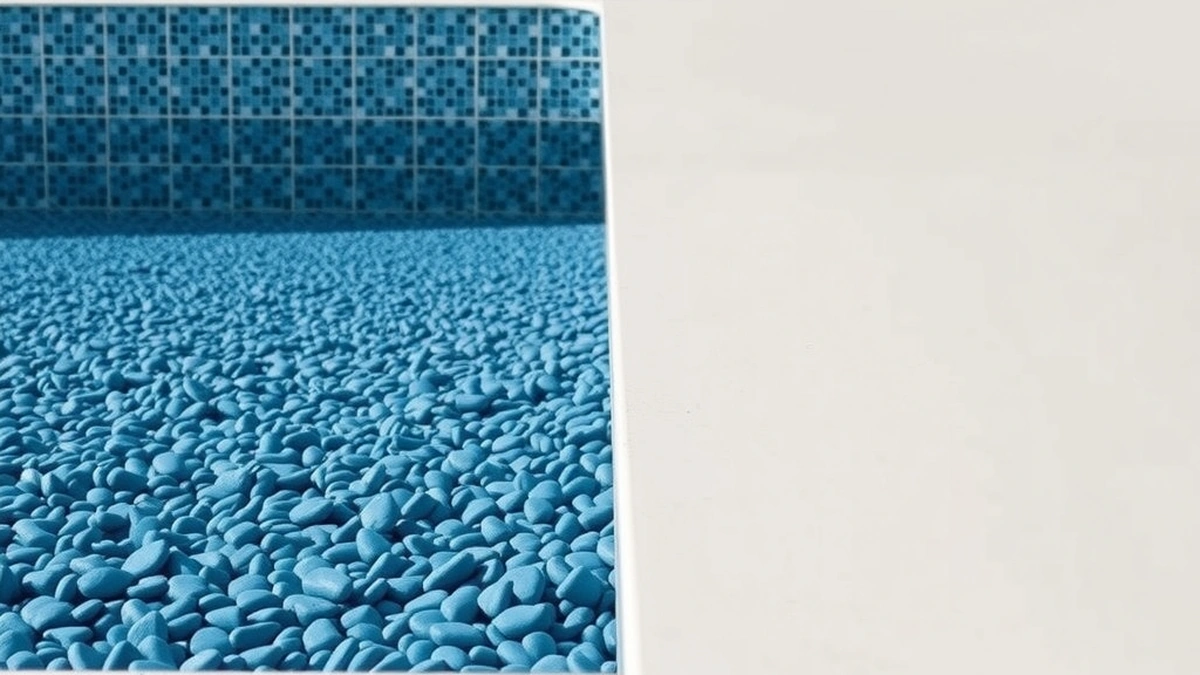
Pebble costs $8,000 to $15,000 and lasts 15 to 20 years, or $400 to $1,000 per year. Fibreglass costs $5,000 to $12,000 and lasts 10 to 15, or $333 to $1,200. Pebble grips and endures; fibreglass is smooth and cheaper.
- Pebble installed
- $8,000 - $15,000
- Fibreglass installed
- $5,000 - $12,000
- Cost per year
- $400 - $1,000 vs $333 - $1,200
- Texture
- Coarse vs smooth
Some links on this page are affiliate links.If you buy through them we may earn a commission at no extra cost to you. We do not accept payment for rankings. Read the full disclosure.
Pebble and fibreglass are the two most durable common finishes, and they are bought for different reasons. Pebble costs $8,000 to $15,000 for 15 to 20 years; fibreglass costs $5,000 to $12,000 for 10 to 15. Per year the ranges overlap: $400 to $1,000 against $333 to $1,200. One is chosen for grip and endurance, the other for smoothness and cost.
Stone versus membrane
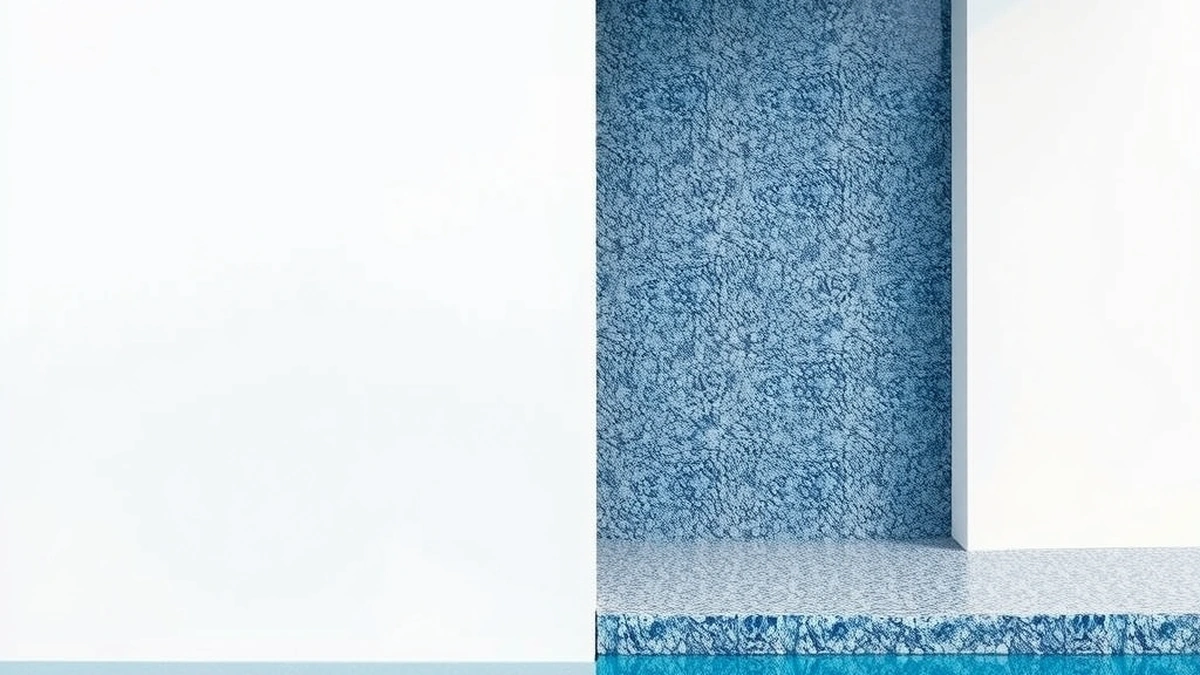
Pebble is a cement finish with river stone or quartz aggregate, washed back so the stone sits proud. The surface is stone and cement, and it is part of the cementitious family.
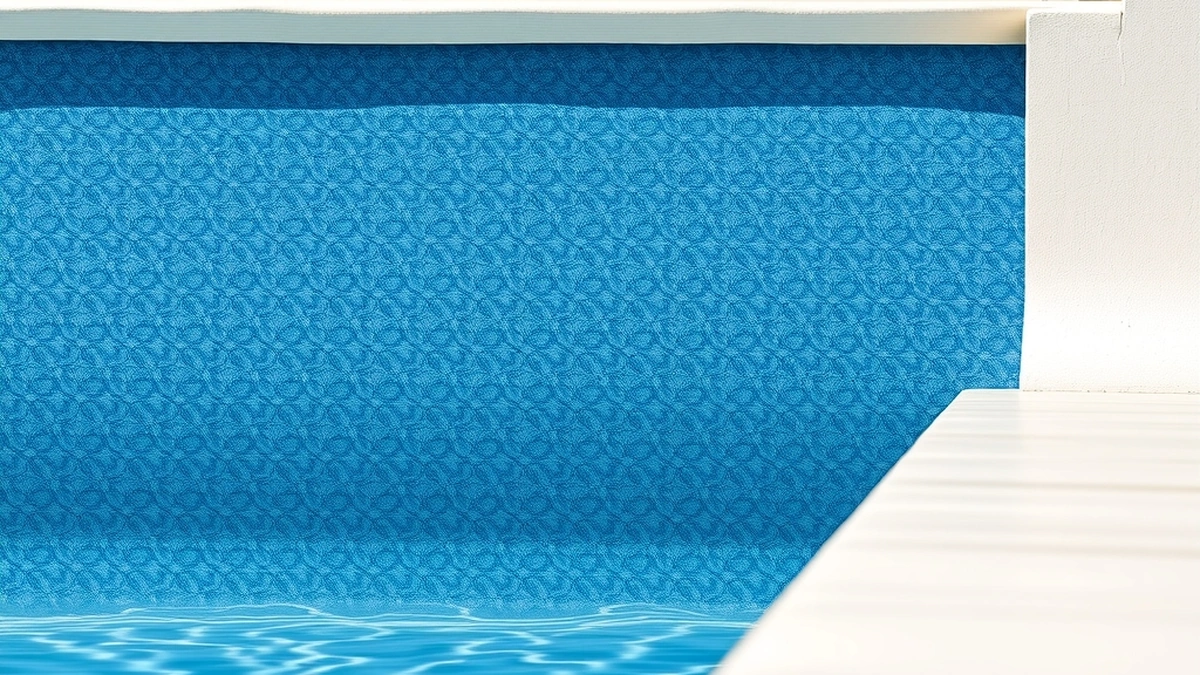
Fibreglass is a glass-reinforced plastic coating with a gelcoat top. It is a membrane, bonded to the shell, with no exposed aggregate.
One is a surface you can feel the structure of. The other is a smooth skin.
Price and life
| Pebble | Fibreglass | |
|---|---|---|
| Installed | $8,000 - $15,000 | $5,000 - $12,000 |
| Per square foot, 855 sq ft | $9.36 - $17.54 | $5.85 - $14.04 |
| Expected life | 15 - 20 years | 10 - 15 years |
| Cost per year | $400 - $1,000 | $333 - $1,200 |
| Surface | Coarse grip | Smooth gelcoat |
| Repair | Patch, visible | Specialist resin |
| UV behaviour | Colour stable | Fades |
The per-year figures are division. Pebble: $8,000 ÷ 20 = $400, $15,000 ÷ 15 = $1,000. Fibreglass: $5,000 ÷ 15 = $333, $12,000 ÷ 10 = $1,200.
Pebble’s worst case is $1,000, below fibreglass’s worst case of $1,200. Fibreglass’s best case is $333, below pebble’s best case of $400. The two cross, which is why the decision is not arithmetic alone.
Grip and comfort
Pebble is the grippiest common finish. On steps, in the shallow end, and around a slide, that texture is the point. It is also the reason some owners reject it: it feels like coarse sand underfoot, and it does not soften with age.
Fibreglass is smooth and stays smooth. It is comfortable to sit on and to walk on, and it is slick unless a texture has been applied.
There is no compromise between them, which is why the decision is usually made by standing on both. Owners who choose pebble for its life and dislike the feel tend to say so afterward.
Heat and sun
A dark pebble surface absorbs more heat than a light gelcoat, and in full sun it can be noticeably warmer underfoot. That is an advantage in a cool climate and a disadvantage in a hot one.
Fibreglass gelcoat fades under UV. The colour loss is gradual and cosmetic, and it cannot be sanded back the way an aggregate surface can be refinished. A pebble surface holds its colour because the colour is in the stone.
Ten years changes the two finishes in opposite directions. A pebble surface has lost some of its cement between the stones, so it looks slightly more textured and slightly lighter, but the stone itself is unchanged. The pool still reads as the colour it was installed.
A fibreglass surface at ten years has usually lost some gloss and some colour depth, especially on the sun-facing side. It is structurally sound and smooth, but it looks older in a way that a pebble pool does not, because the fade is uniform and visible against the waterline.
Neither is a defect. It is the difference between a surface that wears and a surface that fades, and it matters mostly at resale.
A decade in, chemistry, and wear
Both want the same water: pH 7.2 to 7.8, alkalinity 80 to 120 ppm, calcium 250 to 400 ppm.
Pebble tolerates drift better than any other cementitious finish, because less cement is exposed at the surface. It still etches under low pH, but the damage takes longer to show.
Fibreglass is not calcium-based, so it does not scale in the same way, and it is less affected by high calcium. Low pH still dulls the gelcoat, and a long period of low pH leaves a surface that cannot be brought back.
Repair and resale
Pebble is patched with a matching mix, and the patch is visible on a speckled surface but structurally sound. Fibreglass repair is a resin and gelcoat job, and the colour match is the difficult part. On a pool with a dark gelcoat, a patch reads as a lighter patch for the life of the surface, which is why some owners choose pebble on reparability alone.
At resale, pebble reads as an upgrade and photographs well. Fibreglass reads as a clean, modern surface, and it is often described as low maintenance. Neither returns its full cost, but pebble tends to hold a premium in listings.
Five steps to choose
- Stand on a finished example of each, ideally a dark pebble in sun.
- Decide whether grip or comfort is the priority.
- Compare the per-year cost at your ownership horizon.
- Ask what preparation the shell needs for each.
- Check the UV exposure and whether fading matters.
Step one is the one that cannot be answered from a table. Texture is a daily experience, not a specification.
The short version
Pebble is the durable, grippy, stone surface; fibreglass is the smooth, cheaper, UV-fading membrane. Per year they cross, so choose on feel and on how long you are staying. Prices are in pebble cost and fibreglass cost, and the aggregate comparison is in quartz vs pebble.
Frequently asked questions
Is pebble worth more than fibreglass?
On a long hold, often yes. Pebble is $8,000 to $15,000 for 15 to 20 years, which is $400 to $1,000 per year. Fibreglass is $5,000 to $12,000 for 10 to 15, which is $333 to $1,200 per year.
Which is smoother, pebble or fibreglass?
Fibreglass, by a wide margin. Pebble is an exposed aggregate and feels like coarse sandpaper. Fibreglass is a gelcoat surface that stays smooth as it ages.
Which lasts longer?
Pebble, at 15 to 20 years against 10 to 15 for fibreglass. The stone is harder and there is less cement exposed, so it tolerates chemistry drift for longer.
Which is better in full sun?
Pebble holds up better in full sun and heavy use. Fibreglass gelcoat fades under UV over time, and a faded surface cannot be sanded back the way an aggregate can.
Can fibreglass go over pebble?
It can be applied as an overlay over sound pebble, but the coarse surface has to be prepared and the overlay is thicker. Over loose or delaminating pebble, it fails with the substrate.
Which is better for a rental?
Pebble. It tolerates inconsistent chemistry and heavy use, and it does not show marks the way a light gelcoat does. The longer life also reduces the number of replacement cycles.
Sources
Some links are affiliate links.If you buy through them we may earn a commission at no extra cost to you. We do not accept payment for rankings. Read the full disclosure.