Fibreglass vs vinyl liner: coating or sheet
Fibreglass costs $5,000 to $12,000 for 10 to 15 years; a vinyl liner $2,500 to $7,500 for 8 to 12. Both are non-cement surfaces, but only one is bonded.
Fibreglass costs $5,000 to $12,000 and lasts 10 to 15 years, or $333 to $1,200 per year. A vinyl liner costs $2,500 to $7,500 and lasts 8 to 12, or $208 to $938. Fibreglass is bonded; a liner is hung and replaceable.
- Fibreglass installed
- $5,000 - $12,000
- Vinyl liner installed
- $2,500 - $7,500
- Cost per year
- $333 - $1,200 vs $208 - $938
- Life
- 10 - 15 years vs 8 - 12
Some links on this page are affiliate links.If you buy through them we may earn a commission at no extra cost to you. We do not accept payment for rankings. Read the full disclosure.
Fibreglass and vinyl are the two non-cement surfaces, and they are often compared because neither is plaster. Fibreglass costs $5,000 to $12,000 for 10 to 15 years; a liner costs $2,500 to $7,500 for 8 to 12. Per year that is $333 to $1,200 against $208 to $938. The difference is not the material family; it is that one is bonded and the other is hung.
Bonded versus hung
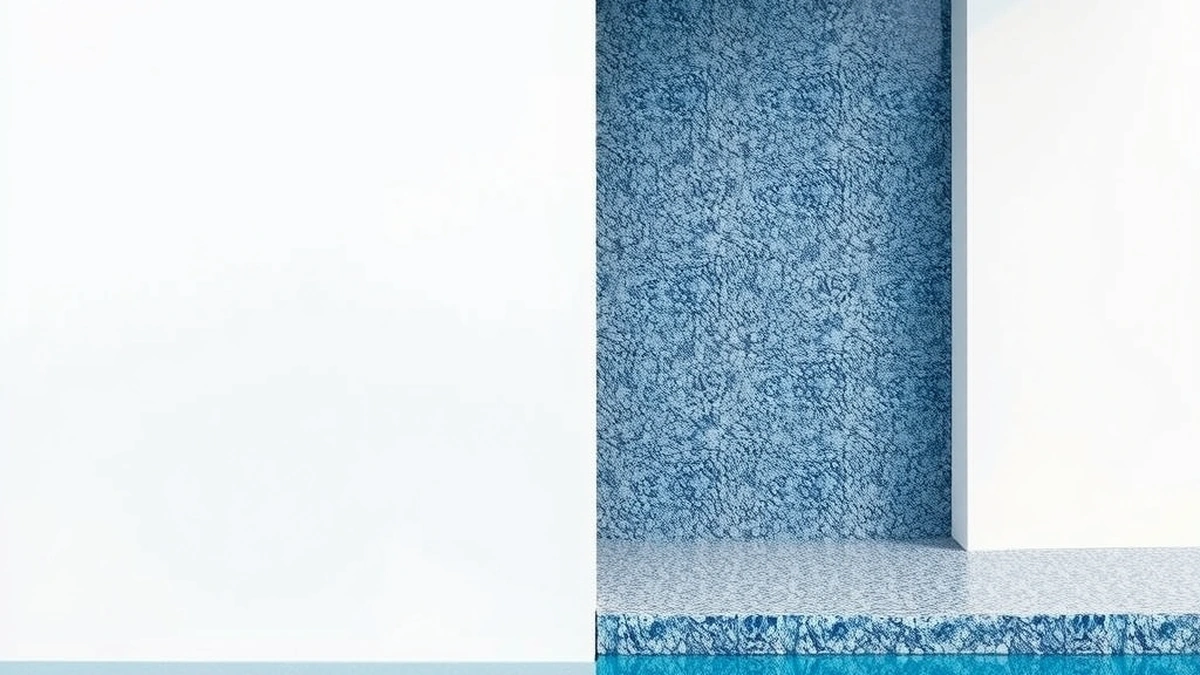
Fibreglass is applied in layers and bonds to the shell. Once cured, it is part of the pool, and it moves with the structure.
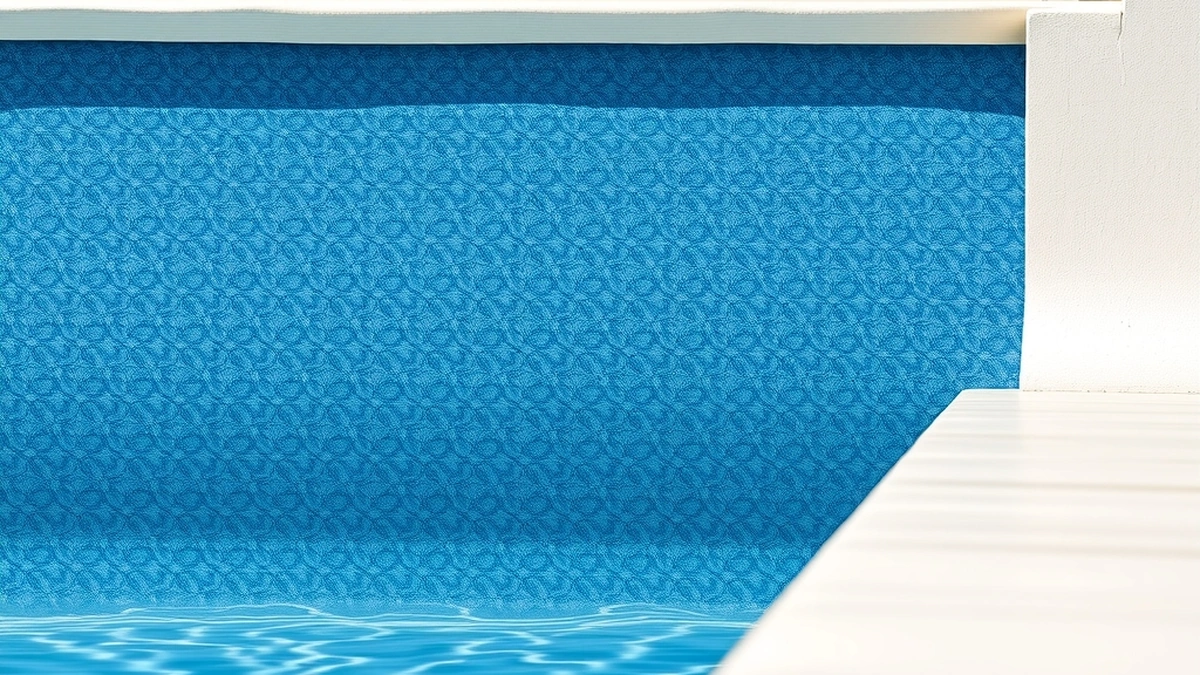
A vinyl liner is a sheet hung inside the pool and held by a bead in a track at the top and by gaskets at the fittings. It is not bonded, and it relies on water pressure to hold it against the wall.
That is why one can be patched invisibly and the other cannot, and why one cares about the water level and the other does not.
Price and life
| Fibreglass | Vinyl liner | |
|---|---|---|
| Installed | $5,000 - $12,000 | $2,500 - $7,500 |
| Per square foot, 855 sq ft | $5.85 - $14.04 | $2.92 - $8.77 |
| Expected life | 10 - 15 years | 8 - 12 years |
| Cost per year | $333 - $1,200 | $208 - $938 |
| Surface | Smooth, hard | Smooth, soft |
| Repair | Resin and gelcoat | Patch kit |
| Water level sensitive | No | Yes |
The per-year figures are division. Fibreglass: $5,000 ÷ 15 = $333, $12,000 ÷ 10 = $1,200. Liner: $2,500 ÷ 12 = $208, $7,500 ÷ 8 = $938.
The liner is cheaper per year at both ends. Fibreglass is bought for the bond and the life, not for the arithmetic.
Feel and appearance
Vinyl is the softer surface. It has a little give underfoot, it is warmer to the touch, and it does not chalk or roughen with age.
Fibreglass is smooth but hard. It feels closer to a bathtub than to a cushioned floor, and it stays that way. It does not have the texture of pebble, and it does not have the give of vinyl.
Appearance is the other difference. A liner carries a printed pattern, and the pattern fades from the top down where the sun hits it. A fibreglass gelcoat is a solid colour that fades more evenly, and it can be recoated.
Water, chemistry, and level
Both want pH 7.2 to 7.8, alkalinity 80 to 120 ppm, and calcium 250 to 400 ppm.
Fibreglass is not calcium-based, so it does not scale in the way plaster does, and it is less affected by high calcium. Low pH still dulls the gelcoat over time.
A liner is also affected by low pH, which attacks the plasticiser, and it is affected by water level in a way fibreglass is not. A liner held by water pressure will relax and wrinkle if the level drops, and float if groundwater rises behind it.
That is the practical difference on a pool that is drained for repairs or managed seasonally.
Repair and replacement
A liner is patched with a kit at $20 to $60, or professionally at $200 to $600. The patch is visible, and on a patterned liner it is obvious.
Fibreglass repair is a resin and gelcoat job at $300 to $800. The patch is structurally sound but rarely matches the colour, and it is usually done by a specialist.
Replacement is a sheet for the liner and a recoat for the fibreglass. A reline at $2,500 to $7,500 is a known cost at a known interval. A fibreglass recoat is less commonly priced, and many owners replace the surface rather than coat it.
Five steps to choose
- Confirm what the shell accepts. A track means a liner; a rigid shell means fibreglass is possible.
- Compare the per-year cost at your ownership horizon.
- Decide how much the softness matters.
- Check the water table and how the pool is drained.
- Ask what the end-of-life job costs for each.
Step five is the one that differs most. A liner has a clear replacement price; a fibreglass recoat is a less standard product, and the quote should be in writing.
A fibreglass job is a construction process. The pool is drained, the surface is prepared and often ground back, the layers are applied, the gelcoat goes on, and the pool is refilled after a cure. It is dusty, it is a fixed sequence, and the pool is out of service for days.
A liner job is faster and cleaner. The old sheet comes out, the walls and floor are checked and smoothed, the new liner is hung and vacuum-set, and the pool is filled. It is a two-to-four-day job with less mess, and the pool is usable as soon as the water is balanced.
That difference is part of what the liner is buying with its shorter life: less disruption per replacement, and a process that a smaller crew can complete.
What installation does, and where each wins
Fibreglass wins on life, on stability, on chemistry tolerance, and on not caring about the water level. It also wins on a pool that is drained regularly, because a liner in that situation is at risk every time.
A liner wins on cost, on softness, on speed of replacement, and on the simplicity of the end-of-life decision. It is the rational buy for a short hold, a rental, or a pool where the budget is the constraint.
The failure to avoid is fitting a liner to a pool with a high water table and no relief valve. That combination floats liners, and a floated liner is a replacement rather than a repair.
The short version
Fibreglass is a bonded coating; a liner is a hung sheet. Per year the liner is cheaper, and fibreglass is bought for life and stability. The shell and the water table decide more than the price. Prices are in fibreglass cost and vinyl liner cost, and the liner risks are in vinyl liner maintenance.
Frequently asked questions
Is fibreglass better than a vinyl liner?
Fibreglass is bonded, lasts longer, and does not depend on water level. A liner is cheaper, softer, and replaced as a complete sheet. The shell decides which is possible.
How much cheaper is a liner?
About $2,500 cheaper at the low end and $4,500 at the high end: $2,500 against $5,000, and $7,500 against $12,000. Per year the gap is $125 to $262 because fibreglass lasts longer.
Can a vinyl liner pool be coated with fibreglass?
Not as a simple resurface. A liner pool has a track and panel walls, and fibreglass needs a prepared, rigid substrate. Converting is a construction project rather than a coating job.
Which lasts longer?
Fibreglass, at 10 to 15 years against 8 to 12 for a liner. Neither is as long as pebble at 15 to 20.
Which is softer underfoot?
Vinyl. It has a little give and feels warmer. Fibreglass is smooth but hard, closer to a bathtub surface than a cushioned floor.
Which is easier to repair?
A liner, for small damage. A patch kit is $20 to $60 and takes minutes. A fibreglass repair is a resin and gelcoat job at $300 to $800, and the colour rarely matches.
Sources
Some links are affiliate links.If you buy through them we may earn a commission at no extra cost to you. We do not accept payment for rankings. Read the full disclosure.