Pool replastering cost
What replastering a pool costs by finish, what a quote should include, and which extras quietly add thousands to the bill.
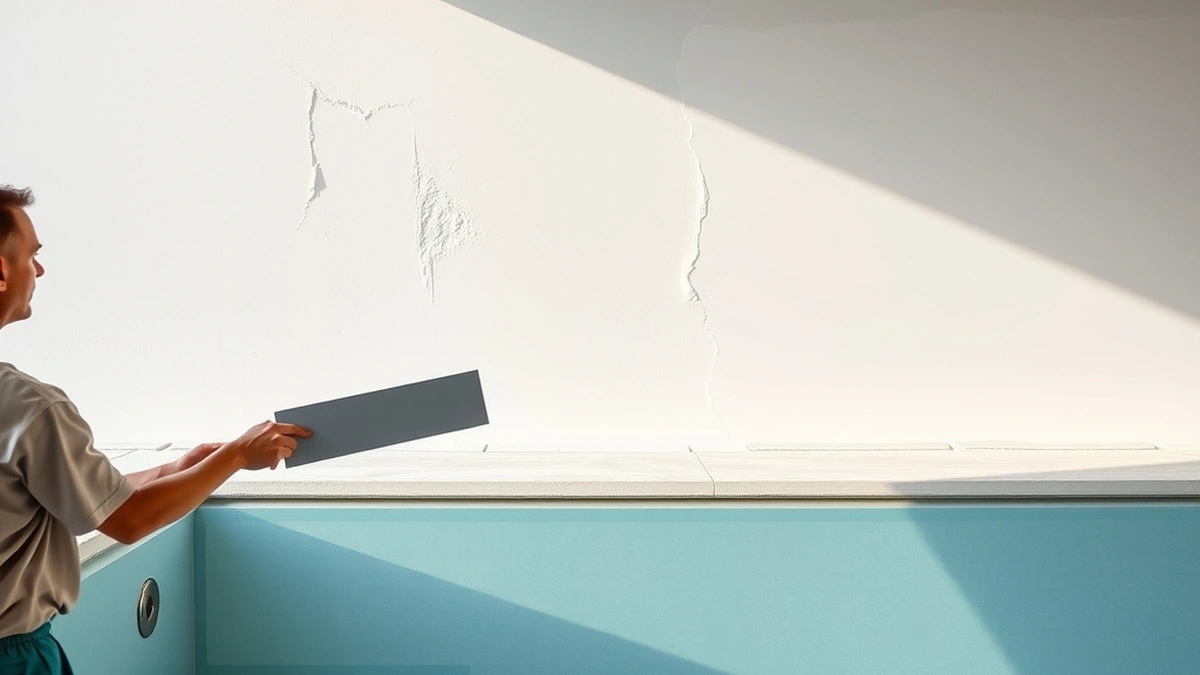
Replastering a pool costs about $4,000 to $10,000 in white plaster, $6,000 to $12,000 in quartz aggregate, and $8,000 to $15,000 in pebble. The finish sets the range; chip-out, crack repair, tile, and coping decide where in it you land.
- White plaster
- $4,000-$10,000
- Quartz aggregate
- $6,000-$12,000
- Pebble finish
- $8,000-$15,000
- Waterline tile add-on
- $1,500-$5,000
Some links on this page are affiliate links.If you buy through them we may earn a commission at no extra cost to you. We do not accept payment for rankings. Read the full disclosure.
Pool replastering costs between $4,000 and $15,000 for a typical residential pool, with white plaster at $4,000 to $10,000, quartz aggregate at $6,000 to $12,000, and pebble at $8,000 to $15,000. Within each range, the price is set by surface area, how the old finish is removed, how much repair the shell needs, and whether tile and coping are included.
What replastering covers
Replastering is the application of a new cementitious finish over a prepared pool shell. It includes draining, removing or preparing the old surface, repairing cracks and hollow areas, applying a bond coat, and troweling on the new plaster. It does not automatically include tile, coping, or decking, and those omissions are where quotes diverge.
The finish is only part of the material cost. Preparation is labour, and labour is the larger share of the bill on most pools.
Price by finish
| Finish | Cost range | Expected life | Notes |
|---|---|---|---|
| White plaster | $4,000-$10,000 | 7-12 years | Cheapest, most chemically fragile |
| Quartz aggregate | $6,000-$12,000 | 10-15 years | Harder surface, hides mottling |
| Pebble finish | $8,000-$15,000 | 15-20 years | Longest life, textured, more brushing |
White plaster remains the default because it is the least expensive way to restore a watertight surface. Quartz and pebble cost more in material and more in labour, since aggregate finishes take longer to apply and, for pebble, require washing at the right moment to expose the stone.
The square-foot arithmetic
Take a 15 by 30 foot pool. Floor area is 450 square feet and the perimeter is 90 feet. At an average depth of 4.5 feet, wall area is 90 × 4.5 = 405 square feet, so the interior surface is roughly 855 square feet.
Division gives the per-foot rate:
- White plaster: $4,000 ÷ 855 = $4.68, and $10,000 ÷ 855 = $11.70 per square foot
- Quartz aggregate: $6,000 ÷ 855 = $7.02, and $12,000 ÷ 855 = $14.04 per square foot
- Pebble: $8,000 ÷ 855 = $9.36, and $15,000 ÷ 855 = $17.54 per square foot
Use those figures to sanity-check a quote. A 1,100 square foot pool quoted at $7,500 for white plaster is $6.82 per square foot, near the bottom of the range, which usually means a bond coat rather than a chip-out. A 700 square foot pool quoted at $9,000 is $12.86 per square foot, which suggests repairs are included. Pool resurfacing cost per square foot covers how depth and shape change the surface area calculation.
What adds cost
Chip-out. Removing the old plaster to bare shell typically adds $1,500 to $4,000 over simply bonding a new coat. It is not optional if the existing finish is hollow or delaminating.
Crack and shell repair. Epoxy injection, staple stitching, and patching run a few hundred dollars for a hairline crack and several thousand for structural work.
Waterline tile. $1,500 to $5,000 for 90 linear feet, depending on tile and whether the old tile has to be chipped off. See pool tile replacement cost.
Coping. Loose or cracked coping is often discovered once the pool is drained. Replacement runs roughly $1,800 to $6,300 for 90 linear feet.
Drain and refill. An 855 square foot pool at 4.5 feet average depth holds about 28,800 gallons (855 × 4.5 × 7.48). Most quotes include the water; confirm it, because municipal water and sewer charges for that volume are not trivial.
Access and disposal. Plaster spoil is heavy. A pool with no vehicle access carries a labour premium, and disposal fees are sometimes billed separately.
Replastering against the alternatives
Replastering sits in the middle of the resurfacing market. Paint is cheaper by an order of magnitude and lasts 3 to 5 years. A vinyl liner at $2,500 to $7,500 costs less than a full replaster but gives a shorter service life. A fiberglass overlay at $5,000 to $12,000 costs about the same as quartz replastering and is the better answer when the shell keeps cracking. Pool resurfacing vs pool replastering sets out the difference in scope, which is what the two words actually describe.
How to read a replastering quote
- Check that the square footage of interior surface is stated. Without it, every other number is unverifiable.
- Confirm the removal method: full chip-out, sandblast, or bond coat over the existing finish.
- Confirm which repairs are included and which are extras, especially crack repair and skimmer or light-niche leaks.
- Confirm whether tile, coping, drain, refill, and disposal are in the price. These are the usual omissions.
- Ask for the startup plan in writing: brushing schedule, chemistry targets, and when the heater can run.
The last item is not administrative. A replaster is a 28-day chemistry project after the crew leaves, and a contractor who cannot describe the startup does not do them. Plaster vs quartz covers the finish decision, and best pool resurfacing covers how to weigh it against the alternatives.
Regional price differences
Plastering is labour, and labour rates vary by region more than material does. Quotes in high-cost metro areas commonly sit 20 to 40 percent above the middle of the national range, while rural areas with few pool crews can run higher on travel and mobilisation instead. Bagged plaster is a small share of the total — roughly a few hundred to a couple of thousand dollars on a standard pool — so a quote far below the range almost always reflects less preparation rather than cheaper material. Treat any estimate, including the ranges here, as a starting point for comparing local quotes rather than as a target to negotiate toward.
The short version
Replastering costs $4,000 to $10,000 in white plaster, $6,000 to $12,000 in quartz, and $8,000 to $15,000 in pebble for a typical pool. Divide by interior square footage to compare quotes honestly, and check that chip-out, repairs, tile, coping, and water are actually included. The finish is roughly half the decision; preparation is the other half.
Frequently asked questions
How much does it cost to replaster a pool?
White plaster runs $4,000 to $10,000 for a typical residential pool. Quartz aggregate costs $6,000 to $12,000 and pebble finishes $8,000 to $15,000.
Is replastering cheaper than resurfacing?
Replastering is a type of resurfacing. It is cheaper than a fiberglass overlay or a pebble finish at the low end, but more expensive than paint or a vinyl liner.
Does the price include draining the pool?
Most quotes include drain and refill, but confirm it. Refilling an 855 square foot pool takes about 28,800 gallons, and water cost varies by municipality.
What does a chip-out add to a replaster?
Full removal of the old finish typically adds $1,500 to $4,000 over a bond coat, depending on surface area and how hard the old plaster is to break up.
How long does replastering take?
Most pools take 5 to 10 working days from drain to refill, then about 28 days of controlled chemistry before the plaster is fully cured.
Are there cheaper alternatives to replastering?
Pool paint at $150 to $300 in materials is cheaper but lasts only 3 to 5 years. A vinyl liner at $2,500 to $7,500 is the other lower-cost route.
Sources
Some links are affiliate links.If you buy through them we may earn a commission at no extra cost to you. We do not accept payment for rankings. Read the full disclosure.