Vinyl liner maintenance: the routine that adds years
Keep a vinyl liner for 8 to 12 years with stable pH, steady water level, gentle brushing, and no summer draining. What each habit prevents and what it costs.
Vinyl liner maintenance is stable chemistry at pH 7.2 to 7.8, a steady water level, weekly brushing with a soft head, and no draining in summer. It costs $40 to $120 a month in chemicals and prevents the failures that end a liner early.
- pH target
- 7.2 - 7.8
- Alkalinity
- 80 - 120 ppm
- Water level
- Mid-skimmer
- Chemical cost
- $40 - $120 per month
Some links on this page are affiliate links.If you buy through them we may earn a commission at no extra cost to you. We do not accept payment for rankings. Read the full disclosure.
A vinyl liner lasts 8 to 12 years when the water is kept stable, the level stays at mid-skimmer, and the surface is brushed with something soft. Maintenance costs $40 to $120 a month in chemicals. The failures that end a liner early, wrinkling, stiffening, fading, and seam separation, are almost all chemistry or water-level problems rather than manufacturing faults.
What the liner needs from you
A liner is a plastic membrane under tension. It is held against the wall by water pressure and kept flexible by the plasticiser in the vinyl. Maintenance is about protecting both: keeping the water where it belongs, and keeping the chemistry from attacking the plastic.
That is a shorter list than most pool owners expect. It is also a list that is easy to skip for a month, which is when the damage happens.
The targets
| Parameter | Target | Why it matters to vinyl |
|---|---|---|
| pH | 7.2 - 7.8 | Low pH attacks plasticiser |
| Total alkalinity | 80 - 120 ppm | Buffers pH swings |
| Calcium hardness | 250 - 400 ppm | Scale at the waterline |
| Free chlorine | 1 - 3 ppm | High doses bleach pattern |
| Cyanuric acid | 30 - 50 ppm | Protects chlorine from sun |
| Water level | Mid-skimmer | Prevents bead strain |
Vinyl is less sensitive to calcium than plaster is, because the surface is not calcium-based. It is more sensitive to pH extremes, because the plasticiser that keeps the sheet flexible is what low pH destroys.
Chemistry that does not damage the sheet
The two failures to avoid are a pH below 7.0 and repeated heavy shocking.
Low pH makes the water aggressive. On plaster that shows as etching; on vinyl it shows as a surface that goes dull, then chalky, then stiff. A liner that has lost its plasticiser does not stretch, and a liner that does not stretch cracks at the fittings.
Repeated heavy shocking bleaches the pattern and accelerates fading. Normal chlorination at 1 to 3 ppm is fine. A single shock after heavy use or a storm is fine. A weekly double dose is not.
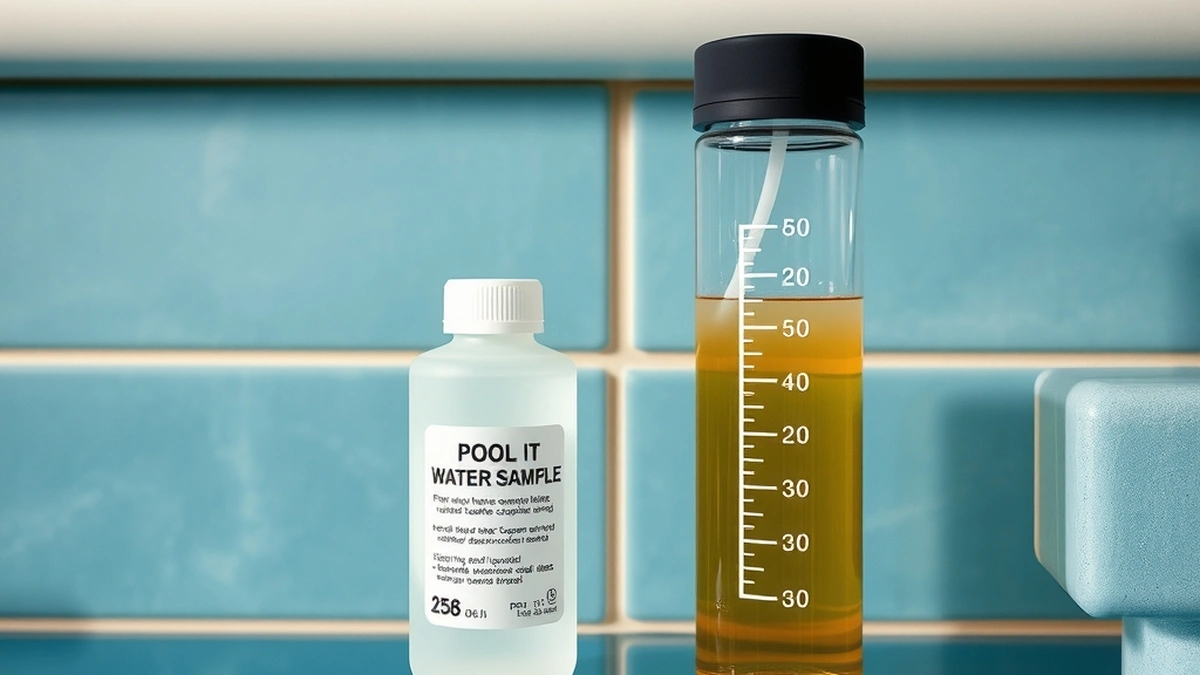
Test twice a week in season and adjust in small steps. Large corrections swing the chemistry in the other direction, and the swing does more damage than the original reading.
The water level should sit at mid-skimmer. Too low and the liner relaxes away from the wall at the top, which strains the bead and starts a wrinkle at the wall base. Too high and the skimmer does not skim.
In summer, top up after heavy use rather than waiting for the level to drop a hand’s width. A liner that has been allowed to relax and then refilled does not return to its original fit.
Water level, bead, and brushing
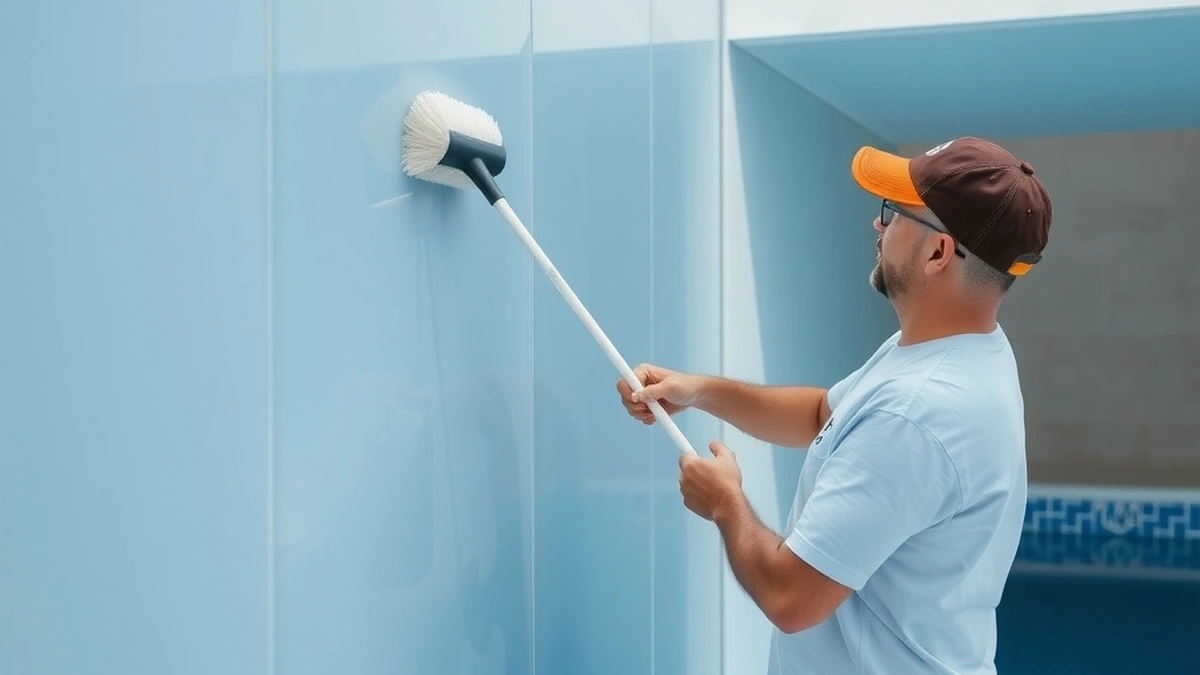
Brush weekly with a soft brush on a plastic head. Work the walls and the floor, and pay attention to the waterline, where oils and sunscreen collect.
Never use a stiff brush, a metal scraper, or an abrasive pad. Vinyl is soft, and a pinhole from a brush bristle or a tool corner becomes a tear once the water pressure works on it. Check the brush head before each use for a protruding clip or a worn edge, because that is how most pinholes start.
Sand and grit on the floor act like sandpaper underfoot and under the brush. Vacuum rather than sweep when the pool is open, and rinse the brush before moving from the floor to the walls.
For the waterline, a sponge or a dedicated liner cleaner is enough. Avoid solvent-based cleaners, which soften the vinyl and leave a dull patch.
Winter and the draining rule
Never drain a vinyl pool fully in summer, and do not leave it empty over winter in wet ground. The liner is held in place by water; without it, the sheet shrinks and wrinkles, and groundwater can float it.
If the pool has to be drained for a repair, do it quickly, check the groundwater level first, and refill as soon as the work allows. A liner that has been empty for a week in hot weather may not go back.
Winterising means lowering the water below the skimmer, blowing the lines, and covering the pool. It does not mean emptying it.
Five habits that add years
- Test pH and chlorine twice a week in season.
- Hold the water at mid-skimmer and top up in small amounts.
- Brush weekly with a soft head.
- Shock only after heavy use, not on a schedule.
- Keep the pool covered when it is not in use.
Step five is the one that pays for itself twice. A cover reduces UV fading and cuts the chemical demand, and both extend the liner’s life.
What maintenance costs against replacement
Chemicals at $40 to $120 a month is $480 to $1,440 a year. A replacement liner is $2,500 to $7,500. Over ten years, the maintenance spend is $4,800 to $14,400, which is more than the liner, and it is also what keeps the liner from being replaced at year six.
That is the honest framing. Maintenance is not cheap; it is cheaper than the alternative, and it protects a surface that cannot be patched back to new.
The short version
Stable pH, steady water level, soft brushing, and no summer draining. Those four habits take a liner to the top of its 8-to-12-year range. The failure modes they prevent are in vinyl liner problems, the replacement cost is in vinyl liner cost, and the installation detail is in vinyl liner installation.
Frequently asked questions
How do I maintain a vinyl liner pool?
Keep pH at 7.2 to 7.8, alkalinity at 80 to 120 ppm, and calcium hardness at 250 to 400 ppm. Hold the water at mid-skimmer, brush weekly with a soft head, and never drain the pool in summer.
What water chemistry damages a vinyl liner?
Low pH and high chlorine are the two that attack the plasticiser and make the vinyl stiff and chalky. High calcium is less of an issue than it is for plaster, but scale still forms at the waterline.
Can I drain a vinyl liner pool?
Not fully, and not in summer. A liner is held against the walls by water pressure, so an empty pool lets it shrink and wrinkle. Drain only for a repair, and only after checking the groundwater level.
How often should the liner be brushed?
Weekly, with a soft brush and a plastic head. Stiff brushes and metal tools abrade the surface and open pinholes. Brushing also disturbs the film where algae starts.
Do I need to shock a vinyl pool?
Occasionally, but not routinely at high doses. Vinyl tolerates normal chlorination, and repeated heavy shocking bleaches the pattern and speeds up fading.
How much does maintenance cost?
Chemicals run $40 to $120 a month for a typical pool, plus test strips and the occasional patch kit at $20 to $60. A professional service is $100 to $250 a month in most markets.
Sources
Some links are affiliate links.If you buy through them we may earn a commission at no extra cost to you. We do not accept payment for rankings. Read the full disclosure.