Pebble reviews: owner verdicts after ten years
What long-term pebble pool finish reviews agree on: durability, feel, color change, and whether the $8,000 to $15,000 premium over plaster holds up.
Long-term pebble reviews converge on durability: owners report 15 to 20 years of service at $8,000 to $15,000, with complaints about roughness, faded color, and the cost of the initial job rather than surface failure.
- Installed cost
- $8,000-$15,000
- Reported life
- 15-20 years
- Cost per year
- $400-$1,000
- Main complaint
- Rough texture
Some links on this page are affiliate links.If you buy through them we may earn a commission at no extra cost to you. We do not accept payment for rankings. Read the full disclosure.
Pebble reviews read differently from plaster reviews, because the two finishes fail for different reasons. Owners of pebble pools rarely complain that the surface wore out; they complain about texture, about color that lightened, and about the price of the job in the first place. On the central question — does it last — the long-term accounts are consistently positive.
What owners are reviewing
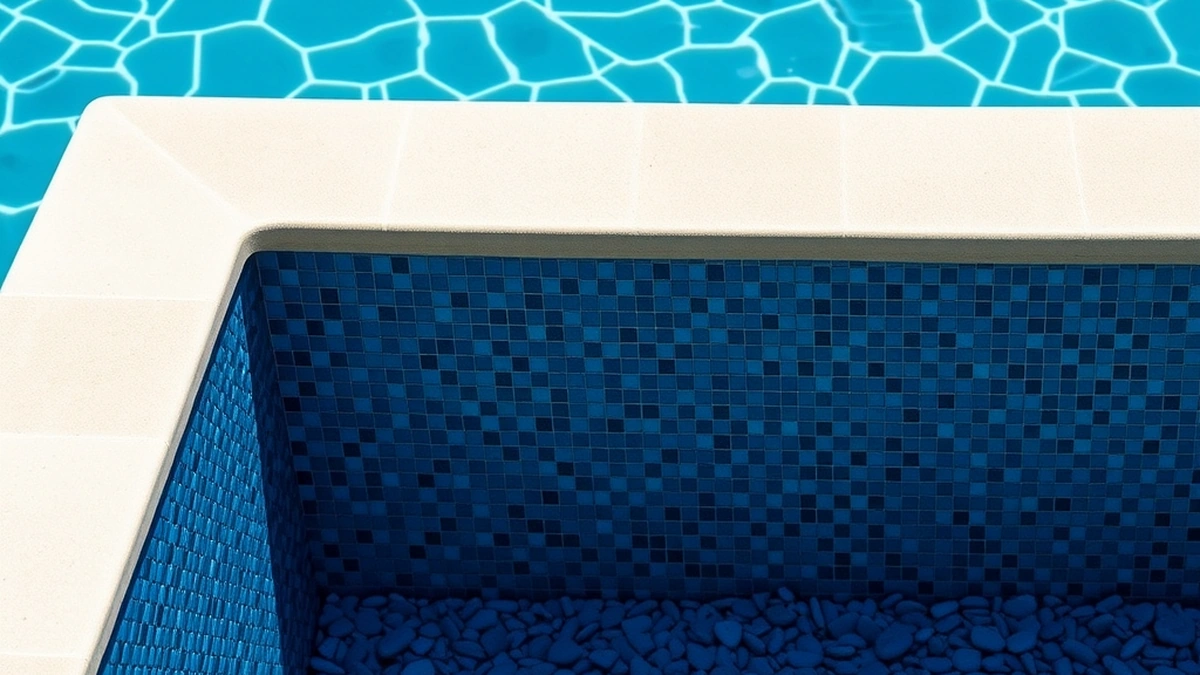
A pebble finish is an exposed aggregate surface: small stones set in cement, washed back so the stone sits proud. It is the most durable of the common cementitious finishes, with an expected life of 15 to 20 years and an installed cost of $8,000 to $15,000.
That price is the context for every review. An owner who paid $13,000 is measuring the surface against a very different expectation than one who paid $4,500 for plaster, and the complaints reflect it.
What the positive reviews describe
Four themes repeat in accounts written after five or more years of ownership:
- The surface is still there. No peeling, no delamination, no patches of bare shell. For owners who had watched a plaster pool fail in year eight, this is the whole point.
- Scale brushes off. A pebble wall that is brushed weekly sheds light scale that would have bonded to plaster.
- It hides wear. The speckled surface does not show the chalky patches, footprints, and light stains that make a white pool look old.
- It grips. Slip resistance on steps and the slope into the deep end is the safety argument owners mention most, usually in the context of children or older relatives.
The price per year is what makes these reviews persuasive: $8,000 ÷ 20 = $400, and $15,000 ÷ 15 = $1,000. A plaster pool at $10,000 over 7 years is $1,429 per year. On that arithmetic, pebble is the cheaper finish to own even though it is the more expensive one to buy.
What the critical reviews describe
The negatives cluster just as tightly, and they are worth taking seriously:
- Texture. Pebble is rough. On the feet it reads as grip; on a sun shelf, the top step, or a shallow lounge area it reads as uncomfortable. Owners who entertain on the steps notice it most.
- Color drift. Blue and gray mixes lighten over a decade. Dark finishes show it first, and no amount of balancing brings the original tone back.
- Scale that set in early. When pH was allowed to run high through the first summer, the aggregate held deposits the owner could not brush away.
- Cost. The premium over plaster is real, and owners who sold the house within five years often say they would not spend it again.
- Repair visibility. A patched area shows as a smooth island in a textured field. On plaster the patch disappears; on pebble it does not.
Notice that “it fell apart” is not on that list. When reviews do report failure, the detail is almost always a bond coat applied over a surface that was already delaminating, or a pool run at low pH for years. Those are preparation and chemistry stories, not material stories. Pebble problems covers how to tell which failure you are looking at.
Pebble against the alternatives, in review terms
| Finish | What reviewers praise | What reviewers criticize | Installed cost |
|---|---|---|---|
| Pebble | Life, grip, hides wear | Roughness, color drift | $8,000-$15,000 |
| Quartz | Balance of price and life | Mottling, fine grit | $6,000-$12,000 |
| White plaster | Low price, smooth feel | Short life, shows stains | $4,000-$10,000 |
| Fibreglass overlay | Smooth, non-porous | Limited colors, shell must be sound | $5,000-$12,000 |
The pattern is that every finish is praised for what it optimizes and criticized for what it trades away. Pebble trades comfort for durability. Quartz trades a little durability for price and a smoother surface. Plaster trades life for the lowest entry cost. None of these is a defect; they are the terms of the deal.
How to read a pebble review
Most reviews are written at the two least informative moments: the week after installation and the week something breaks. A review worth weighting has four details:
- The interior square footage of the pool.
- The removal method used — full chip-out or bond coat over the old surface.
- The water chemistry the owner actually maintained, at least in general terms.
- The age of the finish at the time of writing.
A review without those is a review of the contractor’s customer service, which is useful but not what you are trying to learn. The same discipline applies when you compare quartz reviews or any other finish.
Five questions the reviews cannot answer
- What will removal cost on your specific shell?
- Does your fill water run hard enough to scale a new surface?
- Is your pool shaded, or in full sun all day?
- How many people use the pool, and how many are children?
- How long do you intend to own the house?
Those five decide whether pebble is right for you far more than any star rating. If the pool is a long hold, in full sun, used hard, and your water is manageable, the reviews line up with your situation. If it is a short hold with a shallow sun shelf and barefoot guests, they do not.
The short version
Pebble reviews are positive where it counts and honest where it hurts: the finish lasts, the surface grips, the color lightens, and the texture is not for everyone. The premium over plaster is repaid over a full service life and not before. Buy it for the fifteen years, not the first summer — and read pebble cost before you fall in love with a color sample.
Frequently asked questions
Do pebble pool finishes live up to the reviews?
On durability, mostly yes. Owners who kept up water balance report 15 to 20 years of service. The failures in reviews usually trace to a bond coat over a failing surface or years of uncontrolled pH.
Is pebble too rough for kids and bare feet?
It is textured, not sharp. Most owners stop noticing, but it is noticeable on steps and sun shelves. If barefoot comfort is the priority, quartz or fibreglass is smoother.
Does pebble color fade over time?
It lightens. Blue and gray mixes drift toward a lighter tone over a decade, and dark mixes show it most. Color is not fully UV stable in any cementitious finish.
Are pebble reviews worth trusting?
The useful ones name the pool size, the removal method, and the water chemistry they run. Reviews written a month after installation describe the contractor, not the material.
Is pebble worth the price over quartz?
Over a long hold, yes. Pebble costs $2,000 to $3,000 more but adds roughly five years of life, which brings the cost per year to about the same figure with a harder surface.
What do owners dislike most about pebble?
The texture underfoot and the price of the initial job. Surface failures are much less common in reviews than complaints about feel and about scale that formed because pH was not controlled.
Sources
Some links are affiliate links.If you buy through them we may earn a commission at no extra cost to you. We do not accept payment for rankings. Read the full disclosure.