Pebble problems: what actually fails and why
Rough patches, calcium nodules, mottling, stone loss, and algae in the aggregate: the real pebble pool problems, their causes, and what fixes each.
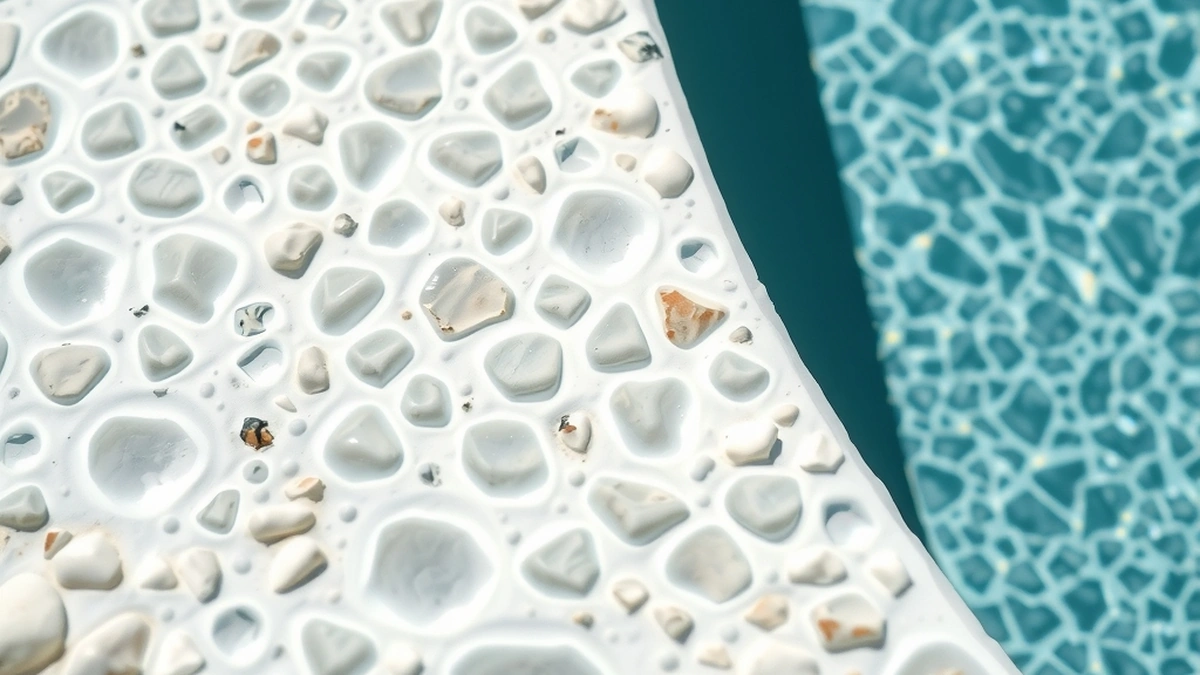
Most pebble problems are surface chemistry, not the stone: scale and calcium nodules from high pH, roughness from exposed cement, mottling from troweling, and stone loss from a failed bond coat. Diagnosis comes before any repair.
- Surface life
- 15-20 years
- Replacement cost
- $8,000-$15,000
- Acid wash
- $400-$800
- Most common fault
- Calcium scale
Some links on this page are affiliate links.If you buy through them we may earn a commission at no extra cost to you. We do not accept payment for rankings. Read the full disclosure.
Most pebble problems are water chemistry problems wearing a surface costume. Scale, calcium nodules, and roughness appear on the stone but originate in the water; mottling and stone loss are installation defects that show up later. Telling the two apart decides whether you spend $400 on a wash or $12,000 on a resurface.
What a pebble finish is up against
A pebble surface is small stones held in a cement matrix, with the stones exposed at the top. That structure creates two vulnerabilities plaster does not have: hundreds of tiny crevices where scale can start, and a cement phase between the stones that dissolves faster than the aggregate when water turns aggressive.
Expected life is 15 to 20 years, and most finishes that fail early fail in one of two directions — the water was allowed to scale, or the bond coat was never sound. The finish itself is rarely the weak link.
Calcium scale and nodules
Scale is the most common complaint and the easiest to explain. When pH sits above 7.8 and calcium hardness runs high, calcium carbonate comes out of solution and deposits on the warmest, roughest surface available — which is the textured pool wall.
It shows as a white haze at the waterline, a rough band on the floor, or hard bumps on the steps. Left alone it thickens, and thick scale traps dirt, which is why a scaled pool looks dirty no matter how much you brush.
Nodules are different. They are hard white bumps that appear where water is pushing through a pinhole in the finish, depositing calcium as it exits. Grinding the bump off fixes nothing; the water finds the hole again. The real repair is at the breach.
Roughness and exposed cement
A pebble surface should feel like coarse sandpaper, not like concrete. When it feels sharp or scratchy, the cement around the stones has worn or was washed too deep at installation.
Two causes dominate:
- Aggressive water. Low pH or low calcium hardness pulls cement out of the matrix, leaving stones standing proud with nothing between them. Usually paired with etching on the steps and a chalky residue when you brush.
- Over-washing at installation. A crew that leaves the acid on too long exposes more stone than intended. The surface feels rough from day one and never improves.
This is the pebble-specific version of a problem plaster owners know well; delamination signs covers the structural variants.
Mottling and color variation
Blotchy color is the most common aesthetic complaint and the least fixable. Cementitious finishes mottle because water pools on the surface while it cures, because the mix varies between batches, and because troweling pressure differs across a wall.
Some mottling is normal and should be disclosed before the job. Severe mottling, where the pool looks tie-dyed, is an application failure. There is no coating that corrects it — a color-correcting stain can even it out temporarily, but the honest fix is replacement, and that argument belongs before payment rather than after.
Algae in the aggregate
The texture that makes pebble slip-resistant also gives algae somewhere to live. Green or black growth collects in the grain and along the waterline, and brushing clears the green but not always the black.
Black algae roots into the cement between stones. It needs a targeted treatment — a trichlor tablet held against the spot, plus brushing with a stainless brush — and it comes back if circulation is poor in that corner. Persistent black spots in the same place usually mean a dead spot in the flow, not a chemistry failure.
Stone loss, and repair or replace
When stones come away in patches, or the surface sounds hollow under a tap, the bond coat is the suspect. This is an installation defect and it does not heal.
| Problem | What you see | Likely cause | Realistic fix |
|---|---|---|---|
| Scale | White haze, rough band | High pH, high hardness | Acid wash, $400-$800 |
| Nodules | Hard white bumps | Water through a pinhole | Repair the breach |
| Roughness | Sharp, scratchy feel | Aggressive water or over-wash | Refinish if widespread |
| Mottling | Blotchy color | Troweling and curing | Replacement only |
| Stone loss | Patches of bare shell | Failed bond coat | Local removal and redo |
| Algae | Green or black in grain | Poor circulation, low chlorine | Brush, treat, fix flow |
When repair is on the table rather than replacement, work through this order:
- Test the water and record pH, alkalinity, calcium hardness, and stabilizer before deciding anything.
- Tap the surface with a plastic handle and listen for hollow patches.
- Photograph the worst areas with something for scale, and date the photos.
- Get one quote for local repair and one for a full resurface, both with square footage stated.
- Compare the repair cost against the remaining life. A $2,500 repair on a twelve-year-old finish buys a few years; $8,000 to $15,000 buys fifteen to twenty.
That last comparison is the whole decision. Pebble replacement at $8,000 ÷ 20 years is $400 per year, which is often less than a sequence of patches on a finish that is already past its midpoint. Pebble cost breaks the replacement number down line by line.
Preventing the repeat
Almost every problem above is prevented by the same routine: pH 7.2 to 7.8, alkalinity 80 to 120 ppm, calcium hardness in the 250 to 400 ppm range, and brushing the walls weekly whether or not the pool looks clean. Add a scale inhibitor only if your fill water is hard, and test the fill water before you assume it is not.
The full schedule is in pebble maintenance, and the installation choices that prevent the structural faults are in pebble installation. For repair pricing on the non-surface items that often get blamed on the finish, pool resurfacing repair covers fittings, cracks, and skimmer leaks.
The short version
Pebble problems split cleanly. Chemistry problems — scale, nodules, roughness — are manageable and often reversible. Installation problems — mottling, stone loss, hollow patches — are not, and no maintenance routine fixes them. Diagnose which one you have before spending anything, because the two paths lead to very different invoices.
Frequently asked questions
Why is my pebble finish rough and scratchy?
Usually exposed cement between stones and calcium scale on the surface. Scale forms when pH and calcium hardness run high, and it feels like sandpaper. A light acid wash removes scale; worn cement needs refinishing.
What are the white bumps on my pebble pool?
Calcium nodules. They form where water pushes through a pinhole in the finish and deposits calcium at the surface. They are a symptom of a breach, so the fix is to treat the cause, not grind the bump.
Does pebble finish turn green with algae?
The surface does not turn green, but algae colonizes the textured grain and the grout lines between stones. Brushing with a proper brush and holding free chlorine in range clears it, and it recurs if circulation is poor.
Can pebble finish delaminate?
Yes, if the bond coat was inadequate or the shell was not properly prepared. Stone loss in sheets or hollow-sounding areas point to a bond failure, which needs local removal and reapplication, not a patch on top.
Is a pebble finish worth repairing or replacing?
Repair local defects and keep the finish if it is under ten years old and sound elsewhere. If stone loss or roughness covers large areas, replacement at $8,000 to $15,000 is usually cheaper than repeated repairs.
Does acid washing damage pebble?
It can. Acid dissolves the cement holding the stones, so each wash leaves the aggregate more exposed and rougher. On pebble, acid washing is a repair tool rather than routine maintenance.
Sources
Some links are affiliate links.If you buy through them we may earn a commission at no extra cost to you. We do not accept payment for rankings. Read the full disclosure.