Plaster vs fibreglass: which finish survives the shell
Plaster is $4,000 to $10,000 for 7 to 12 years; fibreglass is $5,000 to $12,000 for 10 to 15. Why the shell decides which one is safe to install.
Plaster costs $4,000 to $10,000 and lasts 7 to 12 years; fibreglass costs $5,000 to $12,000 and lasts 10 to 15. Fibreglass is smoother and non-porous, plaster patches invisibly, and both fail over a delaminating shell.
- Plaster installed
- $4,000 - $10,000
- Fibreglass installed
- $5,000 - $12,000
- Life
- 7 - 12 years vs 10 - 15
- Patching
- Blends vs visible
Some links on this page are affiliate links.If you buy through them we may earn a commission at no extra cost to you. We do not accept payment for rankings. Read the full disclosure.
Plaster and fibreglass are separated by about $1,000 to $2,000 at each end of the price range: $4,000 to $10,000 against $5,000 to $12,000. One is a troweled cement surface, the other a bonded plastic membrane, and the difference shows in the feel, the repair options, and how each behaves on a shell that is already moving.
Two materials, two failure modes
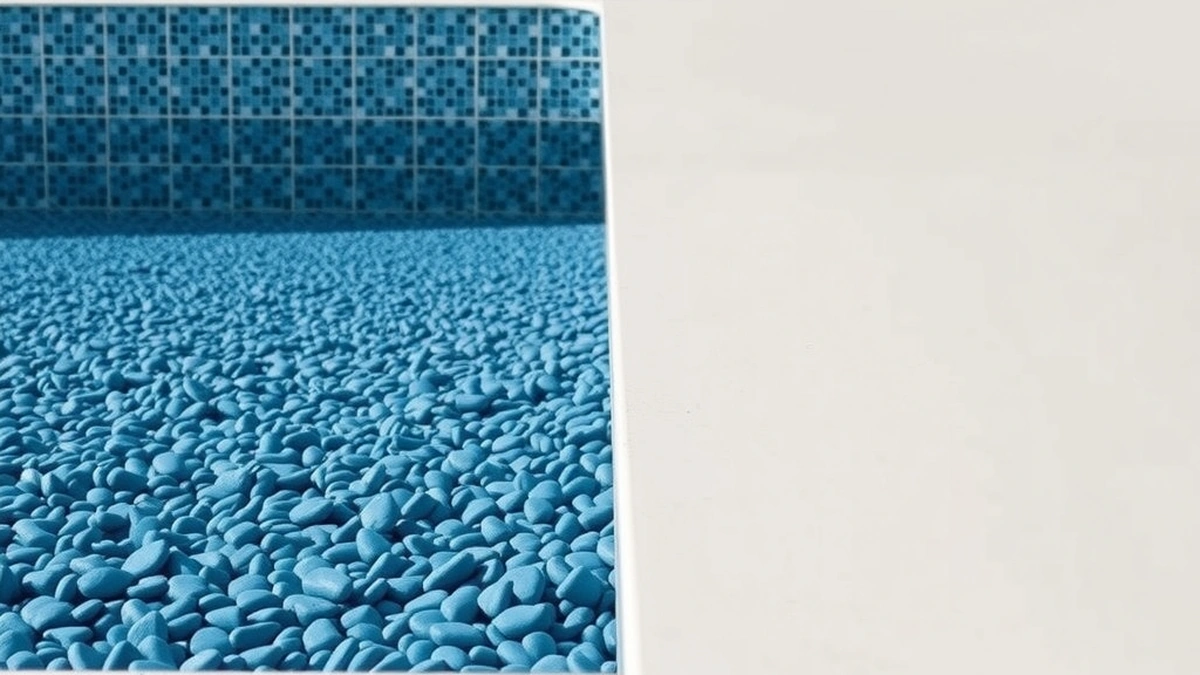
Plaster is cement and marble dust, troweled wet onto the shell. It bonds mechanically, cures hard, and wears by dissolving into the water.
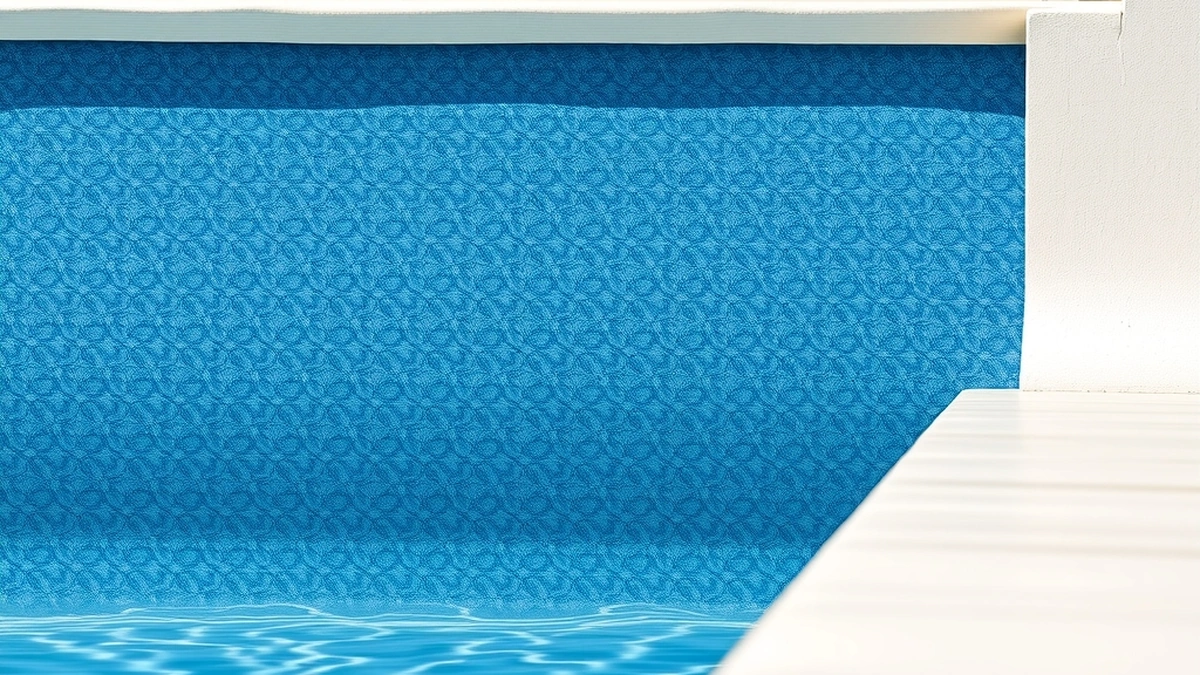
Fibreglass is a glass-reinforced plastic coating applied in layers with a gelcoat on top. It bonds as a membrane, cures flexible, and wears by dulling, blistering, or peeling at an edge.
Plaster fails by eroding. Fibreglass fails by lifting. That is the sentence to keep in mind when comparing the two on an older pool.
Cost, life, and per-year arithmetic
| Plaster | Fibreglass | |
|---|---|---|
| Installed | $4,000 - $10,000 | $5,000 - $12,000 |
| Per square foot, 855 sq ft | $4.68 - $11.70 | $5.85 - $14.04 |
| Expected life | 7 - 12 years | 10 - 15 years |
| Cost per year | $333 - $1,429 | $333 - $1,200 |
| Surface | Smooth, porous | Smooth, non-porous |
| Repair | Patch and blend | Specialist resin |
| What fails first | Surface erosion | Edge lift or blister |
The per-year figures are division. Plaster: $4,000 ÷ 12 = $333 and $10,000 ÷ 7 = $1,429. Fibreglass: $5,000 ÷ 15 = $333 and $12,000 ÷ 10 = $1,200.
The low ends are identical. The high ends favour fibreglass by $229 per year, which is not a reason on its own to spend $2,000 more.
Feel, and what owners notice
Fibreglass is the smoother surface and it stays that way. It does not chalk, and the surface does not roughen as it ages, so the pool feels the same in year eight as in year one.
Plaster is smooth when new and becomes chalky as it wears. That is not a defect; it is the finish giving up material, and it is the reason an older plaster pool feels rougher at the steps.
Underfoot, fibreglass is slick unless a texture has been added. On steps and in the shallow end, that is the one place where plaster’s slight chalkiness is an advantage.
The shell decides
This is the part that matters more than the price. A fibreglass overlay bonds to whatever is underneath it, so a delaminating plaster surface takes the overlay with it.
A plaster finish has the same constraint, but it is troweled on and can be applied over a prepared, sound substrate with a bond coat. It is more forgiving of a shell that has been patched.
If the shell has hollow areas, the answer for both is a chip-out first. A contractor who quotes an overlay without tapping the surface is quoting a finish, not an assessment.
Repair, patching, and colour
Plaster wins on repair. A chip, a crack, or a worn patch can be filled with a matching mix and blended, and the repair is often invisible from the deck.
Fibreglass repair is a resin and gelcoat job. The patch is structurally sound but rarely matches the surrounding colour, and on a light finish the difference is visible for the life of the surface.
That matters on a pool with children, dogs, or a history of dropped equipment. Chips happen, and the ease of repair is a real ownership cost.
What each does to the water
The chemistry targets are the same: pH 7.2 to 7.8, alkalinity 80 to 120 ppm, calcium 250 to 400 ppm. The difference is the consequence of drift.
Plaster reacts quickly. Low pH etches it, high pH scales it, and both show on a white surface within a season. Fibreglass reacts slowly, because the gelcoat is not calcium-based, but low pH still dulls and eventually breaks it down.
A pool that is tested twice a year rather than twice a week is a pool where the fibreglass advantage is real.
A buyer looking at a pool sees the water, not the finish specification. Both surfaces photograph as a blue pool, and neither is a defect when it is sound.
What differs is the story attached. A five-year-old fibreglass finish reads as a recent upgrade, and an owner can say the surface is non-porous and does not need acid washing. A five-year-old plaster finish reads as a pool that is halfway through its cycle, and an inspector may note the chalkiness as a maintenance item.
Neither usually changes the sale price by the cost of the finish. The difference is in how much explaining the pool needs, which is worth something at a negotiation but not $6,000.
Resale, and five steps to choose
- Have the shell tapped for hollow areas before either finish is quoted.
- Ask what preparation each includes: chip-out, bond coat, crack repair.
- Divide each price by its expected life.
- Decide whether invisible patching matters to you.
- Look at a five-year-old example of each, not a new one.
Step five is the one that settles the feel question. A new fibreglass pool and a new plaster pool look similar; five years later they do not.
The short version
Fibreglass is smoother, non-porous, and lasts longer for $1,000 to $2,000 more. Plaster is cheaper, patches invisibly, and wears visibly. Both require a sound shell, and the shell assessment is the decision that matters. Prices are in plaster cost and fibreglass cost, and the failure to avoid is in delamination signs.
Frequently asked questions
Which is better, plaster or fibreglass?
Fibreglass is smoother, non-porous, and lasts three to eight years longer. Plaster is $1,000 to $2,000 cheaper at the low end and can be patched invisibly. The shell condition decides which is appropriate.
How much more does fibreglass cost?
About $1,000 more at the low end and $2,000 more at the high end: $5,000 against $4,000, and $12,000 against $10,000. Divided by life, the two are close to level per year.
Can fibreglass be applied over plaster?
Yes, if the plaster is sound and bonded. Over delaminating plaster the overlay fails with the substrate, usually within one to three years, which is the most common cause of a bad overlay.
Which finish is easier to repair?
Plaster. A chip can be filled and blended into the surrounding surface. A fibreglass repair is a resin and gelcoat job that rarely matches, and it is usually done by a specialist.
Does fibreglass need less maintenance?
It needs less acid washing, because it does not chalk or hold scale the way plaster does. The chemistry targets are the same, and low pH still damages the gelcoat over time.
Which lasts longer in a rental pool?
Fibreglass, generally, because it tolerates chemistry drift for longer. A rental with inconsistent testing is the case where the extra life pays for the extra cost.
Sources
Some links are affiliate links.If you buy through them we may earn a commission at no extra cost to you. We do not accept payment for rankings. Read the full disclosure.