Plaster vs vinyl liner: cement surface or membrane
Plaster costs $4,000 to $10,000 for 7 to 12 years; a vinyl liner costs $2,500 to $7,500 for 8 to 12. Compare replacement cycles, feel, and what suits the shell.
Plaster costs $4,000 to $10,000 and lasts 7 to 12 years, or $333 to $1,429 per year. A vinyl liner costs $2,500 to $7,500 and lasts 8 to 12 years, or $208 to $938 per year. A liner is a membrane; plaster is a cement finish.
- Plaster installed
- $4,000 - $10,000
- Vinyl liner installed
- $2,500 - $7,500
- Cost per year
- $333 - $1,429 vs $208 - $938
- Life
- 7 - 12 years vs 8 - 12
Some links on this page are affiliate links.If you buy through them we may earn a commission at no extra cost to you. We do not accept payment for rankings. Read the full disclosure.
A vinyl liner costs $2,500 to $7,500 installed and a plaster finish $4,000 to $10,000, and they last about the same time: 8 to 12 years against 7 to 12. Per year that is $208 to $938 for the liner and $333 to $1,429 for plaster. The liner is the cheaper surface and the one with the shorter repair list; plaster is the one that feels like a pool.
Membrane versus cement
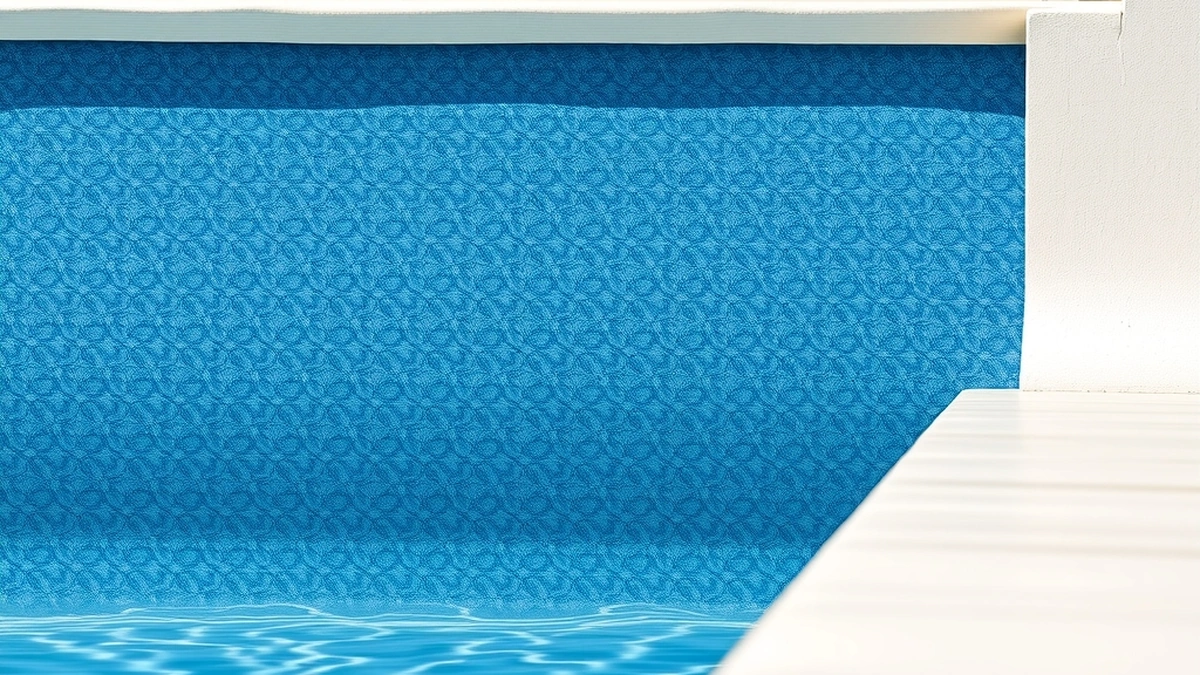
A vinyl liner is a thick PVC sheet that sits inside the shell and holds the water. It is a membrane, and the shell behind it stays dry. It is held by a bead in a track at the top and by gaskets at the fittings.
Plaster is a cement and marble-dust finish troweled directly onto the shell. It is bonded, not hung, and the water touches the finish rather than a sheet.
That is the whole structural difference. Everything else, the cost, the feel, the repair, the chemistry, follows from it.
Cost and life, with arithmetic
| Plaster | Vinyl liner | |
|---|---|---|
| Installed | $4,000 - $10,000 | $2,500 - $7,500 |
| Per square foot, 855 sq ft | $4.68 - $11.70 | $2.92 - $8.77 |
| Expected life | 7 - 12 years | 8 - 12 years |
| Cost per year | $333 - $1,429 | $208 - $938 |
| Repair | Patch and blend | Patch kit |
| Surface | Hard, chalky with age | Soft, smooth |
| Water level sensitivity | Low | High |
The per-year figures are division. Plaster: $4,000 ÷ 12 = $333, $10,000 ÷ 7 = $1,429. Liner: $2,500 ÷ 12 = $208, $7,500 ÷ 8 = $938.
The liner wins on cost at both ends. The plaster wins on nothing in that table except hardness, which is a preference rather than a benefit.
Why the liner is cheaper
Three reasons. The material is a sheet rather than a troweled finish, the installation is faster, and the shell does not have to be prepared to the same standard because the liner is not bonded to it.
That third point is also the liner’s weakness. Because it is not bonded, it depends on water pressure to hold it against the wall, and on the track and gaskets to keep it in place. A liner that loses water, or gains groundwater behind it, moves.
Feel and appearance
Vinyl is softer and slightly warmer underfoot than plaster. It has a consistent texture and it does not chalk, so a ten-year-old liner feels much like a new one, provided it has not stiffened.
Plaster is harder and becomes chalky as it wears. The surface changes over its life in a way vinyl does not, and that change is visible as a duller, rougher finish in the shallow end.
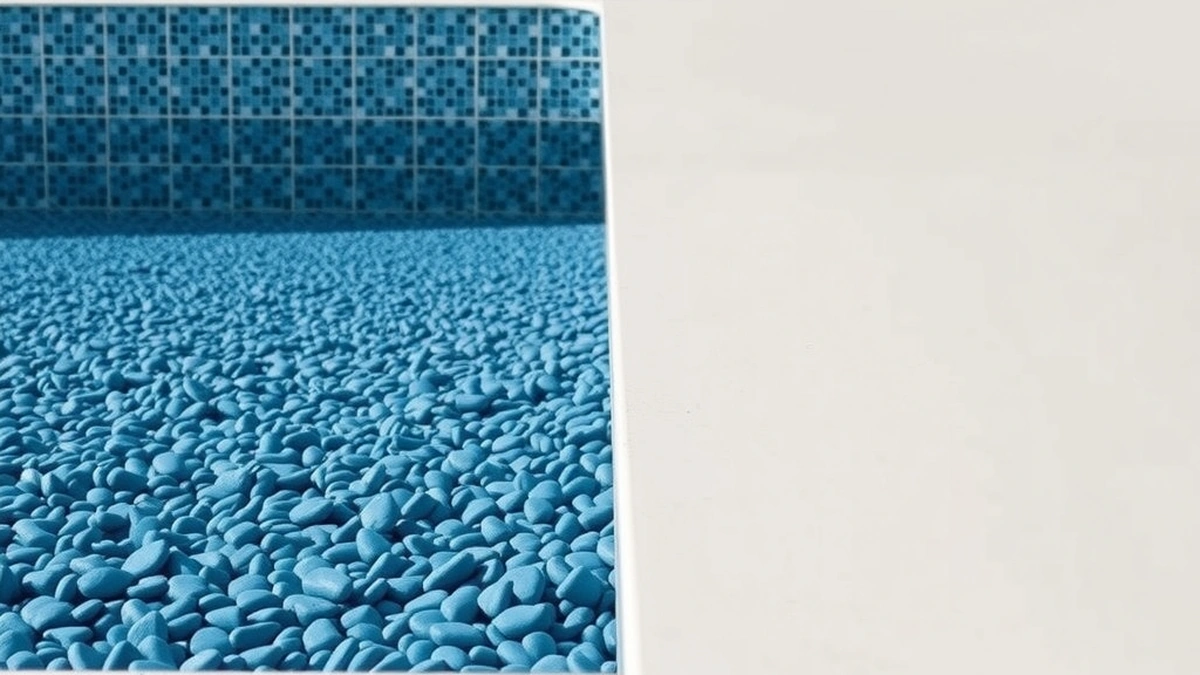
Neither is textured like pebble. If grip is the priority, the comparison is plaster vs pebble.
Chemistry and water level
Both want pH 7.2 to 7.8, alkalinity 80 to 120 ppm, and calcium 250 to 400 ppm. The sensitivities differ.
Plaster is damaged by both low and high pH, and the damage is visible. Vinyl is less affected by calcium but more affected by low pH, which attacks the plasticiser and leaves the sheet stiff and chalky.
The liner has a second vulnerability that plaster does not: water level. A liner held by water pressure will relax and wrinkle if the level drops, and it will float if groundwater rises behind it. Plaster does not care about either.
Repair and replacement
A liner is patched with a kit at $20 to $60, or professionally at $200 to $600. The patch is visible, and on a patterned liner it is obvious.
Plaster is patched at $300 to $800, and the repair is usually invisible because the mix is matched and troweled in.
Replacement is where the liner’s advantage narrows. A liner is replaced as a whole sheet at $2,500 to $7,500, and there is no partial replacement. Plaster can be resurfaced in sections or as a whole pool, so the cost is more scalable.
A plaster pool that is winterised correctly comes out of the season unchanged. The surface does not move, and the only risk is chemistry that was not corrected before closing.
A liner has a more eventful winter. The water level is lowered, the sheet relaxes slightly, and groundwater has a season to push against a shell that is no longer held by a full pool. A liner that floats in February is discovered in April, and by then it has stretched.
That is why liner owners are advised to keep some water in the pool over winter and to check the relief valve, while plaster owners are advised to balance the water before closing. Different risks, different routines.
The first winter, and five steps to choose
- Check what the existing shell is built for. A liner pool has a track; a plaster pool does not.
- Compare the per-year cost, not the sticker.
- Decide how much the surface feel matters.
- Consider the water table and whether the pool is drained seasonally.
- Ask what a full replacement costs for each, not just a repair.
Step four is the one that catches people. A liner on a high water table needs a relief valve and careful management, or it floats.
The short version
A liner is the cheaper surface with a shorter repair list and a soft feel. Plaster is harder, patches invisibly, and tolerates a fluctuating water level. Both last about a decade. Prices are in vinyl liner cost and plaster cost, and the liner-specific failures are in vinyl liner problems.
Frequently asked questions
Is a vinyl liner cheaper than plaster?
Yes. A liner is $2,500 to $7,500 installed against $4,000 to $10,000 for plaster, and it lasts about the same time. Per year, the liner is $208 to $938 and plaster is $333 to $1,429.
How long does each last?
Plaster lasts 7 to 12 years and a vinyl liner 8 to 12. Both ranges depend on water chemistry, and a liner also depends on the water level and groundwater.
Can a plaster pool be converted to a vinyl liner?
It is possible but unusual. The shell has to accept a liner track and the fittings have to be adapted, which is a construction job rather than a resurfacing job. Most conversions go the other way.
Which feels better underfoot?
Vinyl is softer and slightly warmer. Plaster is harder and becomes chalky as it wears. Neither has the texture of a pebble finish.
Which is easier to repair?
A vinyl liner is patched with a kit at $20 to $60. Plaster is patched with a matching mix at $300 to $800, and the repair is usually invisible. Both are repairable; the liner repair is cheaper and more visible.
Does a liner need different chemistry?
The targets are the same: pH 7.2 to 7.8, alkalinity 80 to 120 ppm, calcium 250 to 400 ppm. Vinyl is less affected by calcium but more affected by low pH, which attacks the plasticiser.
Sources
Some links are affiliate links.If you buy through them we may earn a commission at no extra cost to you. We do not accept payment for rankings. Read the full disclosure.