Vinyl liner problems: wrinkles, tears, and floating liners
Wrinkles, floating liners, tears at fittings, and fading are the common vinyl liner failures. What causes each, what a repair costs, and when to replace.
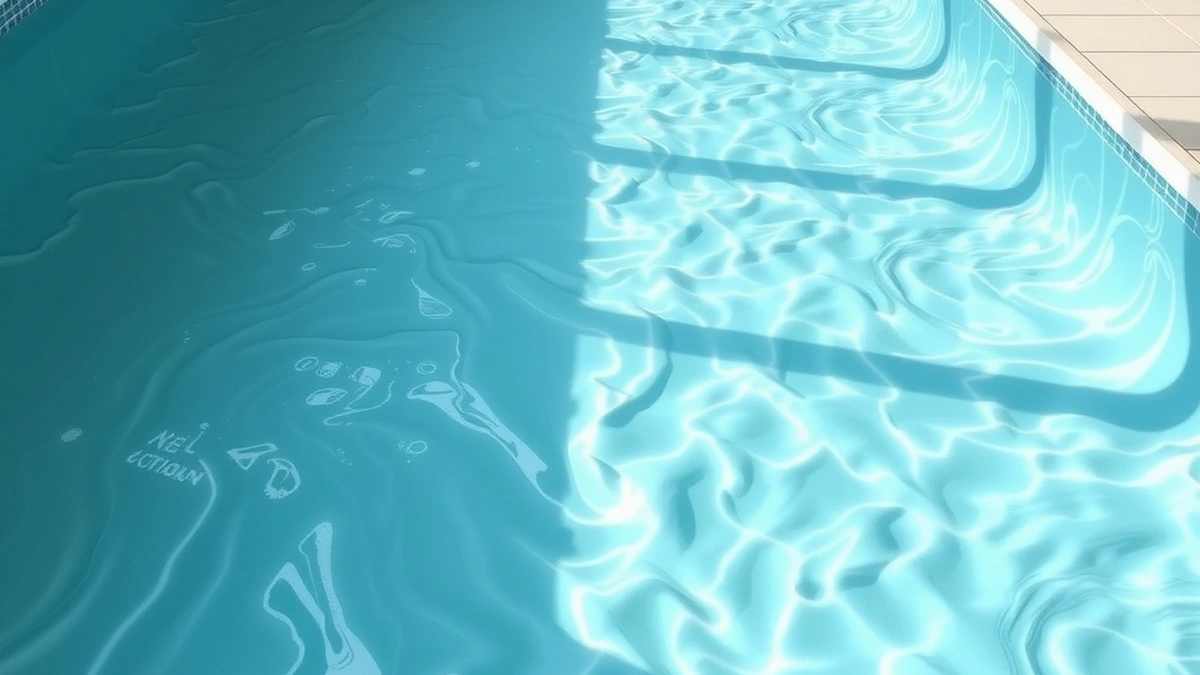
Vinyl liners fail by wrinkling, floating, tearing at fittings, fading, and pulling out of the bead track. Repairs run $20 to $600, and a liner that has floated or wrinkled across the floor usually needs replacement at $2,500 to $7,500.
- Patch kit
- $20 - $60
- Professional repair
- $200 - $600
- Full replacement
- $2,500 - $7,500
- Expected life
- 8 - 12 years
Some links on this page are affiliate links.If you buy through them we may earn a commission at no extra cost to you. We do not accept payment for rankings. Read the full disclosure.
Vinyl liners fail in five recognisable ways: they wrinkle, they float, they tear at fittings, they fade, and they pull out of the bead track. Repairs cost $20 to $600, but a liner that has floated or wrinkled across the floor is usually beyond patching, and replacement runs $2,500 to $7,500.
What the liner is doing
A vinyl liner is a PVC membrane that holds the water and keeps it away from the shell. It is held at the top by a bead in a track, at the fittings by gaskets and faceplates, and everywhere else by water pressure pushing it against the walls.
Every failure follows from one of those three: a bead that lets go, a fitting that leaks, or pressure from the wrong side.
The failures, causes, and repairs
| Problem | Cause | Repair | Cost |
|---|---|---|---|
| Wrinkles on the floor | Poor vacuum set, cold install | Usually replacement | $2,500 - $7,500 |
| Wrinkles at the wall base | Slow leak, water level drop | Find leak, refit | $200 - $600 |
| Floating liner | Groundwater behind the sheet | Pump, reset if possible | $600 - $2,500 |
| Tear at a fitting | Over-tightened faceplate | Patch or new gasket | $20 - $300 |
| Seam separation | Age, chemistry | Patch or replace | $200 - $600 |
| Faded pattern | UV, low pH, high chlorine | Cosmetic, replacement | $2,500 - $7,500 |
| Bead out of track | Installation, shrink | Reseat | $150 - $400 |
The top three rows are the expensive ones, and they are the ones that are almost always installation or drainage related rather than material defects.
Wrinkles and what they mean
A wrinkle is a section of liner that has more material than the space it sits in. There are two causes, and they are treated differently.
Installation wrinkles appear at the first fill and are common at corners and along the wall-to-floor junction. They happen when the liner is set cold, when the vacuum is weak, or when the liner was ordered to a measurement that did not account for the shell’s shape.
Leak wrinkles appear later, usually at the wall base, after the water level has dropped and the liner has relaxed. They are a symptom of a leak, not a fitting problem, and patching the wrinkle without finding the leak is wasted effort.
Floating liners
A floating liner is the most urgent failure in the list. Groundwater rises behind the liner, pushes it away from the wall, and the sheet stretches into a shape it will not return from.
It happens after prolonged rain, in a pool on a high water table, or when the pool has been drained for the winter without hydrostatic relief. The fix is to pump the groundwater down, reset the liner if it has not stretched, and refill. If it has stretched, replacement is the only answer.
The prevention is a hydrostatic relief valve in the floor and never leaving a pool empty in wet ground.
Tears, fittings, and seams
Most tears start at a fitting. A faceplate screwed down unevenly pinches the liner, and the pinch becomes a split. A gasket that hardens and shrinks lets water behind the sheet, and the liner balloons slightly around the fitting.
Small tears above the waterline can be patched with a kit at $20 to $60. Underwater patches need a professional at $200 to $600, because the patch has to bond while the water pushes against it.
Seam separation is an age failure. A liner is welded from sheets, and the welds are the weakest point after eight to ten years. A short separation can be patched; a long one means the liner is at the end of its life.
Fading, chemistry, and the end of life
Fading is cosmetic, but it is a useful indicator. A liner that has gone chalky across the whole pool has lost plasticiser, and that means it is thinner, stiffer, and closer to cracking.
The causes are UV and chemistry. Low pH and high chlorine both attack the plasticiser, and a pool left uncovered in full sun fades faster than a covered one. That is why the maintenance routine, not the liner specification, decides how long the colour lasts.
When to repair and when to replace
Repair makes sense for a tear at a fitting, a bead out of track, and a small seam separation. Those are $20 to $600 and they buy years.
Replacement makes sense when the liner has floated, when wrinkles cover the floor, when the pattern has gone chalky across the pool, or when seams have failed in more than one place. At that point a repair is a delay, and the money is better spent on a new sheet.
Before booking anything, run six checks:
- Note where the wrinkles are: floor, wall base, or corners.
- Check the water level against the skimmer. A drop points to a leak.
- Look for a gap between the liner and the wall at the shallow end.
- Inspect every fitting for a stretched or pinched edge.
- Look at the seams at the deep end for lifting.
- Check the ground around the pool for saturation after rain.
Step six separates a fitting problem from a groundwater problem, and the two have very different repair paths.
The short version
Wrinkles and floating are installation and drainage failures, tears are fitting failures, and fading is chemistry. Repair the small ones for $20 to $600 and replace the liner when it has floated or wrinkled across the floor. The cost of replacement is in vinyl liner cost, the install sequence is in vinyl liner installation, and the routine is in vinyl liner maintenance.
Frequently asked questions
Why is my pool liner wrinkled?
Usually because it was installed without a proper vacuum set, installed cold, or the water level dropped and the liner relaxed. Wrinkles across the whole floor are installation; wrinkles at the wall base often follow a leak.
Why is my pool liner floating?
Groundwater is pushing the liner up from behind. It happens after heavy rain or a high water table, and it is an urgent problem because the liner stretches and cannot be shrunk back.
Can a torn vinyl liner be repaired?
Yes, if the tear is small and above or near the waterline. A patch kit costs $20 to $60 and a professional repair $200 to $600. A tear at a fitting or along a seam is more likely to need replacement.
What causes a liner to fade?
UV exposure and unbalanced water. Low pH and high chlorine both attack the plasticiser in the vinyl, and a pool left uncovered in full sun fades faster than a covered one.
How long should a vinyl liner last?
Eight to twelve years with balanced water, a winter cover, and no long periods at low water level. Liners drained in summer or left dry age much faster.
When should a liner be replaced rather than repaired?
When it has floated, when wrinkles cover the floor, when the pattern has gone chalky across the whole pool, or when a seam has failed over more than a short length. At that point the repair is a delay.
Sources
Some links are affiliate links.If you buy through them we may earn a commission at no extra cost to you. We do not accept payment for rankings. Read the full disclosure.