Quartz vs fibreglass: aggregate or membrane
Quartz costs $6,000 to $12,000 and lasts 10 to 15 years; fibreglass costs $5,000 to $12,000 and lasts 10 to 15. One is troweled, one is bonded.
Quartz costs $6,000 to $12,000 and fibreglass $5,000 to $12,000, and both last 10 to 15 years. Quartz is a troweled aggregate with a grainy feel; fibreglass is a bonded membrane with a smooth, non-porous surface.
- Quartz installed
- $6,000 - $12,000
- Fibreglass installed
- $5,000 - $12,000
- Life
- 10 - 15 years both
- Cost per year
- $400 - $1,200 vs $333 - $1,200
Some links on this page are affiliate links.If you buy through them we may earn a commission at no extra cost to you. We do not accept payment for rankings. Read the full disclosure.
Quartz and fibreglass occupy the same price band, $5,000 to $12,000, and the same life band, 10 to 15 years. Per year that is $333 to $1,200 either way. The choice is not financial. It is whether you want a troweled aggregate with a fine grain, or a bonded membrane with a smooth, non-porous surface.
Troweled versus bonded
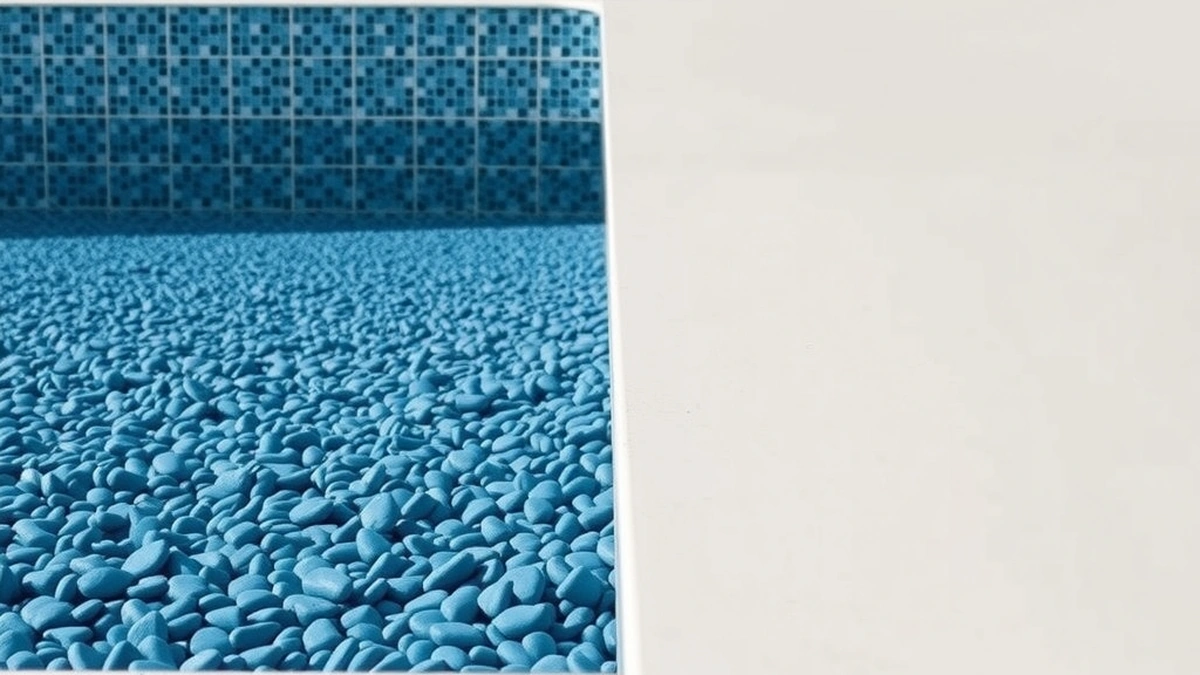
Quartz is a cement finish with a fine crushed aggregate, troweled onto the shell and sanded to a close surface. It is part of the cementitious family, and it wears the way plaster wears, only more slowly.
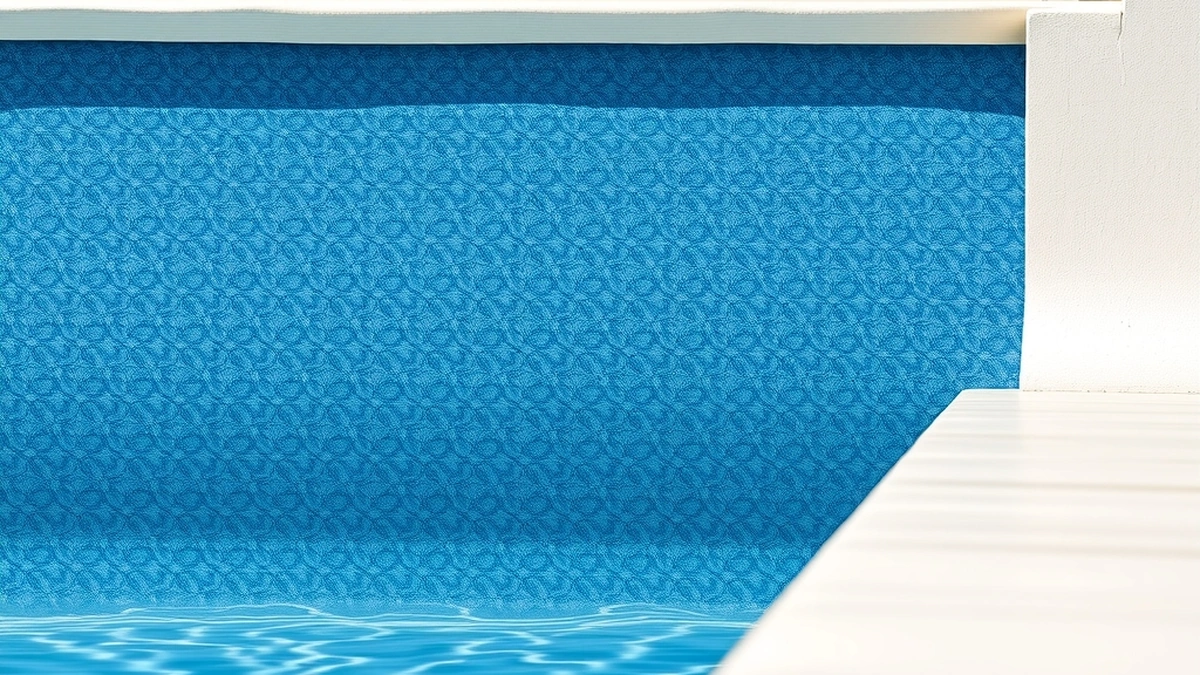
Fibreglass is a glass-reinforced plastic coating applied in layers with a gelcoat on top. It bonds as a membrane, and the surface is the gelcoat rather than the substrate.
One is a surface you could sand back and re-trowel. The other is a coating that is either sound or lifting.
Price and life
| Quartz | Fibreglass | |
|---|---|---|
| Installed | $6,000 - $12,000 | $5,000 - $12,000 |
| Per square foot, 855 sq ft | $7.02 - $14.04 | $5.85 - $14.04 |
| Expected life | 10 - 15 years | 10 - 15 years |
| Cost per year | $400 - $1,200 | $333 - $1,200 |
| Surface | Fine grain | Smooth gelcoat |
| Repair | Patch and blend | Specialist resin |
| Fails by | Erosion | Dulling or lifting |
The per-year figures are division. Quartz: $6,000 ÷ 15 = $400, $12,000 ÷ 10 = $1,200. Fibreglass: $5,000 ÷ 15 = $333, $12,000 ÷ 10 = $1,200.
The only gap is at the low end, where fibreglass is $67 per year cheaper. That is not a decision-making difference; it is a rounding error against the feel of the surface.
Feel and appearance
Fibreglass is the smoother of the two and stays that way. It does not chalk, and the gelcoat does not roughen with age. Underfoot it is slick unless a texture has been added, which is the main complaint at the steps.
Quartz has a fine grain that most owners describe as smooth, but it is not gelcoat smooth. It is closer to a polished stone than to glass, and it becomes slightly rougher as the cement matrix wears.
Neither has the coarse texture of pebble. If grip is the priority, the comparison is quartz vs pebble.
Chemistry and wear
Both want pH 7.2 to 7.8, alkalinity 80 to 120 ppm, and calcium 250 to 400 ppm. The response to drift is different.
Quartz is affected like plaster: low pH dissolves the cement matrix and leaves the aggregate proud, and high pH scales the surface. The damage is visible as a change in texture.
Fibreglass is affected more slowly, because the gelcoat is not calcium-based. Low pH still dulls it and eventually breaks it down, but a season of drift does less visible damage than it would on quartz.
That is the reason fibreglass appears in rental pools and holiday lets, where chemistry is not watched as closely.
Repair and colour
Quartz wins on repair. A chip or a worn patch can be filled with a matching mix and blended, and the repair is often invisible on a speckled surface.
Fibreglass repair is a resin and gelcoat job. The patch is sound but rarely matches, and the difference is visible on a light finish. On a pool with children or dogs, that matters.
Colour is the other consideration. Quartz carries its colour in the aggregate and the cement, and it is available in a wide range. Fibreglass gelcoat is a solid colour, and it fades under UV in a way that quartz does not. A faded gelcoat can be recoated, but that is a specialist job at a specialist price, and it is not a patch.
What the surface does to the water
A non-porous finish changes the way the pool behaves as much as the way it looks. Fibreglass does not absorb water, so it does not affect the calcium balance and it does not need the same acid washing that a cement finish does to remove scale and metal marks.
Quartz does interact with the water. It contributes a little calcium as it cures, and it holds scale and metal staining at the surface in the way plaster does. That is why quartz pools are more often acid washed than fibreglass ones, and why the maintenance routine differs even when the chemistry targets are identical.
Neither difference is decisive on its own, but together they explain why owners who dislike pool maintenance tend toward fibreglass and owners who want a repairable surface tend toward quartz.
Five steps to choose
- Decide whether you want a grain or a glass-smooth surface.
- Have the shell assessed for hollow areas before either is quoted.
- Ask what preparation each includes.
- Compare the repair options, not just the installation.
- Look at a five-year-old example of each.
Step five is the one that shows the difference. A new quartz pool and a new fibreglass pool look similar; five years later the quartz has a patina and the fibreglass is either unchanged or lifting.
The short version
Same price, same life, different surface. Quartz is a hard, grainy, repairable aggregate; fibreglass is a smooth, non-porous membrane that is harder to patch. Choose on feel and on the shell. Prices are in quartz cost and fibreglass cost, and the plaster baseline is in plaster cost.
Frequently asked questions
Is quartz or fibreglass better?
Neither is better in general. Quartz is harder, has a grainy texture, and patches more easily. Fibreglass is smoother, non-porous, and does not chalk, but a repair is a specialist resin job.
Why do they cost the same?
Because the material and labour differ in opposite directions. Quartz is cheaper material with a longer trowel time; fibreglass is more expensive material applied faster. Both land at $5,000 to $12,000.
Which lasts longer?
Both are rated 10 to 15 years. Quartz wears by erosion and fibreglass by dulling or lifting at an edge, so the failure modes differ even when the life is similar.
Which is smoother?
Fibreglass. It is a gelcoat surface with no exposed aggregate, and it stays smooth as it ages. Quartz has a fine grain that most owners describe as smooth, but it is not the same as gelcoat.
Can fibreglass be applied over quartz?
Yes, as an overlay, if the quartz is sound and bonded. Over a surface that is delaminating, the overlay fails with the substrate, so the surface has to be tested first.
Which is easier to repair?
Quartz. A chip can be filled with a matching mix and blended. A fibreglass repair is a resin and gelcoat job, and the patch rarely matches the surrounding colour.
Sources
Some links are affiliate links.If you buy through them we may earn a commission at no extra cost to you. We do not accept payment for rankings. Read the full disclosure.