Quartz vs vinyl liner: hard surface or soft membrane
Quartz costs $6,000 to $12,000 for 10 to 15 years; a vinyl liner costs $2,500 to $7,500 for 8 to 12. Compare cost per year, feel, and replacement cycles.
Quartz costs $6,000 to $12,000 and lasts 10 to 15 years, or $400 to $1,200 per year. A vinyl liner costs $2,500 to $7,500 and lasts 8 to 12, or $208 to $938. Quartz is harder and longer-lived; a liner is cheaper and softer.
- Quartz installed
- $6,000 - $12,000
- Vinyl liner installed
- $2,500 - $7,500
- Cost per year
- $400 - $1,200 vs $208 - $938
- Life
- 10 - 15 years vs 8 - 12
Some links on this page are affiliate links.If you buy through them we may earn a commission at no extra cost to you. We do not accept payment for rankings. Read the full disclosure.
Quartz and vinyl are separated by a factor of two on price, $6,000 to $12,000 against $2,500 to $7,500, and by a smaller margin on life, 10 to 15 years against 8 to 12. Per year the gap narrows to $192 to $262. The decision is about the shell, the feel, and whether a hard surface is worth the premium.
Hard surface versus membrane
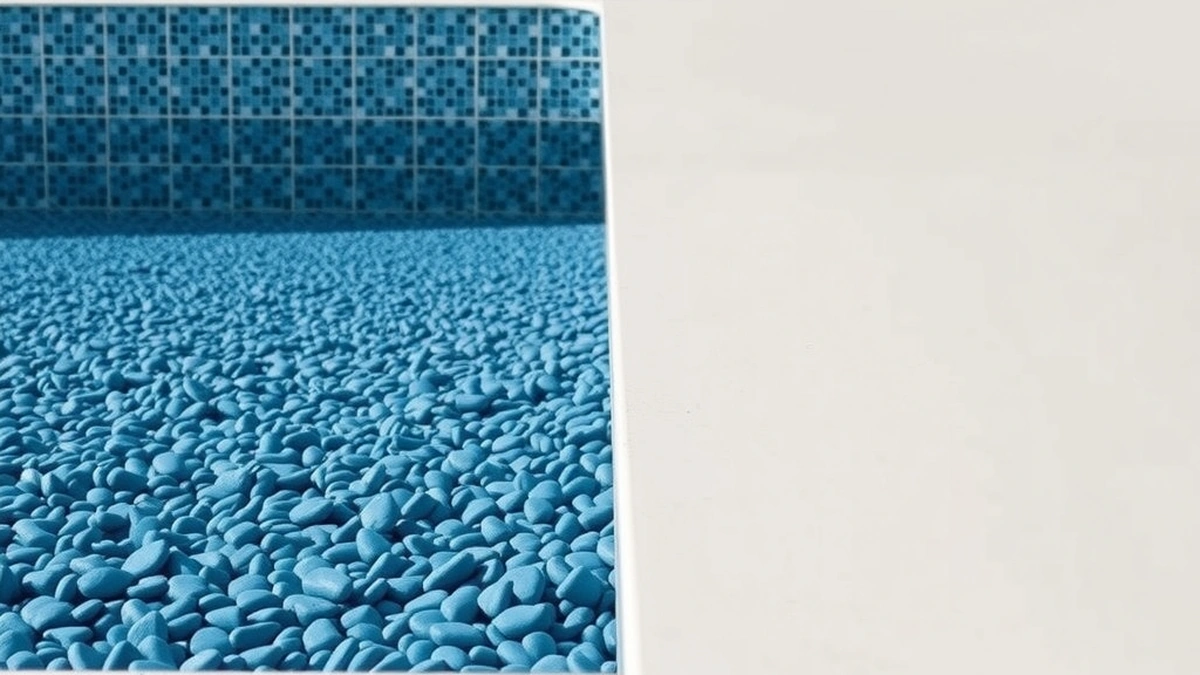
Quartz is a cement finish with a fine aggregate, troweled onto a plaster-ready shell. The water touches the finish, and the finish is bonded to the shell.
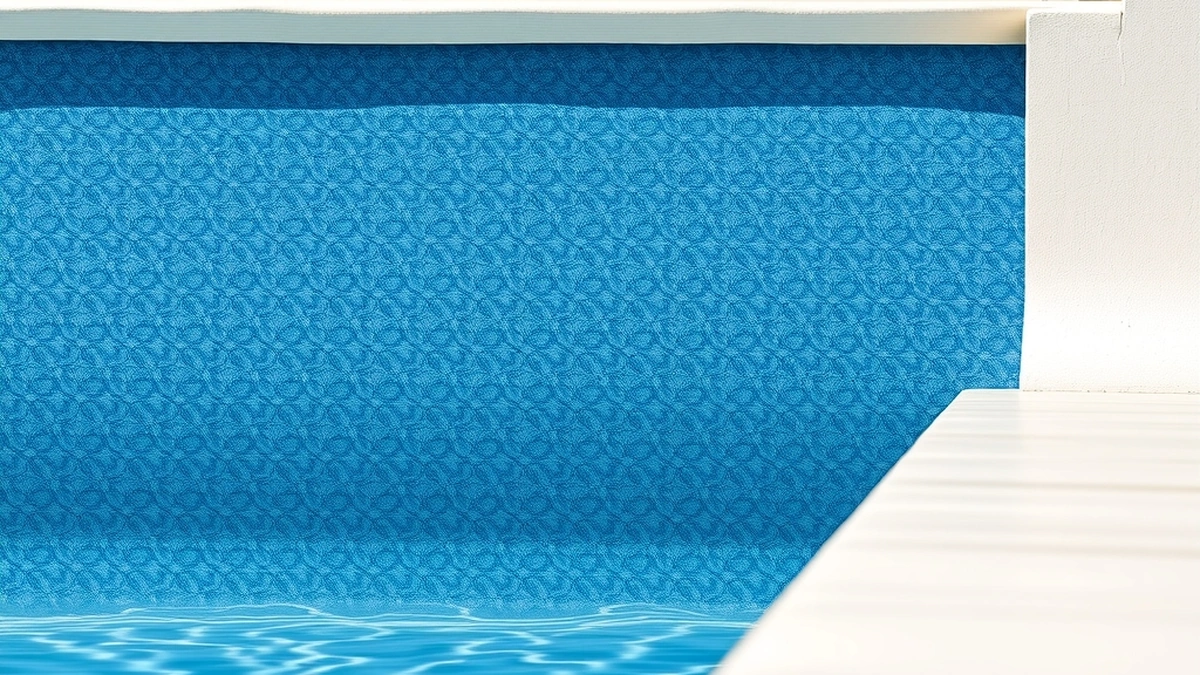
A vinyl liner is a PVC sheet hung inside the pool and held by a bead in a track at the top and by gaskets at the fittings. The water touches the sheet, and the shell behind it stays dry.
That structural difference decides almost everything else, including which pools can take which surface.
Price and life
| Quartz | Vinyl liner | |
|---|---|---|
| Installed | $6,000 - $12,000 | $2,500 - $7,500 |
| Per square foot, 855 sq ft | $7.02 - $14.04 | $2.92 - $8.77 |
| Expected life | 10 - 15 years | 8 - 12 years |
| Cost per year | $400 - $1,200 | $208 - $938 |
| Surface | Hard, fine grain | Soft, smooth |
| Repair | Patch and blend | Patch kit |
| Acid wash | Possible | Not possible |
The per-year figures are division. Quartz: $6,000 ÷ 15 = $400, $12,000 ÷ 10 = $1,200. Liner: $2,500 ÷ 12 = $208, $7,500 ÷ 8 = $938.
The liner wins on cost at every point in the table. Quartz wins on life and on the fact that it does not move.
What the shell allows
This is the constraint that overrides the price comparison. A quartz finish needs a shell that can take a troweled cement surface, which means a gunite or concrete pool.
A liner needs a track at the coping and walls that accept the sheet, which usually means a panel or steel-wall pool, or a concrete pool that was built for a liner.
Converting one to the other is a construction project at a different budget. That is why the comparison is usually between two quotes for the same pool rather than a free choice.
Feel and use
Vinyl is softer and slightly warmer. It has a little give underfoot, and it does not chalk, so a ten-year-old liner feels much like a new one if it has not stiffened.
Quartz is hard and finely grained. It is closer to polished stone than to a cushioned floor, and it becomes slightly rougher as the cement matrix wears.
On a pool used by children, the vinyl is the more forgiving surface. On a pool where the finish is expected to last two decades of family use, quartz is the more durable one.
At ten years, a quartz pool is at the end of its typical life and a liner is at the top of its range. Both are due for replacement, which is why the per-year numbers converge.
The difference is what the last two years look like. A quartz surface that is going chalky shows it: the waterline scales faster, the shallow end feels rough, and the colour has dulled. A liner that is going is more sudden: a seam lets go, or the pattern fades in patches, or a wrinkle appears at the wall base and does not come out.
One degrades visibly and gradually, the other degrades suddenly. Owners tend to prefer the gradual version even when the cost is higher, because it is easier to plan around.
Ten years in, water, and level
Both want pH 7.2 to 7.8, alkalinity 80 to 120 ppm, and calcium 250 to 400 ppm. Quartz responds to drift the way plaster does: low pH etches it and high pH scales it, and both show.
A liner is less affected by calcium but more affected by low pH, which attacks the plasticiser. It is also affected by water level, because the sheet is held against the wall by water pressure. A liner that is allowed to drop relaxes and wrinkles.
Quartz does not care about the water level. That is a practical advantage on a pool that is drained for repairs or topped up infrequently.
Repair and replacement
Quartz is patched at $300 to $800 with a matching mix, and the repair blends. A liner is patched at $20 to $60 with a kit, and the patch is visible.
Replacement is where the liner’s cost advantage is clearest. A full liner is $2,500 to $7,500 and is replaced as a sheet. Quartz is resurfaced as a whole pool at $6,000 to $12,000, or patched in sections.
Five steps to choose
- Confirm what the shell is built for. That decides the options.
- Compare the per-year cost rather than the total.
- Decide how much the surface feel matters.
- Consider the water level and how the pool is managed.
- Ask what replacement costs at the end of life, not just installation.
Step five matters because both surfaces will be replaced. The liner is cheaper to replace and is replaced sooner; quartz is dearer and lasts longer.
The short version
Quartz is the harder, longer-lived, more expensive surface; a liner is the softer, cheaper, shorter-lived one. Per year the gap is smaller than the totals suggest. The shell usually decides. Prices are in quartz cost and vinyl liner cost, and the liner failure modes are in vinyl liner problems.
Frequently asked questions
Is quartz better than a vinyl liner?
Quartz lasts longer and feels harder, and it does not depend on water level to stay in place. A liner costs about half as much and is softer underfoot. Neither is better without knowing the shell and the budget.
How much cheaper is a vinyl liner?
At the low end, $3,500 cheaper: $2,500 against $6,000. At the high end, $4,500 cheaper: $7,500 against $12,000. Per year the gap is $192 to $262, because quartz lasts longer.
Which lasts longer, quartz or vinyl?
Quartz, at 10 to 15 years against 8 to 12 for a liner. The gap is smaller than the price gap, which is why the per-year figures are closer than the totals.
Can a liner pool be converted to quartz?
Not directly. A liner pool has a track and panel walls, and quartz needs a plaster-ready shell. A conversion is a construction project, not a resurfacing job, and it is rarely worth it.
Which is softer underfoot?
Vinyl. It is a sheet with a little give, and it is warmer than quartz. Quartz is a hard cement surface with a fine grain, closer to stone.
Which needs less maintenance?
Quartz needs brushing and balanced chemistry, and it can be acid washed. A liner needs the same chemistry plus attention to water level, and it cannot be acid washed at all.
Sources
Some links are affiliate links.If you buy through them we may earn a commission at no extra cost to you. We do not accept payment for rankings. Read the full disclosure.