Rough or pitted plaster: what a fix costs per square foot
Patching rough plaster costs $300 to $800; a full replaster is $4,000 to $10,000, or $4.68 to $11.70 per square foot. Where the money goes and what adds to it.
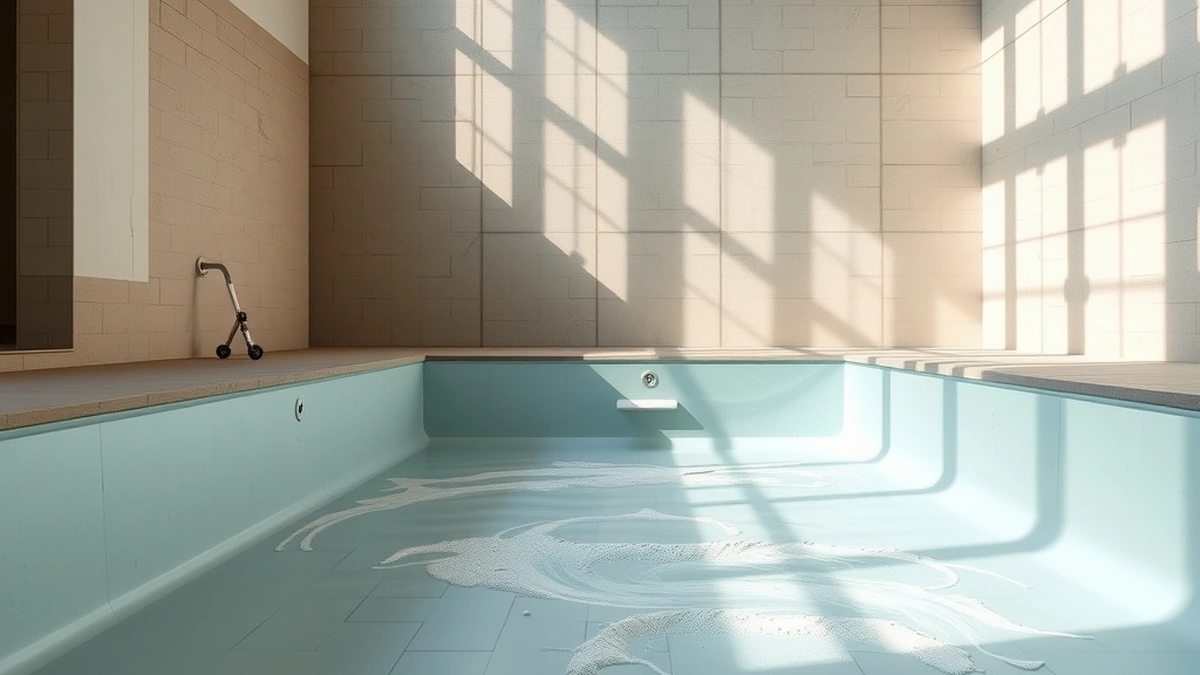
A spot repair costs $300 to $800. A full replaster runs $4,000 to $10,000, which is $4.68 to $11.70 per square foot on an 855-square-foot pool. Quartz is $6,000 to $12,000, and a chip-out adds $1,000 to $2,000 to either.
- Spot patch
- $300 - $800
- Full replaster
- $4,000 - $10,000
- Per square foot
- $4.68 - $11.70
- Quartz finish
- $6,000 - $12,000
- Acid wash
- $400 - $800
Some links on this page are affiliate links.If you buy through them we may earn a commission at no extra cost to you. We do not accept payment for rankings. Read the full disclosure.
Rough or pitted plaster costs $300 to $800 to patch locally, or $4,000 to $10,000 to replaster across an 855-square-foot pool. That is $4.68 to $11.70 per square foot. The spread inside the replaster band is not the plaster mix; it is preparation, and it is the line to interrogate before signing anything.
The price by option
| Option | Scope | Cost |
|---|---|---|
| Spot patch | Under 10 sq ft, drained | $300 - $800 |
| Acid wash | Stain removal only | $400 - $800 |
| Bond coat and replaster | New finish over sound plaster | $4,000 - $9,000 |
| Chip-out and replaster | Old finish removed to shell | $5,500 - $10,000 |
| Quartz resurface | Aggregate finish | $6,000 - $12,000 |
| Waterline tile | Separate scope | $1,500 - $5,000 |
The bond coat and chip-out rows are the same finished product with different preparation underneath. That is the single most important distinction in a plaster quote, and it is rarely volunteered.
Per-square-foot arithmetic
Take the standard 855-square-foot interior used across this site. Interior surface is the floor plus the walls plus the steps, not the water volume.
- $4,000 ÷ 855 = $4.68 per square foot
- $7,000 ÷ 855 = $8.19 per square foot
- $10,000 ÷ 855 = $11.70 per square foot
A quote at $3.50 per square foot is not a bargain; it usually means a bond coat over failing plaster or an exclusion for crack repair. A quote above $12 per square foot is either a premium finish or a shell with problems that the finish budget is absorbing.
What drives the number
Preparation is first. Draining, chipping or bonding, crack repair, and hollow-spot repair are most of the labour, and they are the part that varies between contractors looking at the same pool.
Shell condition is second. A pool with active delamination needs the old finish removed, and that is $1,000 to $2,000 more than a bond coat. A pool with rebar corrosion or a structural crack is a different project again.
Access is third. A pool inside a screened enclosure, behind a house with no side access, or with a deck that has to be protected adds setup time. So does a pool that cannot be drained to the storm system.
What a patch costs to do properly
A patch is not a smear of plaster over a hole. The area is drained, the loose material is cut back to sound plaster, the edge is undercut so the new mix keys in, the surface is wetted, and the patch is troweled and cured before the pool refills.
That is why a patch is $300 to $800 rather than $50. The material is trivial; the drain, the preparation, and the refill are the cost. On a pool that is due for a drain anyway, a patch is cheap. On a pool that has to be drained specifically for it, the water and the labour dominate.
A patch over delaminating plaster is money lost. Test the surrounding surface first with a wet hand: chalk on the palm means the matrix is failing, and the patch will lift within a season.
What is usually excluded
- Waterline tile. $1,500 to $5,000, and often the right time to replace it.
- Coping. Priced per linear foot and rarely included.
- Drain-down and refill water. Can be $150 to $400 depending on the local rate.
- Startup chemicals. The first two weeks of balancing.
- Deck repair where the work disturbed it.
- Crack stitching if the shell has moved.
Ask for each as a line. A quote that includes tile and coping is not comparable with one that excludes them, and the difference can be $3,000.
The cost of waiting
Rough plaster is not stable. The same aggressive water that dissolved the cement will keep dissolving it, and the pits deepen and join. A surface that could be patched for $300 to $800 this year becomes a $4,000 to $10,000 replaster in two or three.
There is a second cost: a rough surface holds debris and makes brushing less effective, which puts more demand on the chemistry and accelerates the cycle.
Fixing the water is part of the repair, not an optional extra. A new plaster finish run at the same low pH will be rough again within a few years, and the money is spent twice.
Five steps to price the job
- Measure the interior surface, not the pool’s footprint.
- Establish whether the roughness is local or general.
- Ask each quote to state bond coat or chip-out.
- Ask what is excluded: tile, coping, water, startup chemicals.
- Compare the per-square-foot rate, not the total.
Step five is the only way to compare a small pool with a large one, and it is the figure a contractor should be able to give without a calculator.
The short version
Patch at $300 to $800 if the damage is small and the surface around it is sound. Replaster at $4,000 to $10,000, or $4.68 to $11.70 per square foot, if it is general. Pay for the chip-out when the old plaster is failing, and fix the water chemistry so the new surface is not dissolved the same way. The repair methods are in rough or pitted plaster: repair options, the assessment is in rough or pitted plaster: warning signs, and the full finish comparison is in pool resurfacing cost.
Frequently asked questions
How much does it cost to fix rough pool plaster?
A spot patch is $300 to $800. A full replaster is $4,000 to $10,000, or $4.68 to $11.70 per square foot across 855 square feet of interior surface. Quartz aggregate is $6,000 to $12,000.
Is it cheaper to patch or replaster?
Patching is cheaper at $300 to $800, and it works when the damage is local. Once roughness covers more than a quarter of the surface, patching is money spent on a surface that will fail around the patch.
What does a replaster include?
Draining, preparing the surface, crack and hollow repair, a bond coat or chip-out, the new plaster, and refilling. Tile, coping, and deck work are usually separate line items, which is why totals vary.
Why do replaster quotes vary by $3,000?
Preparation. A bond coat over sound plaster and a full chip-out to the shell are different jobs, and the difference is $1,000 to $2,000. Access, tile work, and shell repairs account for the rest.
Does an acid wash fix pitting?
No. At $400 to $800 it removes stains and a thin layer of plaster, and it can deepen the roughness by opening more cement. It is a cleaning step, not a resurfacing method.
How long does a replaster last?
Seven to twelve years with balanced water and brushing. The upper end requires pH 7.2 to 7.8, alkalinity 80 to 120 ppm, and calcium hardness 250 to 400 ppm, held consistently rather than corrected after a problem.
Sources
Some links are affiliate links.If you buy through them we may earn a commission at no extra cost to you. We do not accept payment for rankings. Read the full disclosure.