Rough or pitted plaster: the warning signs to check
Gritty walls, chalk on your hand, a sandy floor, and white streaks at the waterline are the signs plaster is dissolving. What each means and how far gone it is.
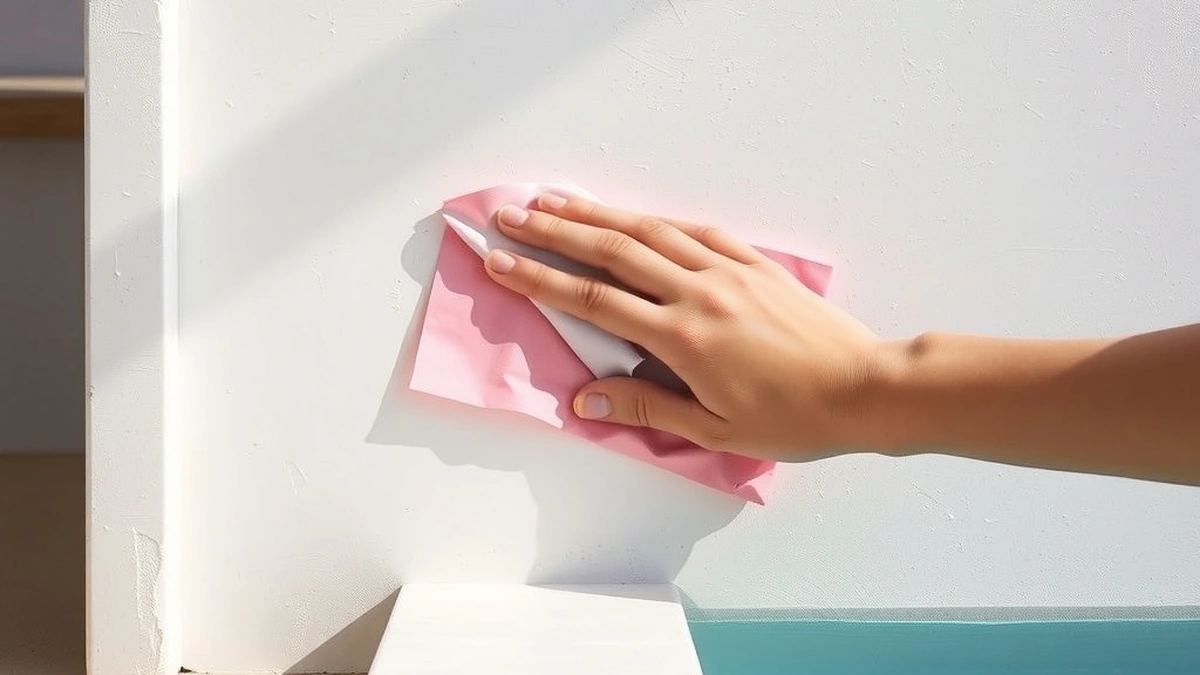
The signs of rough or pitted plaster are a gritty feel underfoot, chalk on a wet hand, sand-like grit on the floor, white streaks at the waterline, and dark specks where pits have formed. Catching them early keeps the fix at $300 to $800.
- Earliest sign
- Chalk on a wet hand
- Most visible
- Gritty walls at the steps
- Patch cost
- $300 - $800
- Resurface cost
- $4,000 - $10,000
Some links on this page are affiliate links.If you buy through them we may earn a commission at no extra cost to you. We do not accept payment for rankings. Read the full disclosure.
Rough plaster gives warning long before it looks damaged. Chalk on a wet hand, a gritty feel at the steps, sand-like grit on the floor, and dark specks in a white surface are the sequence. Caught at the first two, the fix is a chemistry correction and perhaps a $300 to $800 patch. Caught at the last two, it is a $4,000 to $10,000 resurface.
The signs, in order of appearance
| Sign | How to check | What it means | Stage |
|---|---|---|---|
| Chalk on a wet hand | Rub the wall at the steps | Cement is dissolving | Early |
| Gritty feel underfoot | Walk the shallow end | Aggregate standing proud | Early |
| White streaks at the waterline | Look along the tile line | Surface giving up material | Mid |
| Sand-like grit on the floor | Vacuum or brush | Plaster debris or filter sand | Mid |
| Dark specks in white plaster | Look across the floor | Pits forming | Late |
| Hollow sound when tapped | Tap with a screwdriver handle | Delamination | Late |
| Visible cracks or lifting | Inspect at the steps | Structural movement | Late |
The first two need no equipment and no draining. They are the ones an owner can check in a minute, and they are the ones that make the difference to the bill.
Chalk and the wet-hand test
Rub a wet palm across the plaster at the steps, where the surface is most used and most visible. A new plaster surface leaves the hand wet and clean. A failing surface leaves a white chalky residue that dries on the skin.
That residue is cement. It is the binder that should be holding the marble dust in place, and it is coming away because the water is undersaturated with calcium. The test is crude and it is reliable.
Do it at three points: the steps, the shallow end wall, and the deep end wall. Chalk at all three means the whole surface is going, not just a patch.
Grit underfoot and on the floor
A pool floor that feels like fine sandpaper is a floor with exposed aggregate. The sensation is easiest to notice on the steps and in the shallow end, where bathers walk.
Grit on the floor is the same process seen from a different angle. As the cement goes, particles of marble and aggregate are released and settle. If the grit reappears after vacuuming, it is coming from the surface rather than from the filter.
Distinguish the two by checking the filter. Sand from a failed filter is uniform and gritty; plaster debris is finer, whiter, and appears in the corners where the circulation is weakest.
Waterline streaks and pits
The waterline band is where the chemistry is most concentrated, because splash-out and evaporation leave deposits there. White streaks that run down from the tile line, or a chalky band just above the water, are the mid-stage sign.
Pits are the late-stage sign. They appear as dark specks in a white surface, because a hollow fills with dirt and shadows. Each pit is a place where the cement around a particle of aggregate has dissolved, and the pits join up as the process continues.
Tapping for delamination
Roughness and delamination are different problems, and they can occur together. Tap the plaster with the handle of a screwdriver. A sound surface gives a dull, solid tap. A delaminated area gives a hollow note, like tapping a wall with a void behind it.
Hollow sounds mean the plaster has separated from the shell. That changes the repair: a patch will not fix it, and a bond coat over it will fail. The old finish has to come off.
A rough surface has more area than a smooth one, and more area means more places for scale and organic film to attach. That is why a pool with early roughness starts to need more chlorine and more brushing for the same result.
The grit also interferes with cleaning. A brush passes over the peaks and misses the hollows, so the debris in the pits stays there, and the pit gets darker. The surface and the chemistry decline together, which is why the problem seems to accelerate once it is visible.
What roughness does to the water, and the bill
At the chalk and grit stage, the fix is chemistry plus, at most, a patch at $300 to $800. At the streak and sand stage, the surface has lost material across the pool and a resurface at $4,000 to $10,000 is the realistic answer.
At the pit and hollow stage, the decision is already made, and the only question is preparation: chip-out rather than bond coat. The repair options are set out in rough or pitted plaster: repair options and the cost detail is in rough or pitted plaster: what a fix costs.
Five checks in five minutes
- Rub a wet hand at the steps and look at the palm.
- Walk the shallow end and note any gritty patches.
- Look along the waterline for white streaks.
- Scan the floor for dark specks.
- Tap the plaster at three points for a hollow sound.
Step five is the one that decides whether the problem is cosmetic or structural, and it needs nothing but a screwdriver handle. Do it before booking an inspection.
The short version
Chalk is the first sign, grit is the second, pits are the last. The first two are a chemistry problem and the last two are a resurfacing problem. Prevention, which is cheaper than either, is in rough or pitted plaster: how to prevent it, and the underlying water targets are in plaster maintenance.
Frequently asked questions
How do I know if my pool plaster is rough?
Rub a wet hand across the wall at the steps. If chalk comes away on the palm, or the surface feels like fine sandpaper, the cement matrix is dissolving and the aggregate is standing proud.
Why is there sand on the pool floor?
Plaster does not shed sand unless the surface is failing. Grit on the floor is usually dissolved plaster material or filter sand, and either way it points to a surface that needs inspection.
What do dark specks in white plaster mean?
They are pits. The cement around a particle of aggregate has dissolved, leaving a small hollow that fills with dirt and looks dark. Pits grow sideways as the surrounding cement goes.
Is chalky plaster an emergency?
No, but it is the point to act. Chalk means the surface is losing material, and the loss accelerates. A patch or a chemistry correction now is far cheaper than a resurface in two years.
Can I test for pitting without draining the pool?
Yes. Run a hand over the walls and floor, look at the waterline band, and check the steps where the surface is most used. Draining is only needed to confirm the depth of the damage.
When should I call a contractor?
When the roughness covers the floor and walls rather than a few patches, when tapping the plaster gives a hollow sound, or when the surface has visible cracks. Those point to a resurface rather than a repair.
Sources
Some links are affiliate links.If you buy through them we may earn a commission at no extra cost to you. We do not accept payment for rankings. Read the full disclosure.