Fibreglass maintenance: keeping gelcoat sound
The chemistry targets, brushing routine, and gelcoat care that carry a fibreglass pool finish to 15 years, plus the habits that cause blisters and chalking.
Fibreglass maintenance is gentle chemistry plus a clean gelcoat: hold pH at 7.2 to 7.6, alkalinity at 80 to 120 ppm, and calcium hardness at 200 to 400 ppm, brush weekly, and never acid wash or drain the pool for long periods.
- pH target
- 7.2-7.6
- Alkalinity
- 80-120 ppm
- Calcium hardness
- 200-400 ppm
- Brushing
- Weekly
Some links on this page are affiliate links.If you buy through them we may earn a commission at no extra cost to you. We do not accept payment for rankings. Read the full disclosure.
Fibreglass maintenance is gentler than plaster maintenance and less forgiving of mistakes. Hold pH at 7.2 to 7.6, alkalinity at 80 to 120 ppm, and calcium hardness at 200 to 400 ppm, brush weekly with a soft brush, and never acid wash the surface. The gelcoat that makes the finish non-porous is also thin enough that one aggressive cleaning can cost a season of gloss.
What you are protecting
A fibreglass pool finish is a resin laminate sealed with a pigmented gelcoat, with a service life of 10 to 15 years and an overlay replacement cost of $5,000 to $12,000. The laminate provides structure and the gelcoat provides the barrier. Every maintenance decision is about keeping that barrier intact.
Unlike plaster, fibreglass does not dissolve into the water. It does not need calcium to be replenished and it does not chalk away from normal use. What it does is oxidise under UV, dull under abrasion, and blister if water gets behind the gelcoat. The routine below targets those three.
The four numbers
| Parameter | Target | Why it matters on fibreglass |
|---|---|---|
| pH | 7.2-7.6 | Low pH dulls and etches gelcoat |
| Total alkalinity | 80-120 ppm | Buffers pH swings that attack the surface |
| Calcium hardness | 200-400 ppm | Keeps water non-aggressive without scaling |
| Free chlorine | 1-3 ppm, scaled to stabilizer | Low allows biofilm on a smooth surface |
The pH band is tighter than the one used for plaster, and deliberately so. A plaster pool run at 7.0 for a month will etch; a fibreglass pool run at 7.0 for a month will lose gloss that never comes back. Keeping pH under 7.8 also limits scale, which bonds to gelcoat just as readily as to aggregate.
Stabilizer is the number owners forget. At 30 to 50 ppm cyanuric acid, 1 to 3 ppm free chlorine holds. At 70 to 80 ppm, a common reading on salt pools, the same chlorine level is far less effective and biofilm forms on the walls.
The weekly routine
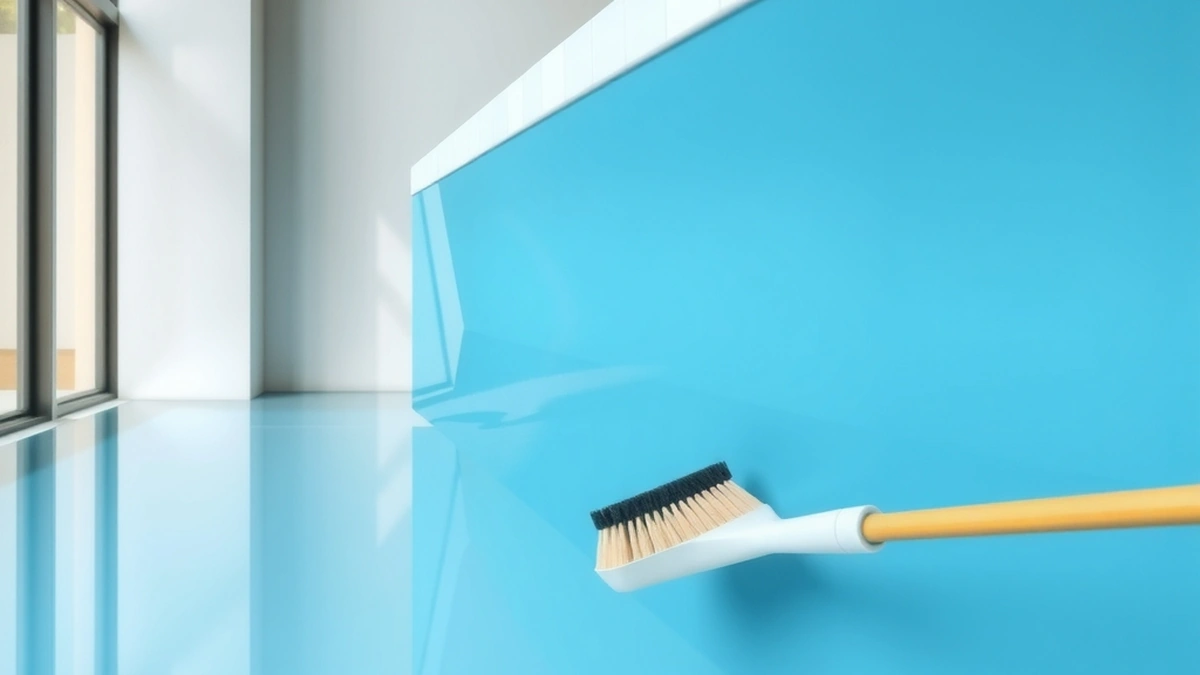
- Brush the walls, floor, and waterline with a soft nylon brush. Never use a stainless brush on gelcoat.
- Skim and empty the baskets before brushing.
- Test pH and free chlorine, and adjust pH first.
- Test alkalinity and calcium hardness weekly rather than monthly.
- Clean the filter on pressure rise, and run the pump long enough to turn the volume over daily in summer.
- Wipe the waterline with a soft sponge where suntan lotion and body oils collect.
That is the whole job on a healthy pool. Fibreglass rewards consistency and punishes enthusiasm: the owners who damage these surfaces are usually the ones scrubbing hard with the wrong tool.
What not to do
- Acid washing. Acid strips the gelcoat’s gloss and opens the surface. A $400 to $800 acid wash that a plaster pool tolerates will leave fibreglass dull and more prone to staining than before.
- Abrasive powders. Scouring cream and calcium-based cleaners scratch the gelcoat. Use a dedicated fibreglass cleaner.
- Draining the pool. An empty fibreglass shell can deform, crack, or pop out of the ground in high water tables. Clean it full.
- Chlorine tablets sitting on the surface. A trichlor puck left on the floor or steps bleaches a permanent white mark into the gelcoat.
- Pressure washing close up. It drives water into seams and lifts edges around fittings.
Stains, scale, and metals
Stains on fibreglass are usually metal or organic, and the treatment differs:
- Brown or rust-coloured. Iron, often from well water or a rusting fitting. A sequestering agent plus filtration lifts it.
- Blue-green. Copper, usually from a heater or algaecide. Stop the source first, then treat.
- Green-black patches. Organic growth in a low-flow corner. Brush and raise free chlorine.
- White haze at the waterline. Scale from high pH. A light hand with a scale remover, not acid.
If a stain does not respond to a targeted treatment, the answer is not a stronger chemical. It is finding out what the stain is. Fibreglass problems covers what happens when aggressive treatment is used instead of diagnosis.
Gelcoat care across the year
Gelcoat oxidises slowly, and a light polish once a season is enough to keep the colour. Use a fibreglass polish with no abrasive grit for routine work, and a fine compound only when the chalk does not come off with a sponge. Over-polishing thins the layer that is protecting the laminate.
At opening, clean the cover and test the water before balancing. At closing, balance first — water sitting at pH 8.0 for four months deposits scale on the waterline — and leave the pool full. In freezing climates, follow the local method for a full pool rather than draining it.
When maintenance is not enough
If blisters, lifting edges, or soft spots have appeared, the routine will not reverse them. Spot repairs run a few hundred dollars; a finish with widespread blistering needs an overlay at $5,000 to $12,000. The decision rule is area: once defects cover a meaningful share of the surface, repairs stop being economical. Fibreglass cost has the arithmetic, and fibreglass installation explains what a proper overlay involves.
The short version
Fibreglass maintenance is the easiest of the finish routines and the least tolerant of shortcuts. Keep the pH in its narrower band, brush softly, skip the acid, and never leave the shell empty. Do that and the gelcoat holds its colour for a decade; skip it and the finish fails in the one way fibreglass cannot cheaply fix.
Frequently asked questions
Does a fibreglass pool need different chemicals?
The same four parameters, with a slightly tighter pH band. Fibreglass prefers 7.2 to 7.6 because the gelcoat is thinner and less forgiving of low pH than plaster or pebble.
Can you acid wash a fibreglass pool?
Not the way you would a plaster pool. Acid attacks the gelcoat and leaves it dull and porous. Stains should be treated with a targeted product, and any acid wash needs a professional who knows fibreglass.
How often should a fibreglass pool be brushed?
Weekly, with a soft nylon brush. Stiff brushes and stainless brushes dull the gelcoat, and the smooth surface means there is little to scrub off if you keep up with it.
Why does my fibreglass pool feel slippery?
Usually biofilm, not the gelcoat itself. A non-porous surface still collects a film when chlorine is low or circulation is poor. Brushing and holding free chlorine in range clears it.
Should I drain a fibreglass pool to clean it?
No. An empty fibreglass shell can deform or crack, especially in heat. Clean it full, and leave drain-down to a professional doing a repair.
How do I remove stains from a fibreglass pool?
Identify the metal first. Iron and copper stains respond to a sequestering agent, organic stains to shock and brushing. Abrasive or acidic cleaners dull the gelcoat and make the stain come back faster.
Sources
Some links are affiliate links.If you buy through them we may earn a commission at no extra cost to you. We do not accept payment for rankings. Read the full disclosure.