Leaks at fittings: how to prevent them from starting
Prevent fitting leaks by renewing gaskets, sealing evenly, keeping chemistry in range, and winterising the lines. A $150 to $400 seal beats a $5,000 rebuild.
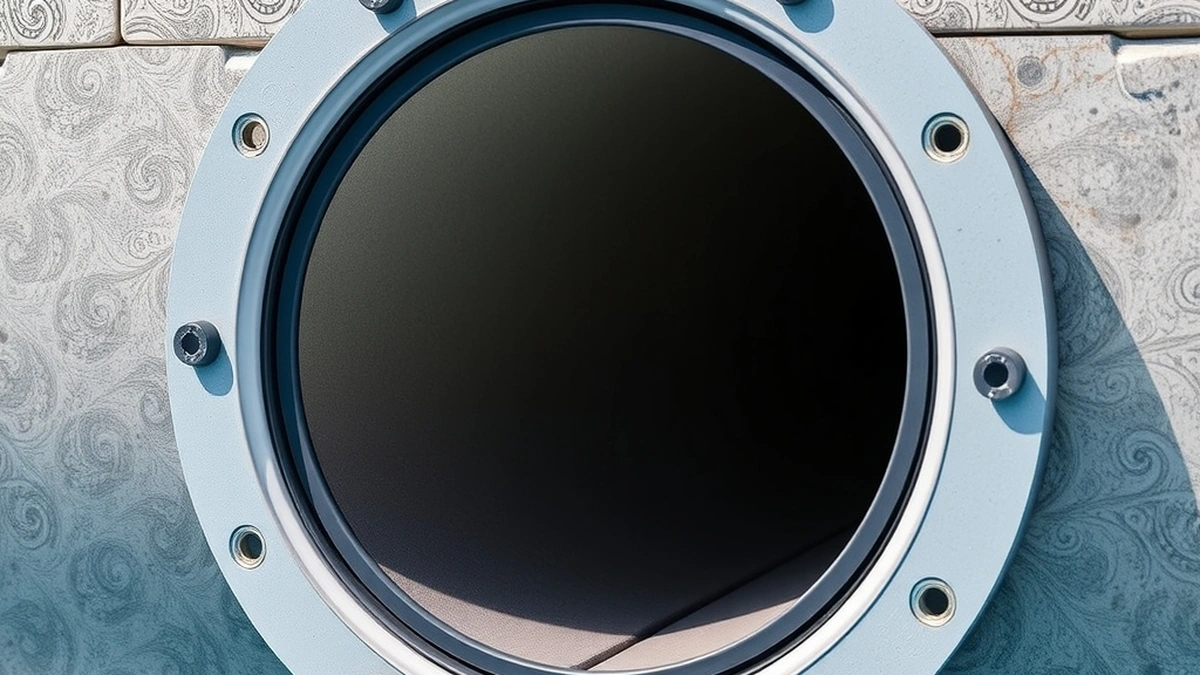
Prevent fitting leaks by renewing gaskets every few years, tightening faceplates evenly, keeping pH at 7.2 to 7.8, and winterising the lines properly. A gasket is $150 to $400; a tile and plaster rebuild is $1,500 to $5,000.
- Gasket renewal
- $150 - $400
- Faceplate set
- $30 - $90
- pH target
- 7.2 - 7.8
- Rebuild if ignored
- $1,500 - $5,000
Some links on this page are affiliate links.If you buy through them we may earn a commission at no extra cost to you. We do not accept payment for rankings. Read the full disclosure.
Fitting leaks are prevented by protecting the seal, and the seal is a gasket, a faceplate, and a thread. Renew the gasket every five to eight years, tighten evenly, keep the water balanced, and winterise the lines. The parts cost $30 to $90; the rebuild that follows a neglected leak costs $1,500 to $5,000.
The three failure points
Every fitting has three places where it can leak: the gasket between the fitting and the pool wall, the faceplate that clamps it, and the thread or body of the fitting itself.
The gasket is the most common. Rubber hardens with age and chlorine exposure, takes a compression set, and stops sealing. The second is the faceplate, which distorts if it is over-tightened. The third is the fitting body, which cracks when water freezes inside it.
Prevention measures, priced
| Measure | What it prevents | Cost |
|---|---|---|
| Gasket replacement | Seal failure | $30 - $90 parts, $150 - $400 fitted |
| Even faceplate torque | Distortion and leaks | $0 |
| Chemistry in range | Rubber and metal attack | Normal chemical cost |
| Line winterising | Freeze cracks | Part of closing |
| Dye test each season | Undetected leak | $100 - $250 |
| Faceplate replacement | Screw holes stripped | $30 - $90 |
The only recurring cost is chemistry, and it is already part of pool ownership. The rest is either free or a small part.
Gaskets and the compression set
A gasket works by being compressed. Compressed rubber slowly loses its ability to spring back, which is the compression set, and once it has taken a set the seal depends on the faceplate staying tight.
That is why a gasket that has been in place for a decade leaks when the pool is drained and refilled, or after a cold winter. The compression that was holding it has gone.
Replace gaskets whenever a faceplate comes off for another reason, and on a schedule of five to eight years otherwise. The parts are $30 to $90 for a set and the labour is $150 to $400, which is a fraction of the surface repair that a leak causes.
Tightening without distorting
Faceplate screws should be tightened in a cross pattern, in small steps, until the plate sits evenly. Tightening one screw fully before the others tilts the plate, pinches the gasket on one side, and leaves a gap on the other.
That gap is where the leak starts. It is also why an over-tightened fitting leaks more than a correctly tightened one, which is counter-intuitive and common.
If a screw will not hold, the thread in the fitting is stripped. That is a fitting replacement at $250 to $600, not a bigger screw.
A fitting leak does not always show as a wet patch. The water often travels along the interface between the plaster and the shell, so the first sign is a soft, discoloured ring around the fitting rather than a drip.
Press that ring with a thumb. A sound surface is hard; a surface that has been undermined gives slightly. That give is the substrate washing out, and it is the point where a $200 seal becomes a $1,500 rebuild.
Check the rings around the returns and the light niche each season, before the water has a chance to travel. A ring that is soft at one edge and hard at the other is the earliest visible stage, and it is still a gasket job at that point.
What a hidden leak looks like, and the seal
Low pH attacks rubber and metal, and high chlorine accelerates hardening. A pool held at 7.0 for a season will have stiffer gaskets than one held at 7.4, and the difference shows at the fittings first because that is where the water is moving.
The targets are the usual ones: pH 7.2 to 7.8, alkalinity 80 to 120 ppm, calcium 250 to 400 ppm. They protect the plaster and the seals at the same time.
Winterising the lines
Water expands when it freezes, and a fitting is the weakest point in a full line. Blowing the lines and adding antifreeze where appropriate is what prevents a freeze crack.
The steps are to lower the water below the skimmer, blow the suction and return lines, plug the fittings, and protect the skimmer with a gizmo or a crushed bottle. A line that is left full in a freezing climate will split at the fitting or at a low point.
Five habits that prevent fitting leaks
- Renew gaskets every five to eight years.
- Tighten faceplate screws evenly, in a cross pattern.
- Hold pH and chlorine in range.
- Blow and plug the lines at closing.
- Dye test the fittings at the start of each season.
Step five is the one that finds a problem while it is still a $200 seal rather than a $2,000 surround, and it takes minutes with the pump off.
The short version
Protect the seal and the seal protects the surface. Gaskets at $150 to $400, even torque at no cost, balanced water at the normal chemical cost, and proper winterising are the whole programme. The repair methods are in leaks at fittings: repair options, the prices are in leaks at fittings: what a fix costs, and the symptoms are in leaks at fittings: warning signs.
Frequently asked questions
How do I prevent pool fitting leaks?
Renew the gaskets every few years, tighten faceplate screws evenly, keep the water balanced, and winterise the lines so freezing water cannot split a fitting. Most leaks start at the seal rather than the pipe.
How often should pool gaskets be replaced?
Every five to eight years, or whenever a faceplate is removed for another repair. Rubber hardens and takes a compression set, and a gasket that has been compressed for a decade no longer seals.
Does water chemistry affect fitting seals?
Yes. Low pH attacks rubber and metal fittings, and high chlorine accelerates gasket hardening. Stable chemistry at pH 7.2 to 7.8 is the cheapest way to extend the life of every seal in the pool.
What causes a fitting to crack?
Freezing water in a line that was not blown out, ground movement, and over-tightened fittings. A winterised line has room for expansion; a full one splits at the weakest point, which is usually the fitting.
Can I tighten a leaking faceplate myself?
You can tighten the screws, but do it evenly and in small steps. Over-tightening distorts the plate and starts a worse leak. If tightening does not stop it, the gasket has failed and needs replacing.
How much does prevention cost?
A gasket and faceplate set is $30 to $90 in parts, or $150 to $400 fitted. Winterising the lines is part of normal closing. Both are far below the $1,500 to $5,000 cost of rebuilding tile and plaster around a failed fitting.
Sources
Some links are affiliate links.If you buy through them we may earn a commission at no extra cost to you. We do not accept payment for rankings. Read the full disclosure.