Leaks at fittings: repair options and what each one fixes
A fitting leak is fixed with a gasket at $150 to $400, a fitting replacement at $250 to $600, or tile work at $1,500 to $5,000. Where the water actually goes.
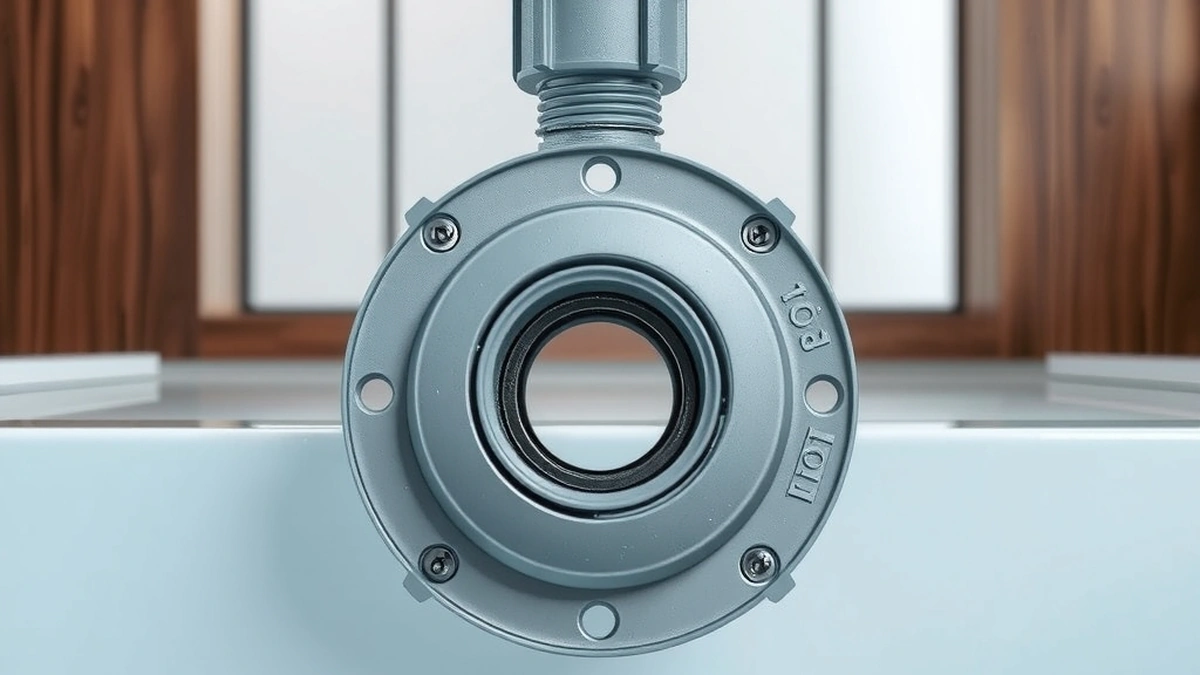
Fitting leaks are repaired with a new gasket and faceplate at $150 to $400, a fitting replacement at $250 to $600, or tile and plaster work at $1,500 to $5,000. A dye test at $100 to $250 identifies which fitting is leaking.
- Dye test
- $100 - $250
- Gasket and faceplate
- $150 - $400
- Fitting replacement
- $250 - $600
- Tile and plaster repair
- $1,500 - $5,000
Some links on this page are affiliate links.If you buy through them we may earn a commission at no extra cost to you. We do not accept payment for rankings. Read the full disclosure.
A leak at a pool fitting is repaired for $150 to $400 when the gasket and faceplate are the problem, $250 to $600 when the fitting itself has failed, and $1,500 to $5,000 when the tile and plaster around it have to be rebuilt. The first step is a dye test at $100 to $250, because cutting into the wrong fitting costs more than finding the right one.
Where fitting leaks happen
A pool has a small number of penetrations, and each one is a potential leak: the skimmer, the return fittings, the main drain, the light niche, and any water feature or cleaning line.
Each is sealed by a gasket, a faceplate, or a packed joint, and each is surrounded by tile or plaster. A leak can start at the seal, at the fitting body, or in the surface around it, and the three have different repairs.
The repair options
| Problem | Repair | Cost |
|---|---|---|
| Worn gasket | New gasket and faceplate | $150 - $400 |
| Cracked fitting body | Cut out and replace | $250 - $600 |
| Failed seal at light niche | Re-seal the niche | $300 - $700 |
| Cracked skimmer throat | Patch or replace | $400 - $900 |
| Tile and plaster around fitting | Rebuild the surround | $1,500 - $5,000 |
| Leak in the buried line | Excavate and repair | $800 - $3,000 |
The last two rows are where the cost jumps. A $200 gasket becomes a $3,000 job when the water has been running behind the surface for a season.
The dye test, and why it comes first
A dye test is simple. With the pump off and the water still, a technician releases a small amount of dye near a fitting and watches. If the dye is drawn toward the fitting, water is entering there.
It costs $100 to $250 and it takes minutes per fitting. Without it, the alternative is to open the most likely fitting and hope, which is how a $200 repair becomes a $600 one with no better result.
The test also distinguishes a fitting leak from a shell leak. A crack in the plaster near a fitting draws dye as well, and the repair for a crack is different from the repair for a gasket.
Gaskets, faceplates, and fittings
The gasket is a rubber or neoprene ring that seals between the fitting body and the pool wall. It hardens with age, takes a compression set, and stops sealing.
Replacing a gasket and faceplate is $150 to $400 including labour, and it can often be done underwater. The fitting body is cut out and replaced at $250 to $600 if it is cracked or the threads are stripped.
Two details decide whether the repair holds. The gasket must be the right material for the water chemistry, and the faceplate screws must be tightened evenly rather than in sequence around the circle. An over-tightened screw distorts the faceplate and starts the next leak.
When the surface is the problem
If the dye is drawn into a crack beside the fitting rather than into the fitting itself, the surround has failed. That is common on older pools where the plaster around a return has cracked and water has been seeping behind it.
The repair is to cut back the failed area, rebuild the substrate, and reinstate the tile and plaster. That is $1,500 to $5,000, and it is tile work rather than plumbing.
This is also the point where a resurface becomes worth discussing. If the surround has failed at three fittings, the surface is telling you something about its age.
A drip at 1 to 2 gallons a day is a rounding error on the water bill. The damage is elsewhere: water moving behind the plaster erodes the substrate around the fitting, and the plaster loses its bond in a ring that grows outward.
That is why a $200 gasket becomes a $1,500 tile and plaster repair, and why the second repair is measured in square feet rather than minutes. The leak itself does not get worse quickly; the surface around it does.
What a running leak costs, and the six steps
- Confirm the pool is losing water with a bucket test.
- Note whether the loss happens with the pump on or off.
- Book a dye test on the suspect fittings.
- Repair the seal, the fitting, or the surround according to the result.
- Re-test with dye after the repair.
- Check the chemistry and the water level.
Step five is the one that gets skipped. A repair that is not re-tested is a guess, and a leak that continues behind a new gasket does more damage than the original.
What the repair does not include
A fitting repair does not include the buried line, the filter plumbing, or the shell. Those are separate diagnoses, and a leak that persists after a fitting repair is usually in one of them.
It also does not include rebalancing the water after a partial drain. If the repair required draining below the fitting, the refill and the chemistry are a separate line at $150 to $400.
The short version
Find the leak with a dye test, then repair the seal, the fitting, or the surround. The first two are $150 to $600; the third is $1,500 to $5,000. The prices by scenario are in leaks at fittings: what a fix costs, prevention is in leaks at fittings: how to prevent it, and the diagnosis is in leaks at fittings: warning signs.
Frequently asked questions
How much does it cost to fix a leak at a pool fitting?
A gasket and faceplate is $150 to $400. Replacing a fitting is $250 to $600. If the leak has damaged the tile or plaster around it, the repair is $1,500 to $5,000 because that is tile work rather than a plumbing job.
How do I find which fitting is leaking?
A dye test at $100 to $250. A small amount of dye is released near each fitting with the pump off, and a leak draws the dye toward it. It is the fastest way to avoid cutting into the wrong place.
Can a fitting leak fix itself?
No. A gasket may swell and slow a leak temporarily, but the water is still moving behind the surface. Delaying lets the leak erode the plaster and the shell around the fitting.
Why does the pool lose water only when the pump runs?
That points to a pressure-side leak, usually on the return line or the filter plumbing, rather than a suction-side fitting. A leak that continues with the pump off is more likely at a fitting or the shell.
Does a fitting leak require draining the pool?
Usually not. Gaskets, faceplates, and most fittings are replaced underwater by a diver or by a technician working from the deck. Draining is needed when the plaster or tile around the fitting has failed.
How much water does a fitting leak waste?
A steady drip can lose 1 to 2 gallons a day, and a cracked fitting can lose far more. The water itself is cheap; the damage to the surrounding surface is the expense.
Sources
Some links are affiliate links.If you buy through them we may earn a commission at no extra cost to you. We do not accept payment for rankings. Read the full disclosure.