Pebble vs vinyl liner: the widest price gap in pool.
Pebble costs $8,000 to $15,000 for 15 to 20 years; a liner costs $2,500 to $7,500 for 8 to 12. When the premium surface earns its price.
Pebble costs $8,000 to $15,000 and lasts 15 to 20 years, or $400 to $1,000 per year. A vinyl liner costs $2,500 to $7,500 and lasts 8 to 12, or $208 to $938. Pebble is two to three times the price and roughly twice the life.
- Pebble installed
- $8,000 - $15,000
- Vinyl liner installed
- $2,500 - $7,500
- Cost per year
- $400 - $1,000 vs $208 - $938
- Life
- 15 - 20 years vs 8 - 12
Some links on this page are affiliate links.If you buy through them we may earn a commission at no extra cost to you. We do not accept payment for rankings. Read the full disclosure.
Pebble costs $8,000 to $15,000 and a vinyl liner $2,500 to $7,500, the widest gap between any two common pool surfaces. Pebble lasts 15 to 20 years against 8 to 12, so per year the gap narrows to $400 to $1,000 against $208 to $938. The premium is real, but it is smaller than the sticker suggests.
Stone versus sheet
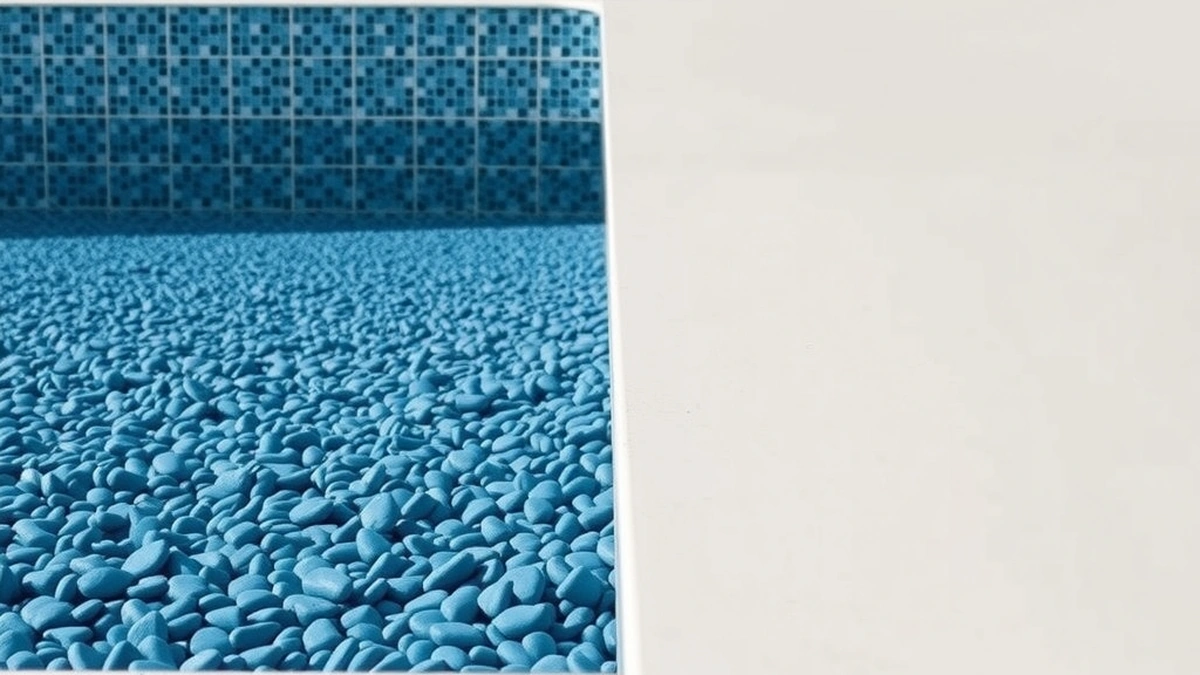
Pebble is a cement finish with exposed aggregate, troweled onto a plaster-ready shell. It is bonded, hard, and textured.
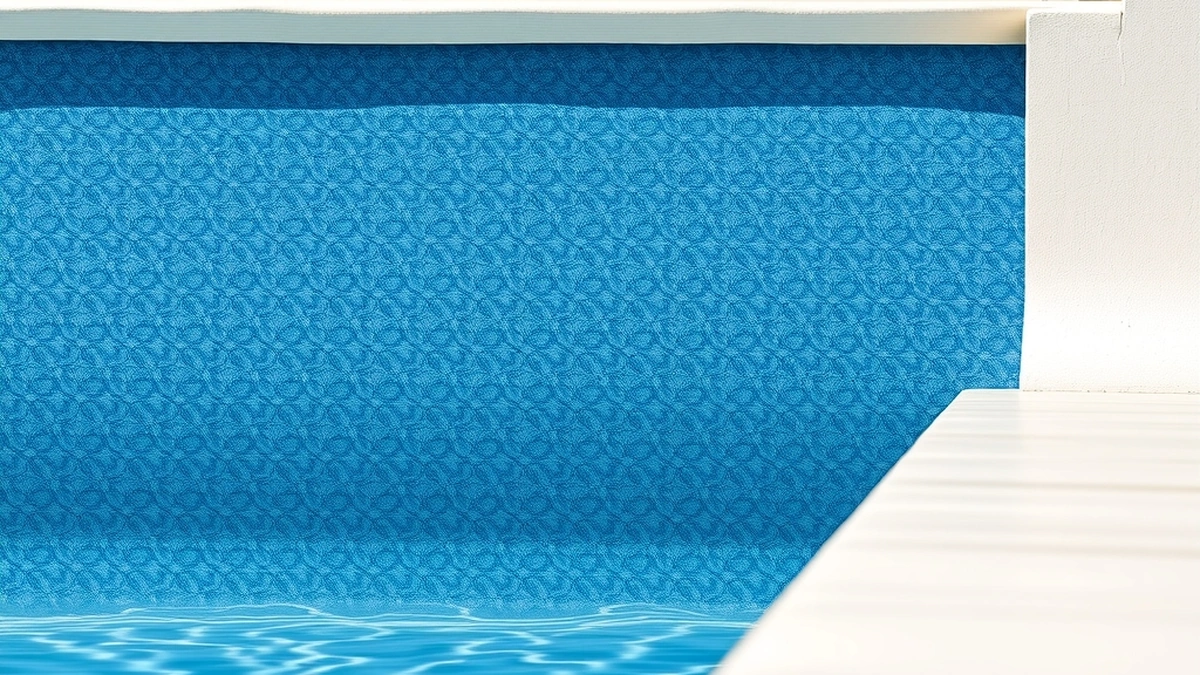
A vinyl liner is a PVC sheet hung inside the pool, held by a bead at the top and gaskets at the fittings. It is a membrane, soft, and replaceable as a unit.
One is part of the structure. The other is a lining inside it. That difference explains the price, the feel, and the replacement cycle.
Price and life
| Pebble | Vinyl liner | |
|---|---|---|
| Installed | $8,000 - $15,000 | $2,500 - $7,500 |
| Per square foot, 855 sq ft | $9.36 - $17.54 | $2.92 - $8.77 |
| Expected life | 15 - 20 years | 8 - 12 years |
| Cost per year | $400 - $1,000 | $208 - $938 |
| Surface | Coarse, hard | Smooth, soft |
| Repair | Patch and blend | Patch kit |
| Replacement | Full resurface | Full reline |
The per-year figures are division. Pebble: $8,000 ÷ 20 = $400, $15,000 ÷ 15 = $1,000. Liner: $2,500 ÷ 12 = $208, $7,500 ÷ 8 = $938.
The liner is cheaper per year at both ends. That is the honest arithmetic, and it is the reason the liner keeps being installed despite the shorter life.
What the extra money buys
Three things: a surface that does not move, a surface that grips, and a longer interval before the next job.
A pebble finish is bonded to the shell. It does not wrinkle, float, or relax when the water level drops. A liner depends on water pressure to stay against the wall, and on the track and gaskets to stay put.
The grip is the second. Pebble is the grippiest common finish, and on steps, in the shallow end, and around a slide, that is a practical difference rather than a cosmetic one.
The third is time. One pebble finish covers roughly the period of two liners, so the owner avoids one disruption, one drain, and one set of decisions.
What the maintenance looks like
Pebble needs brushing and balanced chemistry, and it can be acid washed if it scales or stains. The surface is hard enough to take a brush and a pumice block without damage, and a patch can be troweled in.
A liner needs the same chemistry plus attention to the water level, and it cannot be acid washed or abraded. A stain on a liner is treated with a cloth and a dedicated cleaner, and a stubborn mark stays. A wrinkle is permanent, and a tear at a fitting is a patch that shows.
Neither routine is onerous. The difference is that one surface tolerates intervention and the other does not.
Where the liner wins
The liner wins on initial cost, on replacement cost, and on softness. It is also the faster job, and it can be done without the shell preparation that a cement finish needs.
For a rental, a holiday let, or a pool that will be sold within a few years, the liner is the rational buy. The cost per year is lower, and the remaining life is passed to the next owner rather than paid for by this one.
The liner also wins where the shell cannot take a cement finish. A panel-wall pool with a track is a liner pool, and pebble is not an option without a conversion.
Where pebble wins
Pebble wins on life, on grip, on chemistry tolerance, and on stability. It does not care about the water level, it does not float, and it tolerates a season of neglect better than any other common surface.
It wins on appearance too. A pebble pool at ten years looks like a pool, where a liner at ten years is usually at the end of its pattern life and due for replacement. The pebble colour is in the stone and does not fade; a printed liner pattern fades from the top down, and the fade is most visible at the waterline where the sun hits it.
Five steps to choose
- Confirm what the shell can take. This decides more than the budget.
- Compare the per-year cost at your ownership horizon.
- Stand on both surfaces and decide on feel.
- Ask what replacement costs at the end of life.
- Check the water table and how the pool is managed.
Step five matters for the liner. A high water table and a liner are a combination that needs a relief valve and careful winter management, and a pool that is drained for repairs is a pool where a liner is at risk and pebble is not.
Step three is the one that cannot be delegated. Two owners can look at the same two pools and choose differently, and both are right, because the surface is a daily experience rather than a specification.
The short version
Pebble is two to three times the price, roughly twice the life, and a different surface entirely. Per year the liner is still cheaper, so the premium is bought for grip, stability, and the interval between jobs. Prices are in pebble cost and vinyl liner cost, and the liner risks are in vinyl liner problems.
Frequently asked questions
Is pebble worth two to three times a vinyl liner?
On a long hold, the per-year cost is close: $400 to $1,000 against $208 to $938. The liner is still cheaper per year at the low end, so pebble is bought for the surface and the life rather than for the arithmetic.
How much cheaper is a vinyl liner?
At the low end, $5,500 cheaper: $2,500 against $8,000. At the high end, $7,500 cheaper: $7,500 against $15,000. Both last less time, which narrows the gap per year.
Which lasts longer?
Pebble, at 15 to 20 years against 8 to 12 for a liner. That is roughly two liner replacements in the life of one pebble finish.
Can a liner pool take a pebble finish?
Not without a construction conversion. Pebble needs a plaster-ready shell, and a liner pool has a track and panel walls. Converting is a different budget from resurfacing.
Which feels better?
They are opposites. Pebble is hard and coarse, with grip. Vinyl is soft and smooth, with a little give. Owners tend to have a strong preference after standing on both.
Which is better for a rental property?
Pebble, if the budget allows. It tolerates chemistry drift and heavy use, and it does not wrinkle or float. A liner is cheaper to replace, which is the argument on the other side.
Sources
Some links are affiliate links.If you buy through them we may earn a commission at no extra cost to you. We do not accept payment for rankings. Read the full disclosure.