Plaster problems: what each symptom means and costs
Etching, scaling, delamination, cracks, and mottling in pool plaster, what causes each one, and when a repair is worth doing.
The common plaster problems are etching, calcium scaling, delamination, cracks, mottling, roughness, and staining. Most trace back to water chemistry or preparation, and the cost to fix them runs from $400 for an acid wash to $10,000 for a full replaster.
- Most common
- Etching and scaling
- Repair cost
- $250-$2,500
- Replaster cost
- $4,000-$10,000
- Main cause
- Water chemistry drift
Some links on this page are affiliate links.If you buy through them we may earn a commission at no extra cost to you. We do not accept payment for rankings. Read the full disclosure.
Plaster problems are almost always visible before they are expensive. Etching, scaling, delamination, cracks, mottling, roughness, and staining each have a distinct look and a distinct cause, and most of them trace back to water chemistry or to preparation done before the finish was troweled. Repair costs run from $400 to $800 for an acid wash up to $4,000 to $10,000 for a replaster when the surface has failed as a whole.
The seven failures
Plaster is a cement and marble-dust coating. It is alkaline, slightly porous, and soluble in aggressive water. Every common problem is a version of one of those three facts.
| Symptom | Usual cause | Typical fix | Cost (estimate) |
|---|---|---|---|
| Chalky, dull patches | Low pH, undersaturated water | Rebalance, then acid wash | $400-$800 |
| Rough, sandy feel | Etching exposing aggregate | Patch, or replaster if widespread | $250-$2,500 or replaster |
| White crust at tile line | High pH, high calcium | Scale removal, chemistry | $300-$900 |
| Hollow thud when tapped | Bond failure, water behind finish | Drained patch | $800-$2,500 |
| Single long crack | Shell movement, settlement | Epoxy injection, stitching | $300-$900 |
| Fine web of lines | Hard trowel, shrinkage | Usually nothing | $0 |
| Brown stains, spreading | Rusted rebar | Chip to steel, treat, patch | $300-$1,200 |
The costs are planning estimates, not quotes. The row that matters most is the fourth: hollow plaster is the one symptom that gets worse at its edges regardless of what the water does next.
Etching and scaling, the chemistry pair
Etching and scaling are opposites, and a pool can have both in different places. Etching happens when water is undersaturated, so it dissolves calcium out of the plaster to reach balance. The surface goes dull, then chalky, then rough as the cream wears away and the aggregate stands up. Scaling happens when water is oversaturated, so calcium comes out of solution and deposits on the surface, usually as a hard white crust at the waterline and on the tile.
Both are measured by the same four numbers: pH, total alkalinity, calcium hardness, and water temperature. A pool at pH 7.4 with alkalinity at 80 to 120 ppm and hardness in range does neither. A pool left at pH 7.0 for a summer etches. A pool run at pH 8.0 with hard fill water scales.
The asymmetry is what catches owners. Etching removes material permanently. Scaling can be removed, but the removal takes a little surface with it.
Delamination and cracks
Delamination is the failure that ends a finish’s life. Water gets behind the plaster through a crack, a fitting, or a bond failure at application, and the sheet comes away from the shell in plates. Tap the wall with a screwdriver handle: a ring means bond, a dull thud means hollow. Delamination signs covers how far the problem usually runs once it starts.
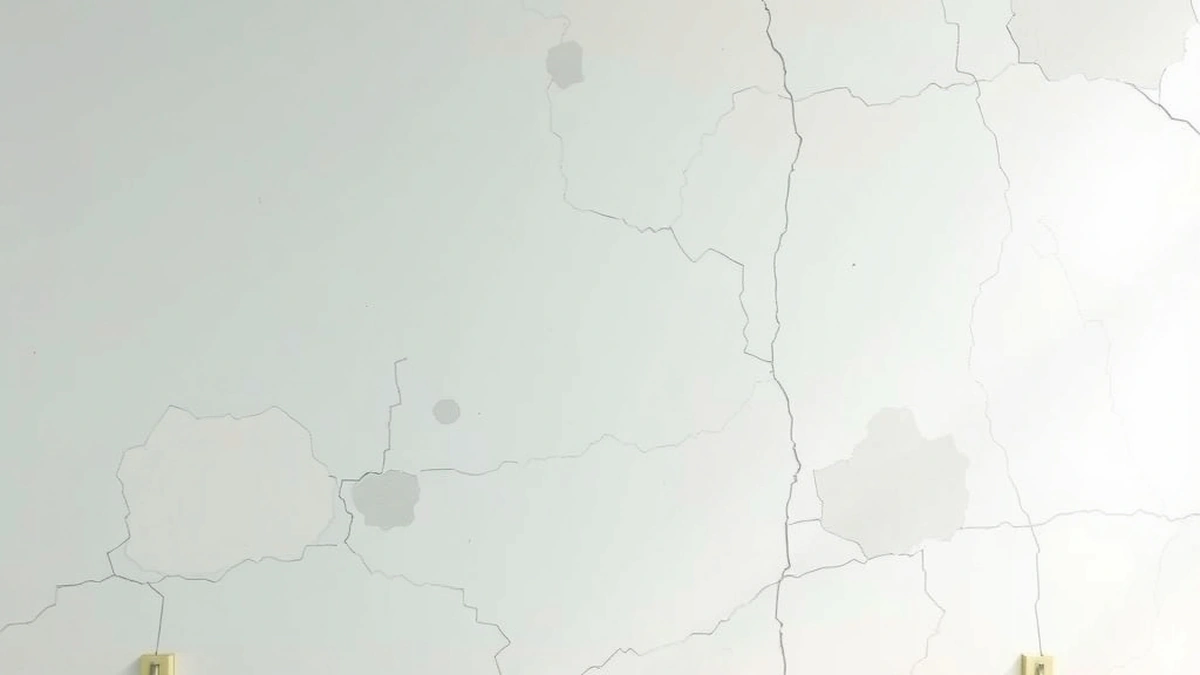
Cracks are a separate question. A single line that crosses the surface is structural until proven otherwise, and it should be injected with epoxy rather than smeared over. A fine web of shallow lines is craze cracking, which is cosmetic, common on hard-troweled plaster, and usually not worth repairing. The test is whether a crack widens, returns after repair, or has rust staining at its edge.
Cosmetic against structural
| Signal | Cosmetic | Structural |
|---|---|---|
| Discoloration only | Yes | No |
| Surface roughness | Often | Sometimes |
| Hollow sound when tapped | No | Yes |
| Crack that returns | No | Yes |
| Rust staining | No | Yes |
| Water loss | No | Yes |
The table is a triage tool, not a diagnosis. Two or more signals in the right column mean the finish is at the end of its life regardless of how the pool looks from the deck, and the money spent on patches will not change the outcome.
What the repairs cost
- Acid wash: $400 to $800. It removes stains and a thin layer of surface, and it is maintenance rather than restoration.
- Spot patch: $250 to $600. Appropriate for a chip or a small area of roughness.
- Crack injection: $300 to $900. Epoxy injection on one to three cracks.
- Drained delamination repair: $800 to $2,500. Drain, strip hollow plaster, repair, patch, refill.
- Replaster: $4,000 to $10,000. The full range for a typical residential pool.
The arithmetic that decides between them is per square foot. A 60 square foot delamination at $2,000 is $2,000 ÷ 60 = $33.33 per square foot. A full replaster on an 855 square foot pool at $6,500 is $6,500 ÷ 855 = $7.60 per square foot. The local repair costs more than four times as much per foot of surface treated. Pool plaster repair cost runs the numbers on the middle cases.
Five steps when you find a problem
- Photograph the area with something for scale, and note whether it is growing week to week.
- Test pH, alkalinity, calcium hardness, and stabilizer before you call anyone, because the water record is the diagnosis.
- Tap the surrounding plaster with a screwdriver handle and mark any hollow areas with tape.
- Get a repair quote and a replaster quote on the same pool, each with the interior square footage stated.
- Ask what the repair will look like after cure, since color match is the complaint that follows most patches.
Step two is the one owners skip. A surface that has been etched by two summers at pH 7.0 will etch again after a patch unless the water is corrected, and the second failure is usually blamed on the contractor. Plaster maintenance covers the targets that prevent it.
The short version
Most plaster problems are chemistry problems that have become surface problems. Etching and scaling come from pH and calcium balance, delamination and cracks come from preparation and shell movement, and staining usually means steel is corroding. Fix the water first, repair locally only when the damage is small and the surrounding finish is sound, and replaster at $4,000 to $10,000 when the symptoms appear in more than one place at once. Plaster cost covers what replacement involves.
Frequently asked questions
What causes rough spots on pool plaster?
Roughness usually comes from etching, where low pH has dissolved calcium out of the surface and left the aggregate standing proud. It can also come from scale that has formed and then flaked away, leaving a pitted surface behind.
Why is my plaster turning white and chalky?
Chalking is the surface giving up calcium carbonate. It happens when water is undersaturated, so it pulls material from the finish. Constant pH rise and white residue on the tile line are the usual companions.
Can plaster delamination be repaired?
Only locally. A drained repair at $800 to $2,500 can replace hollow plaster over a small area, but once delamination covers more than a few square feet the finish is failing as a system and a replaster is the durable answer.
What does plaster etching look like?
Dull, chalky patches that feel rough underfoot, often in the shallow end and on steps. The surface loses its sheen and the color goes patchy, and in bad cases the aggregate shows through the cream.
Is calcium scaling a plaster problem or a water problem?
Both. Scale forms when water is oversaturated with calcium, but it only becomes a plaster problem when the deposits bond to the surface and have to be removed mechanically or with acid, which takes some finish with them.
How do you tell a crack from a craze?
A structural crack is a single line that runs across the surface, often from a fitting to a wall. Craze cracking is a fine web of shallow lines, usually cosmetic, and common on hard-troweled plaster.
Sources
Some links are affiliate links.If you buy through them we may earn a commission at no extra cost to you. We do not accept payment for rankings. Read the full disclosure.