Vinyl liner installation: cost, sequence, and pitfalls
A vinyl liner costs $2,500 to $7,500 installed, or $3 to $9 per square foot. What the job involves, where DIY fails, and the fit details that decide life.
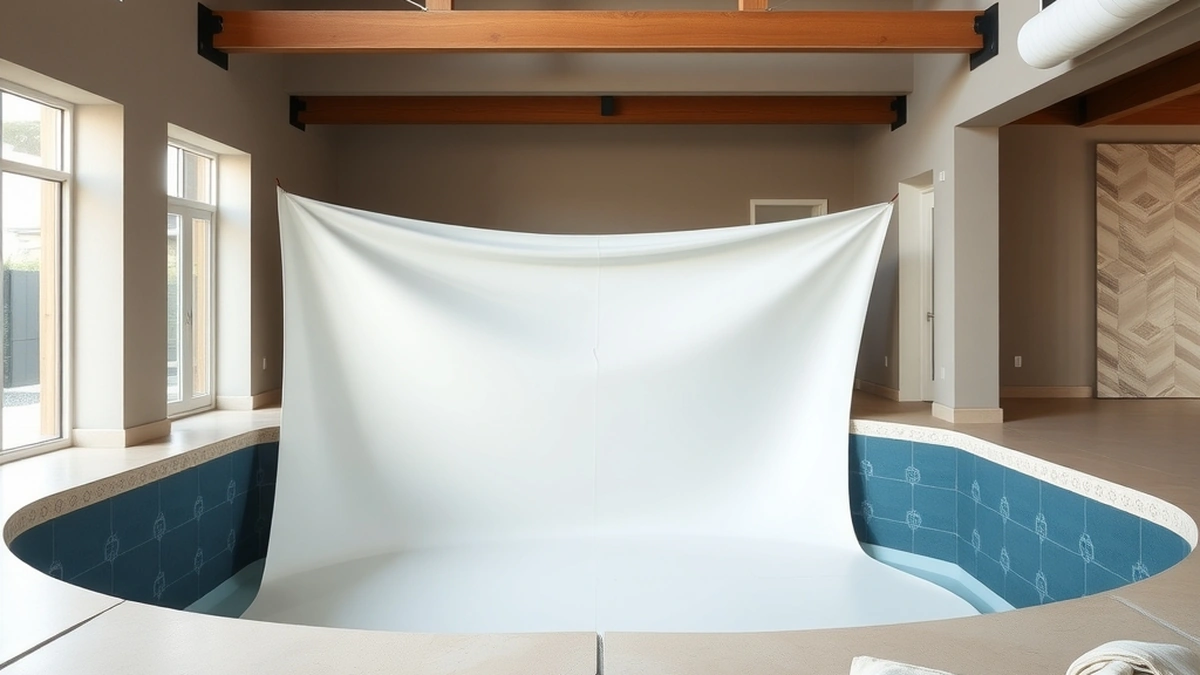
Vinyl liner installation costs $2,500 to $7,500 for a typical pool, or $3 to $9 per square foot. The job is measure, order a custom liner, prepare the walls and floor, set the liner under vacuum, fill, and cut the fittings.
- Installed cost
- $2,500 - $7,500
- Per square foot
- $3 - $9
- Expected life
- 8 - 12 years
- Install time
- 2 - 4 days
Some links on this page are affiliate links.If you buy through them we may earn a commission at no extra cost to you. We do not accept payment for rankings. Read the full disclosure.
Vinyl liner installation costs $2,500 to $7,500 installed, or $3 to $9 per square foot across a typical 855-square-foot pool. The job is a sequence rather than a single task: measure the shell, order a liner cut to it, prepare the walls and floor, set the liner under vacuum, fill, and cut the fittings. Each step has a failure mode that shows up months later.
What a vinyl liner is
A vinyl liner is a thick PVC sheet, usually 20 to 30 mil, that sits inside the pool shell and holds the water. It is not a coating; it is a membrane, and the shell behind it is dry.
That is the defining difference from plaster or fibreglass. A liner pool has a structural shell, a liner as the water barrier, and fittings that clamp the liner at the skimmer, returns, lights, and steps.
The cost, split
| Item | Cost | Notes |
|---|---|---|
| Liner, stock size | $900 - $2,000 | Standard shapes only |
| Liner, custom cut | $1,500 - $3,500 | Measured to the shell |
| Wall and floor prep | $400 - $1,500 | Patching, smoothing |
| Fitting and vacuum set | $600 - $1,800 | Crew labour |
| New gaskets and faceplates | $80 - $300 | Often reused |
| Water and startup chemicals | $150 - $400 | Fill and balance |
| Total installed | $2,500 - $7,500 | Typical range |
The arithmetic is straightforward. A custom liner at $2,500 plus prep at $900 plus fitting at $1,200 plus gaskets at $150 plus water at $250 is $5,000. The low end of the total is a stock liner on a simple pool; the high end is a custom liner with wall repair and new fittings.
Divided by 855 square feet, $2,500 is $2.92 and $7,500 is $8.77 per square foot, which is where the published $3 to $9 band comes from.
The installation sequence
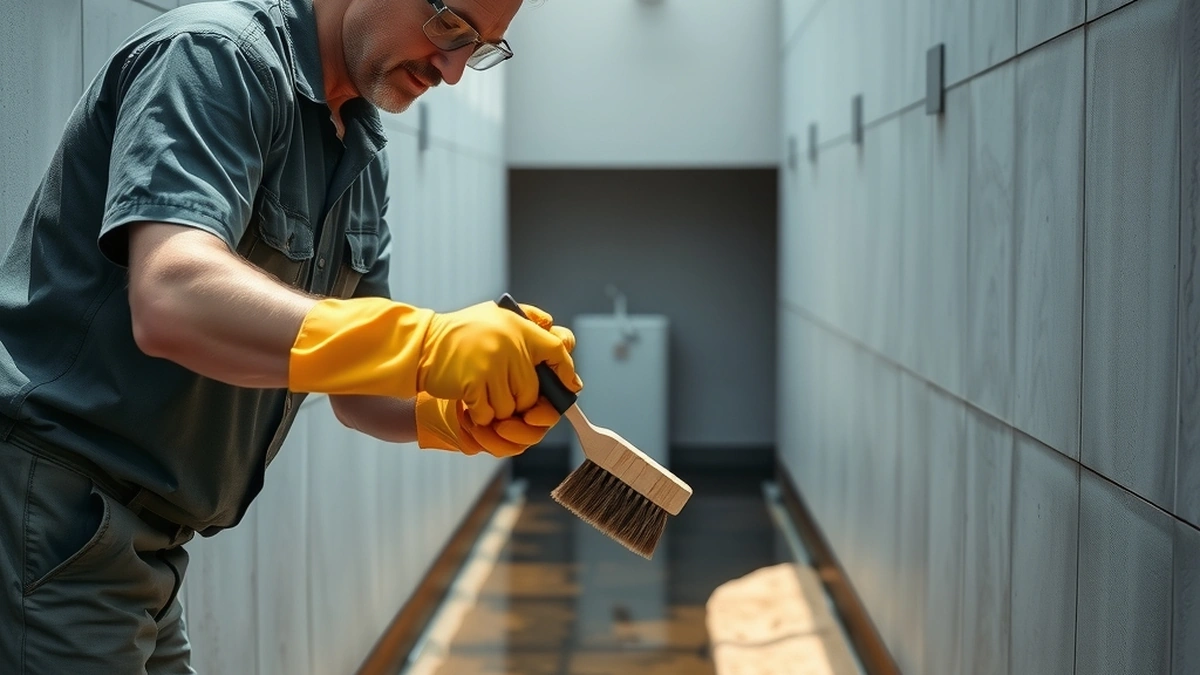
- Drain the pool and remove the old liner, keeping the fittings and faceplates for inspection.
- Inspect the shell for cracks, rust, and soft spots, and repair before anything goes back in.
- Smooth the floor and walls, fill hollows, and sand sharp edges that would abrade the new sheet.
- Measure the pool and the fitting positions, and order a liner cut to those dimensions.
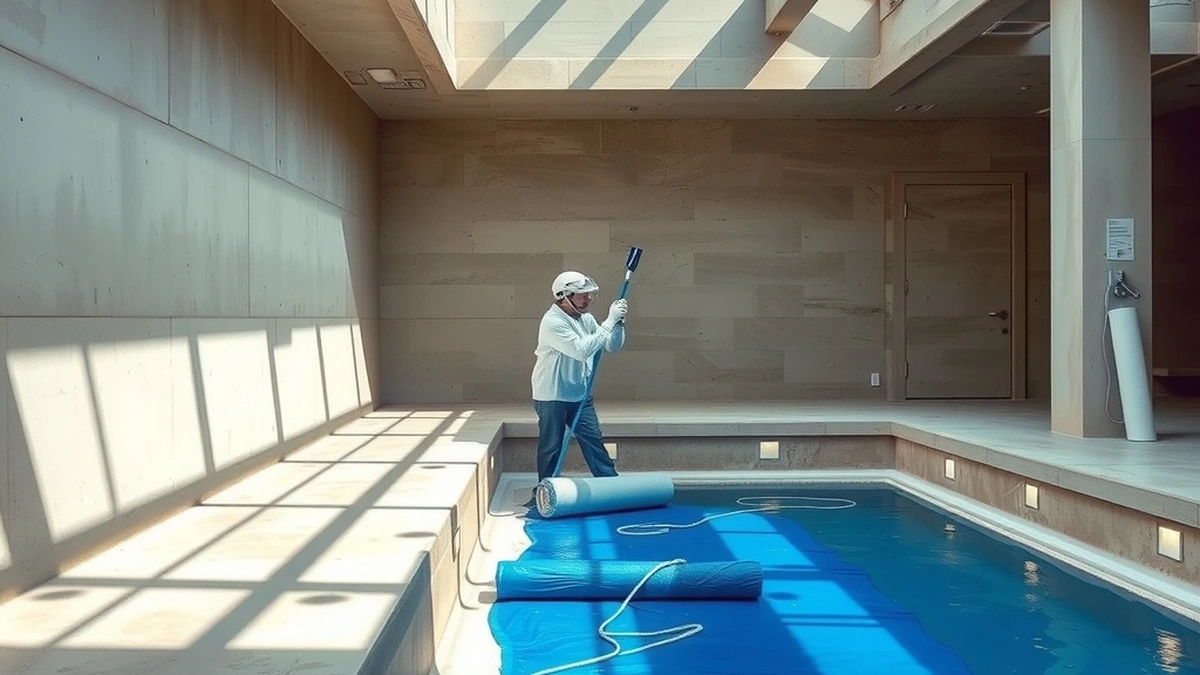
- Drape the liner, align the bead in the track, and draw a vacuum behind it to pull it tight.
- Fill the pool slowly, cutting the fittings as the water reaches them, then balance the chemistry.
Step six is where the detail matters. Fittings are cut wet, with the liner under tension, and a hole cut in the wrong place cannot be moved. That is the step that makes in-ground liner work a crew job rather than a homeowner job.
Where DIY works and where it does not
DIY works on an above-ground pool with a standard shape and an overlap liner. The liner drapes over the wall, the top rail clamps it, and there are no fittings to cut in the water.
DIY fails on an in-ground pool for three reasons. The liner has to be ordered to a measurement accurate to a fraction of an inch. The vacuum set needs equipment most homeowners do not have. And the fittings have to be cut while the pool is filling, which is a two-person job with no second attempt.
The saving on an in-ground job is the labour line, $600 to $1,800. The risk is a $1,500 to $3,500 liner that wrinkles or pulls out of the track.
What the first fill tells you
The fill is the inspection. As the water rises, the liner should pull flat against the walls with no shadows behind it and no ripples at the floor. A shadow means the vacuum did not draw fully, and a ripple at the floor means debris or a hollow in the shell.
Wrinkles at the corners and along the wall-to-floor junction are the common complaint, and they are almost always installation rather than material. A liner that is set cold, or set without vacuum, stretches unevenly and never relaxes.
Walk the pool at half fill and again at full. If a bead has lifted from the track, it can still be reseated before the water reaches it. After that, the fix is draining.
The details that decide how long it lasts
Three installation details separate a liner that lasts twelve years from one that lasts six:
- Bead seating. The liner bead must be fully seated in the track all the way around before filling. A short section that is not seated pulls out under load.
- Floor smoothing. Any sharp debris or ridge under the liner abrades it from below, and the puncture appears years later.
- Fitting alignment. Gaskets and faceplates must clamp the liner evenly. An over-tightened screw distorts the sheet and starts a tear.
None of these is expensive. All of them are invisible after the pool is full.
What the job does not include
Liner installation does not include structural shell repair, new coping, new decking, or a new skimmer. Those are separate trades and separate lines, and they are the reason a quote can be $3,000 on one pool and $7,000 on another of the same size.
Ask for the scope in writing. The full price picture is in vinyl liner cost, the failure modes are in vinyl liner problems, and the routine that protects the investment is in vinyl liner maintenance.
The short version
A liner is a membrane, not a coating, and the installation is a measured sequence with no second attempt at the fittings. Budget $2,500 to $7,500, or $3 to $9 per square foot, and expect two to four days. The preparation and the bead seating decide the life more than the liner thickness does.
Frequently asked questions
How much does vinyl liner installation cost?
Between $2,500 and $7,500 installed for a typical residential pool, which is $3 to $9 per square foot across 855 square feet. The range is set by pool size, liner thickness, and how much wall repair is needed.
Can I install a vinyl liner myself?
On an above-ground pool, sometimes. On an in-ground pool the liner is set with a vacuum, the fittings are cut wet, and a misaligned bead cannot be corrected after filling. Most in-ground jobs are done by a crew.
How long does installation take?
Two to four days for an in-ground pool, including draining, wall preparation, liner setting, and filling. Filling alone takes 24 to 48 hours with a garden hose.
Why is a custom liner needed?
Because a liner is cut to the exact shape of the pool and the fitting positions. A stock liner only works on a pool with standard dimensions, and an ill-fitting liner wrinkles or pulls out of the track.
What is the vacuum method?
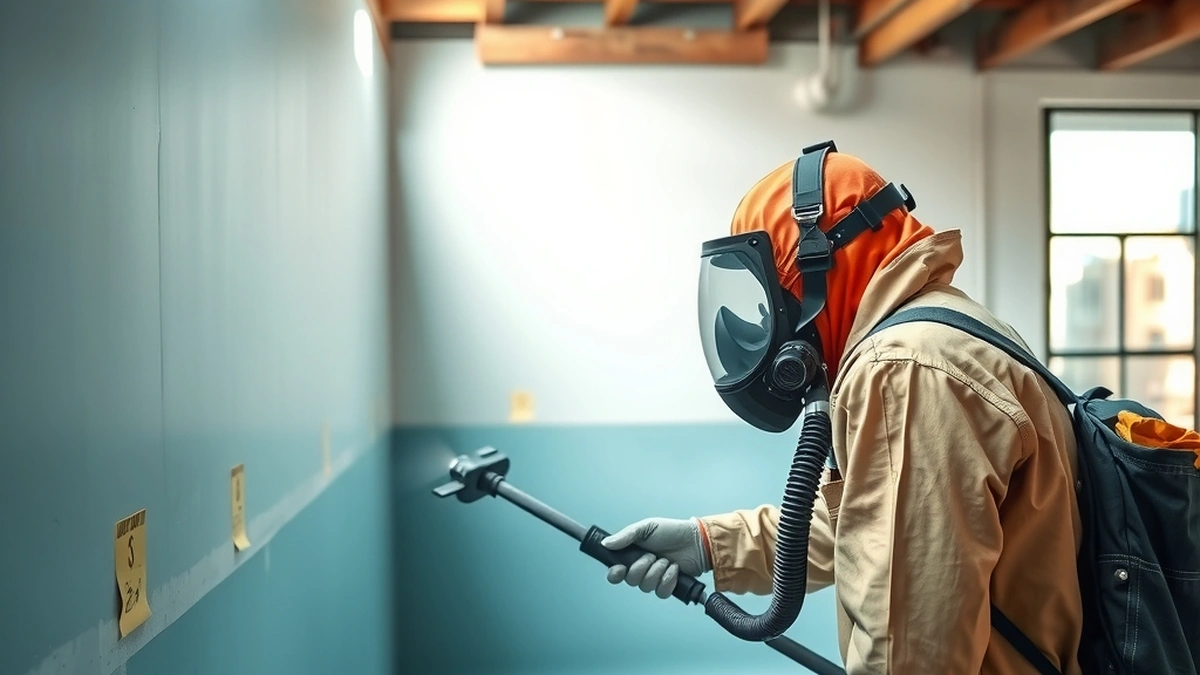
The liner is draped over the pool and a vacuum is drawn behind it, pulling it tight against the walls and floor while the pool fills. It removes wrinkles without stretching the material.
How long does a vinyl liner last?
Eight to twelve years with balanced water and a covered winter. Fading, wrinkling, and seam failure are the usual end points, and a liner that is drained in summer ages faster.
Sources
Some links are affiliate links.If you buy through them we may earn a commission at no extra cost to you. We do not accept payment for rankings. Read the full disclosure.