Vinyl liner vs Plaster
Vinyl liner vs Plaster: practical numbers, costs, and trade-offs, written independently.
Vinyl liner vs Plaster: practical numbers, costs, and trade-offs, written independently. The guide below shows the numbers and the trade-offs.
- Typical range
- Varies by system and site
- First step
- Measure the space and confirm the load
- Professional help
- Recommended for structural or electrical work
Some links on this page are affiliate links.If you buy through them we may earn a commission at no extra cost to you. We do not accept payment for rankings. Read the full disclosure.
A vinyl liner costs less than plaster resurfacing — roughly $4,000 to $7,500 installed for a standard pool against $4,000 to $10,000 for white plaster — but the two are not interchangeable, because a liner only fits a pool built with wall panels and a liner track. Plaster is a finish applied to a concrete or gunite shell; a liner is a membrane hung inside a framed pool. The right comparison depends on which kind of pool you already own.
What each one is
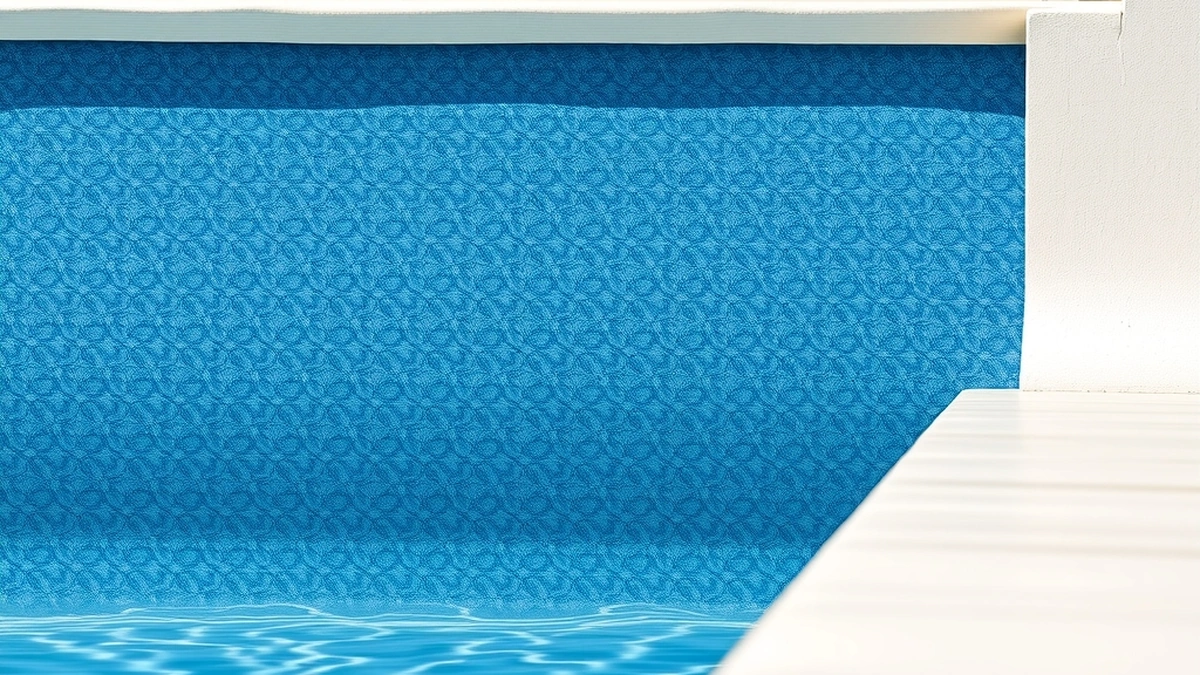
A vinyl liner is a thick PVC membrane, cut and welded to the pool’s dimensions, that is stretched into a pool with steel or polymer wall panels and locked into a track at the coping. The water sits against the liner, not against the structure.
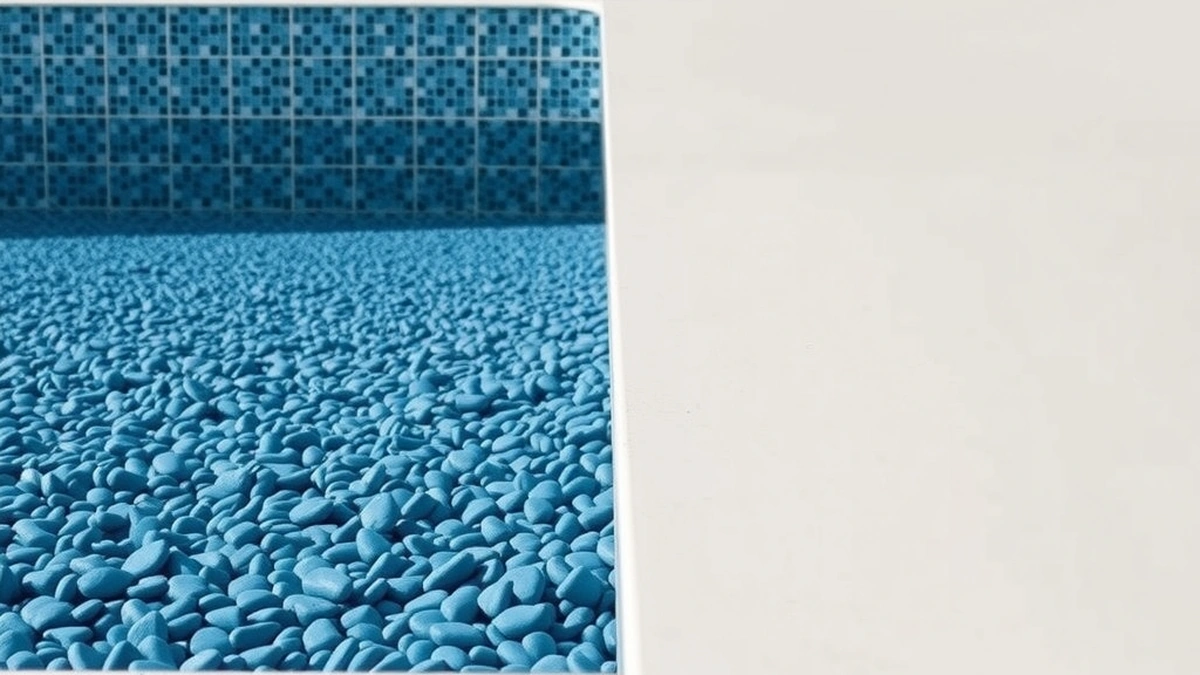
Plaster is a cement-based finish troweled directly onto a concrete or gunite shell, where it bonds to the substrate and becomes the water-facing surface. It is not removable in the way a liner is; replacing it means chipping the old finish off and applying a new one.
That structural difference drives everything else — the cost, the maintenance, the feel, and what happens when the surface reaches the end of its life.
Cost comparison
| Item | Vinyl liner | White plaster |
|---|---|---|
| Typical installed cost | $4,000–$7,500 | $4,000–$10,000 |
| Material | About $4,000 for a 15×30 pool | Included in the resurface |
| Labor | $1,500–$4,000 | Included in the resurface |
| Patch or spot repair | $500–$1,500 | Quoted by area |
| Top of range | Up to about $11,500 | Quartz at $6,000–$12,000 |
| Pool type required | Panels and liner track | Concrete or gunite shell |
The vinyl figures come from the material and labor that make up the job: about $4,000 for the liner itself on a 450-square-foot pool, plus $1,500 to $4,000 in labor, giving $5,500 to $8,000 before options — the market range settles around $4,000 to $7,500 for straightforward pools, with thicker gauges and custom shapes pushing toward $11,500.
At 450 square feet, $4,000 ÷ 450 = $8.89 per square foot for the liner material, and $7,500 ÷ 450 = $16.67 per square foot at the top of the installed range. Plaster at 900 square feet of floor and wall works out to $4.44 to $11.11 per square foot, but note the different areas: a liner covers the same surface, so compare the totals rather than the rates unless you have measured both the same way.
Lifespan and replacement
A liner is replaced when it fails, not on a calendar. Wrinkling that will not stretch out, tears at the fitting cutouts, fading that has gone chalky, and a liner that has pulled out of the track are the usual triggers. Because the liner is a discrete component, replacement is a defined job with a defined price.
Plaster is replaced when the surface has worn through — when it is rough, chalky, etched, or separating from the shell. There is no single interval that applies to every pool; water chemistry, brushing, and the original application decide it. The practical difference is that a liner replacement is a planned purchase with a known number, while a plaster resurface is a diagnosis followed by a quote.
How they behave in use
Vinyl feels smooth and slightly soft underfoot, and it is warmer to the touch than plaster. It is also non-porous, so it does not etch the way cement does, and it does not need the calcium hardness that plaster needs to protect the surface. It can, however, be cut, and a tear at a fitting or a step edge is a real risk in a pool with dogs or heavy use.
Plaster feels hard and slightly textured, and the texture increases as the surface ages. It is porous, so it interacts with the water chemistry: low calcium hardness or low pH will pull material out of the finish. In exchange, plaster can be patched and blended, and it does not have seams or fitting cutouts that can fail.
Vinyl versus plaster, directly
On cost, vinyl usually wins for a like-for-like pool: $4,000 to $7,500 installed against $4,000 to $10,000 for plaster, and the liner job is faster.
On durability, the two are closer than the prices suggest. A liner has a finite service life and will be replaced as a unit. Plaster wears gradually and can be patched, but it is more sensitive to water balance and it cannot be replaced in sections when the whole surface is tired.
On maintenance, vinyl asks less of the chemistry and more of the physical surface — no sharp tools, no dragging furniture across the floor, care around the fittings. Plaster asks more of the chemistry and tolerates more physical contact.
On appearance, vinyl offers a printed pattern and a uniform color; plaster offers a troweled surface that reflects light and can be finished in white, quartz, or aggregate blends.
The honest summary: if you already own a liner pool, a liner is the cheaper and faster route. If you own a concrete pool, a liner is not an option without building a panel system, and the comparison is between plaster and its aggregate variants.
Which one fits your situation
- Identify the pool type. Concrete or gunite shell means plaster or an aggregate finish; panels and a track mean a liner.
- Measure the pool and ask for the installed price, not the material price.
- Ask what the quote includes — for a liner, whether the track and fittings are being replaced; for plaster, whether the chip-out and bond coat are included.
- Compare the total against the years you expect to own the pool, and treat the replacement interval as part of the cost.
- Check the warranty terms for both, and what voids them.
For the wider cost picture, see vinyl liner cost and pool resurfacing cost. If you are choosing a cement finish, plaster vs quartz covers the upgrade path, and pool resurfacing options sets out all four. For a liner that has torn or wrinkled, pool resurfacing repair explains what can be patched.
The bottom line
Vinyl is cheaper to install and simpler to replace, and it only applies to a pool built for it. Plaster costs more up front, bonds to a concrete shell, and needs water chemistry kept in range to reach its service life. Compare the installed totals, confirm which pool type you have, and price the replacement interval into the decision rather than looking only at today’s invoice.
Frequently asked questions
What is the most important measurement?
Start with the ceiling or clearance number; it decides which systems can fit.
What does a typical project cost?
Costs vary by system and site access; the guide shows the line items and a planning range.
Can I install this myself?
Some tasks are DIY-friendly, but structural, electrical, and load-bearing work should be done by a licensed professional.
How long does installation take?
A simple setup is a weekend; a full build with electrical or structural work can take several weeks.
What should I check before buying?
Confirm dimensions, load ratings, and the manufacturer's installation requirements for your exact model.
Where can I find local help?
Ask a licensed contractor or installer who has worked with the same system and can inspect your site.
Sources
Some links are affiliate links.If you buy through them we may earn a commission at no extra cost to you. We do not accept payment for rankings. Read the full disclosure.