Quartz installation: from chip-out to exposed grain
How a quartz aggregate pool finish is installed, stage by stage, including the trowel and wash that expose the grain, and the startup that sets its life.
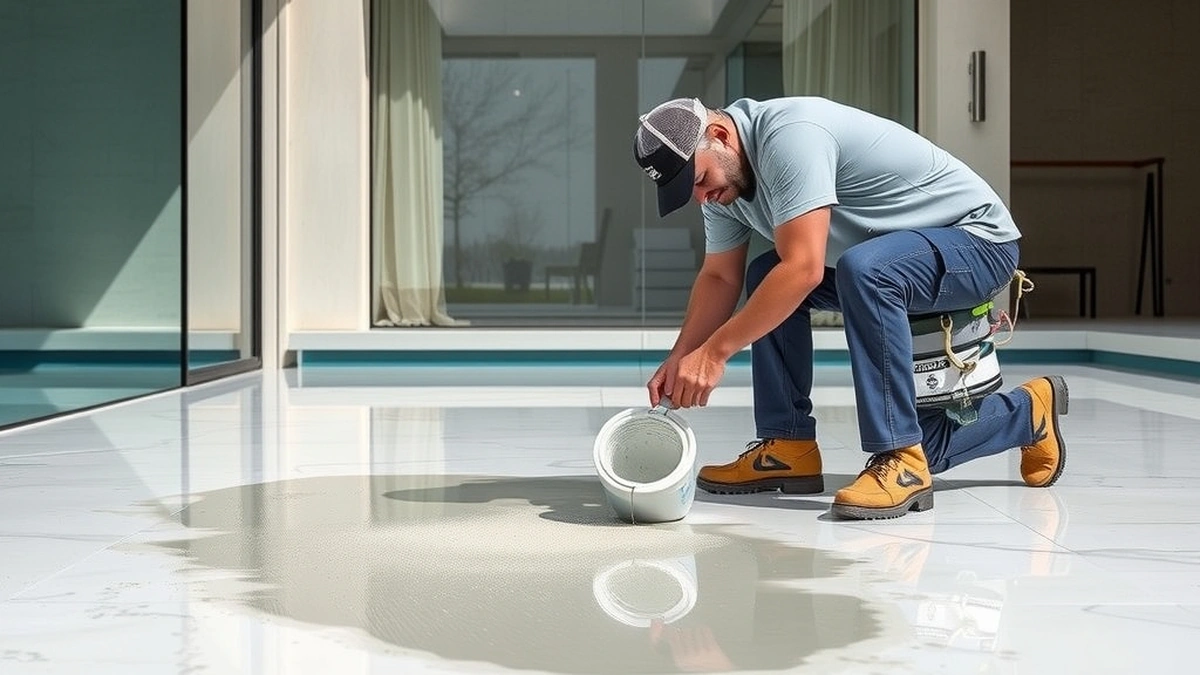
Quartz installation runs drain, chip-out, shell repair, bond coat, scratch coat, aggregate application, trowel, wash-back, fill, and a 28-day startup. The wash-back is the step that separates a good crew from a cheap one: too early and the surface sheds grain for years.
- Typical duration
- 5-8 days plus startup
- Cure period
- 28 days
- Installed cost
- $6,000-$12,000
- Wash-back timing
- Same day, after set
Some links on this page are affiliate links.If you buy through them we may earn a commission at no extra cost to you. We do not accept payment for rankings. Read the full disclosure.
Quartz installation is the application of a cementitious finish carrying crushed quartz aggregate, troweled onto a drained shell and then washed back so the grain sits exposed at the surface. It runs five to eight working days from drain to fill on a typical pool, plus a 28-day cure. The wash-back is the stage that separates crews: a few minutes early or late changes how the surface performs for a decade.
What the job involves
The product is a plaster mix with quartz replacing much of the marble dust. Installation therefore follows the same sequence as plaster — drain, strip, repair, bond, coat, trowel, fill — with one added stage at the end of the trowel: exposing the aggregate before the cement sets hard.
That added stage is the reason quartz costs $6,000 to $12,000 against $4,000 to $10,000 for white plaster. It is labor, not material.
The sequence, stage by stage
| Stage | Typical time | What happens |
|---|---|---|
| Drain and prep | 1 day | Empty the pool, protect fittings, set access |
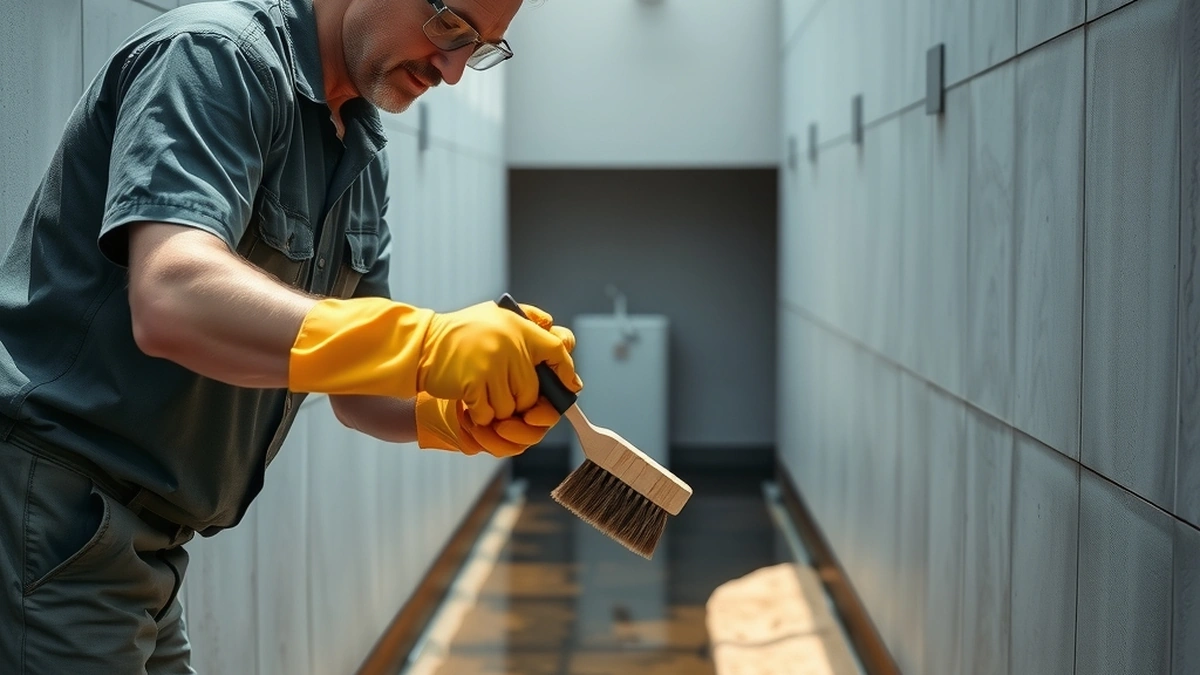
| Chip-out | 1-2 days | Remove the old finish to the shell and haul spoil |
| Shell repair | 1-2 days | Inject cracks, cut out rusted steel, fill hollows |
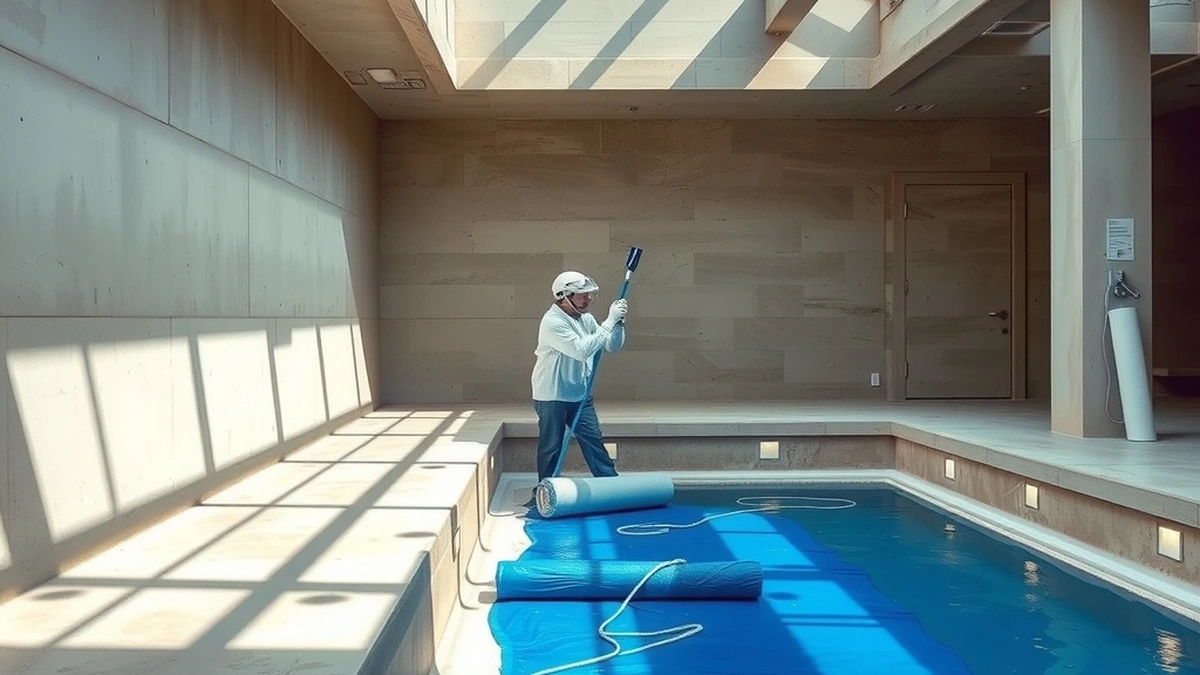
| Bond coat | Half day | Cement slurry over the prepared surface |
| Scratch coat | Half day | First coat, scored to key the finish |
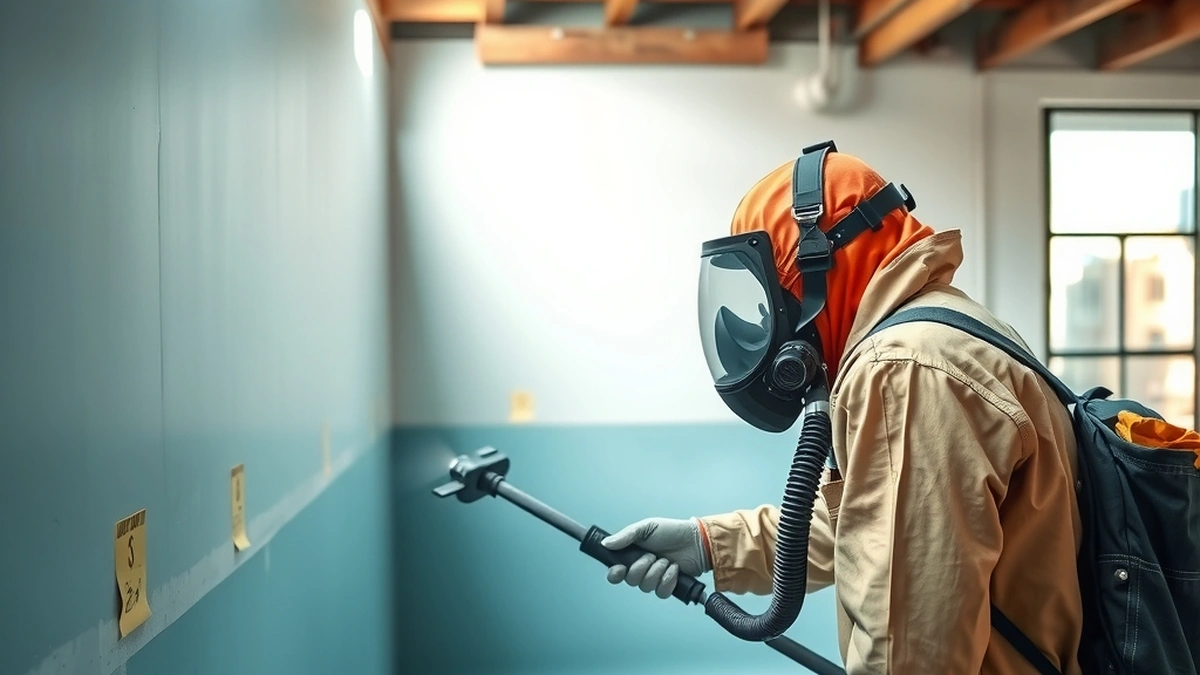
| Aggregate application | 1 day | Quartz mix applied and troweled |
| Wash-back | Same day | Cream washed off to expose the grain |
| Fill and startup | 1 day plus 28 | Water added carefully, chemistry managed |
Small pools compress the schedule and large pools with delamination stretch it. A job quoted at three days is either a small pool or a bond coat over the old finish.
Preparation decides the outcome
Three failures account for most early quartz problems, and all three happen before the aggregate is mixed:
- A bond coat over failing plaster. The new finish looks right for two years and then blisters in plates, because it is bonded to material that was already moving.
- An unrepaired shell crack. A crack telegraphs through any coating. It needs epoxy injection or stitching, not a smear of patch.
- Rusted steel left in place. Rebar close to the surface expands as it corrodes and pushes the finish off from below.
A contractor who does not discuss removal is pricing a different job from the one you think you are buying. Delamination signs covers what the failure looks like once it starts.
Mixing, troweling, and the wash
The mix is delivered as a bagged product or blended on site, and the aggregate ratio is the specification that matters. More stone by weight means a harder surface and a longer wash-back; less means a cheaper job that wears faster.
Application is in coats, worked with a steel trowel as the material sets. The trowel compacts the mix and brings cement cream to the surface, which is exactly what has to come off. Once the surface has set enough to hold the stone but not enough to lock the cream, the crew washes it back with water and a brush or sponge, working evenly across walls, floor, and steps.
Timing is judged by feel, not by a clock. Wash too early and stone washes out with the cream, leaving a weak surface that sheds grit. Wash too late and the cream sets hard, so the grain stays buried and the surface behaves like plaster with a speckled color. Neither failure shows up in the first month.
Startup, step by step
- Test the fill water before the pool is full: pH, alkalinity, calcium hardness, and stabilizer.
- Set pH near 7.4 and alkalinity at 80 to 120 ppm, with hardness high enough that the water does not pull calcium from the new surface.
- Brush twice a day for the first week, then daily for the rest of the month, paying attention to steps and the shallow end.
- Keep the heater off for at least two weeks and avoid calcium hypochlorite shock, which can deposit on fresh aggregate.
- Run the filter continuously and clean it often, because plaster dust loads media quickly.
- Re-test daily for the first month and adjust slowly before moving to a weekly routine.
Quartz maintenance covers what happens after the first month, which is mostly the same work at a lower frequency.
What it costs, and what sits outside the price
Quartz installation runs $6,000 to $12,000, or about $7.02 to $14.04 per square foot on an 855 square foot pool: $6,000 ÷ 855 = $7.02 and $12,000 ÷ 855 = $14.04. Waterline tile at $1,500 to $5,000 is usually separate, and so is coping.
The split inside the price is worth understanding. On a $9,000 job, chip-out at $2,500 and shell repair at $900 are $3,400, or 38 percent, before any aggregate is mixed. The material itself is a smaller share than homeowners expect, which is why a quote far below the range almost always reflects less preparation. Quartz cost breaks the range down by pool size.
The short version
Quartz installation is drain, chip-out, repair, bond coat, scratch coat, aggregate, trowel, wash-back, fill, and 28 days of managed water. It costs $6,000 to $12,000 for a typical pool, and the wash-back timing is the part you cannot inspect afterward. Choose the crew on how they describe removal and startup, keep pH near 7.4 and brush twice daily for the first week, and the finish will reach the top of its 10 to 15 year range. Pool resurfacing installation covers how the same sequence runs for pebble.
Frequently asked questions
How long does quartz pool finish installation take?
Five to eight working days from drain to fill on a typical residential pool, plus the 28-day cure and startup. Removal and shell repair account for most of the variation between jobs.
What is wash-back in a quartz installation?
Wash-back is the step where the crew washes the surface after the finish has begun to set, removing the cement cream so the quartz grain is exposed. Done at the right moment, the surface is uniform. Done early, stone loosens.
Can quartz be applied over old plaster?
A bond coat over sound plaster is a real method and costs less. It also traps any hollow area or crack under the new finish, which is why a full chip-out is the durable choice on an older pool.
How soon can you swim after quartz is installed?
Usually three to seven days after the fill, and only once the water clears and the chemistry is stable. The surface is still curing for four weeks, so brushing and water balance continue after swimming starts.
Why does new quartz look blotchy?
Mottling comes from uneven troweling, uneven aggregate distribution, and water pooling on the surface during cure. Some variation is normal in a cementitious finish and is worth discussing before the job rather than after.
How much does quartz installation cost?
Six thousand to twelve thousand dollars for a typical residential pool, or $7.02 to $14.04 per square foot on 855 square feet of interior surface. Removal and repairs are most of the difference between quotes.
Sources
Some links are affiliate links.If you buy through them we may earn a commission at no extra cost to you. We do not accept payment for rankings. Read the full disclosure.